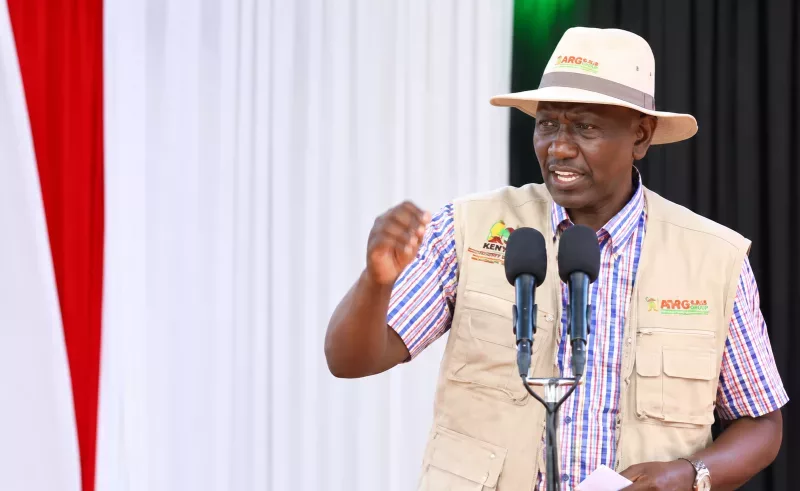
 President William Ruto
 is stepping up efforts to win support
at the Coast, with land reforms and major development projects at the centre of
his forays.
His sustained visits to the region that has traditionally leaned towards the opposition point to a political push targeting historically marginalised areas ahead of next year's election.
Yesterday, Ruto launched the Sh2.2 trillion East Africa Petroleum Refinery project in Lamu, promising the investment would create jobs and business opportunities for residents.
The refinery to be constructed by business mogul Aliko Dangote is among several major investments the President is presenting as part of efforts to transform the Coast into an energy and logistics hub.
The Lamu project came as Ruto continued an eight-day development tour covering Taita Taveta, Kwale, Kilifi, Mombasa, Tana River and Lamu.
The tour has focused heavily on land, infrastructure and investment, giving the administration a platform to showcase its development record while engaging local leaders and residents.
The six Coast counties had 1,964,224 registered voters in the 2022 general election.
Raila Odinga won 649,913 votes across the region against Ruto's 336,478, highlighting the political ground the President is seeking to gain.
Land has emerged as a central pillar of the strategy.
The government has issued thousands of title deeds and announced plans to acquire more land for the settlement of squatters, directly addressing one of the region's longest-running grievances.
Ruto on Tuesday announced plans to issue nearly 300,000 title deeds during the tour, as part of a wider programme targeting 500,000 titles for the Coast by December.
“Whereas some people focused on the land question, I focused on the land answer,” he said in Kilifi.
More than 36,000 residents in Kilifi North, Rabai, Ganze, Kilifi South and Malindi received title deeds.
“I did make a commitment that I will have an answer to this land question. The 300,000 titles that will be given out this one week and the 200,000 that will be issued before December are the answers to the problems that have contributed to poverty that is prevalent in this region,” Ruto said.
“I want to assure the people of the Coast that we are committed to ensuring there is equity in this part of the Coast.”
Kwale has the largest allocation, with 94,175 titles for residents of Lunga Lunga, Msambweni and Kinango constituencies.
Kilifi has been allocated 36,826 titles, Taita Taveta 31,318 and Mombasa 4,360. Lamu and Tana River have a combined allocation of 22,770.
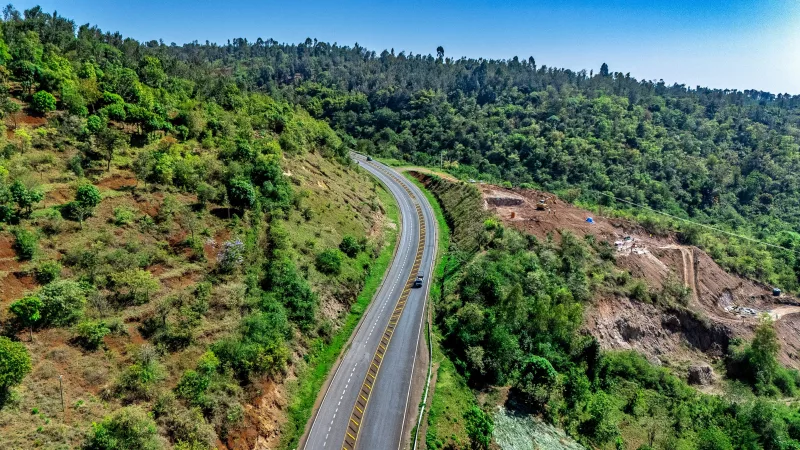
The President has also linked the land programme to major investments, including the Dongo Kundu Special Economic Zone, Mwache Dam and roads intended to improve connectivity between coastal counties and the rest of the country.
The Lamu refinery is the latest project to be presented as part of this development push.
Dangote said the refinery would prioritise residents in employment and training, including through a school expected to train 1,000 people.
The project is expected to supply petroleum products to Kenya and other East and Central African markets.
The President's Coast strategy has also been reinforced by the backing of influential regional politicians, including Senate Speaker Amason Kingi, Mining CS Hassan Joho and Sports CS Salim Mvurya.
Kingi said the region would reciprocate the government's development efforts in the 2027 elections.
“I’m surprised that some coastal leaders are still not sure where to cast their vote next year. Ruto is the only leader with the agenda to develop the Coast region,” Kingi said.
Mombasa Governor Abdulswamad Nassir welcomed the issuance of title deeds but said the exercise should be viewed as part of a wider effort to resolve historical land problems.
“For generations, thousands of Mombasa families have lived on land they called home without title deeds to give them legal security, dignity and something permanent to pass on to their children,” Nassir said.
The President's approach to the Coast is also part of a wider effort to consolidate support in regions that have historically felt excluded from the centre of government.
By combining land ownership, infrastructure and large-scale investments, Ruto is seeking to present his administration as one capable of addressing long-standing grievances while opening new economic opportunities.
The political test will be whether the interventions translate into broader support in a region where opposition parties have traditionally enjoyed considerable influence.