KALRO Director of Corporate Communication Dr Floridah Maritim speaking to journalists and editors attending the Climate Beacons Newsroom Initiative inception meeting in Nairobi./TRACY MUTHONI Journalists should work more closely
with agricultural research institutions to track climate solutions from
research centres to farmers and assess whether they make a difference, the
Kenya Agricultural and Livestock Research Organisation (KALRO) has said.KALRO Director of Corporate
Communication Dr Floridah Maritim said climate reporting should not end when
researchers release a new technology or practice.She was speaking to journalists and
editors attending the Climate Beacons Newsroom Initiative inception meeting in
Nairobi.The initiative is being implemented
by the Media for Environment, Science, Health and Agriculture (MESHA) in
partnership with the Solutions Journalism Network (SJN).Maritim said journalists should
follow the journey of climate solutions and establish whether farmers and
pastoralists can access, understand and use them.“The story continues after a
technology is released,” she said.She said conventional climate
reporting often focuses on the problem facing farmers or pastoralists.
Solutions journalism, however, should examine what could help, where it works,
what it costs and whether communities can use it.This requires journalists to remain
engaged beyond the launch of a new technology.Maritim encouraged journalists to
participate in field demonstrations, farmer training, extension activities and
community engagements.She said field demonstrations give
farmers an opportunity to see new practices under local conditions and ask
questions directly to researchers.She noted that such activities
provide an opportunity for journalists to observe how farmers respond to
proposed solutions.“Each engaging model creates a
reporting opportunity,” she said.At a field demonstration,
journalists can ask what farmers understood, whether they intend to try the
practice and what could prevent them from doing so.The next question, she said, should
be whether farmers can actually access the technology or inputs needed to use
it.“Can they obtain seed, inputs and
reliable advice?” she asked.This could involve examining the
availability and cost of improved seeds, livestock technologies, equipment,
advisory services or other interventions promoted as responses to climate
challenges.Maritim said county agricultural
officers and other advisers also play an important role in transferring
research knowledge to farmers.Research guidance and training
manuals are often used by extension workers when training farmers.She said journalists should
understand how information moves from research institutions to county officers
and eventually to farmers.She also pointed to farmer groups
and agricultural entrepreneurs as important links between research and
communities.Such groups can provide continuous
local support after researchers leave.Journalists, she said, should engage
with these different actors to develop a deeper understanding of whether
climate solutions are reaching the people who need them.The reporting should also continue
after farmers have used a technology or practice.“After a season, what worked, what
failed, and what changed?” she asked.She urged journalists to make field
visits a regular part of climate and agriculture reporting.They should observe practices
directly, speak to farmers and researchers, and independently verify claims
made about a solution.This includes checking the cost of
adoption, availability of inputs and the reliability of technical advice.KALRO Director of Corporate Communication Dr Floridah Maritim speaking to journalists and editors attending the Climate Beacons Newsroom Initiative inception meeting in Nairobi./TRACY MUTHONIJournalists should also return to
the same farmers after a period of use to establish what actually happened.Such follow-up, she said, can reveal
challenges that may not emerge during the launch or demonstration of a
technology.Maritim said the success of climate
reporting should ultimately be judged by what happens to the knowledge once it
leaves the research institution.“The measure of a climate story, did
the knowledge reach farmers and make a difference in their fields, livestock
and livelihoods?” she said.The real story, Maritim said, is
what happens when the solution reaches the farmer.Her call comes as African newsrooms
participating in the Climate Beacons Newsroom Initiative seek to strengthen
reporting that examines evidence-based responses to climate change.The seven-month initiative brings
together six newsrooms from Kenya, Uganda, Nigeria, Tanzania and Malawi.It includes training, coaching,
audience engagement and impact tracking aimed at strengthening climate
solutions journalism.Journalists and editors attending the Climate Beacons Newsroom Initiative inception meeting in Nairobi./TRACY MUTHONI


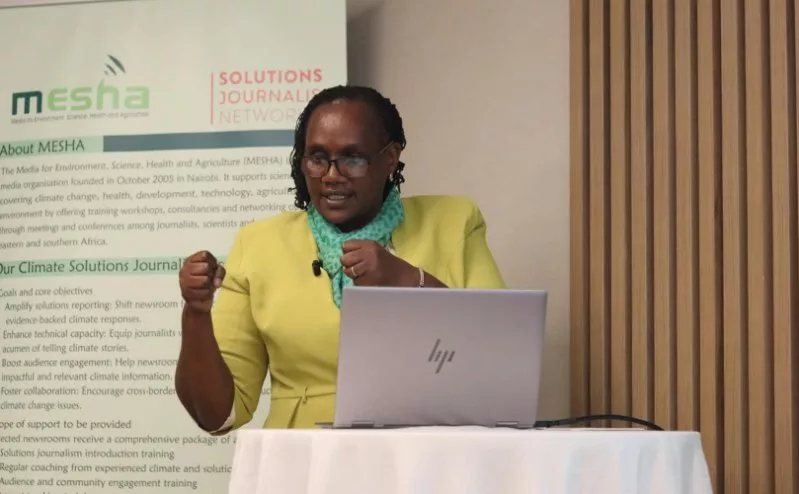 KALRO Director of Corporate Communication Dr Floridah Maritim speaking to journalists and editors attending the Climate Beacons Newsroom Initiative inception meeting in Nairobi./TRACY MUTHONI
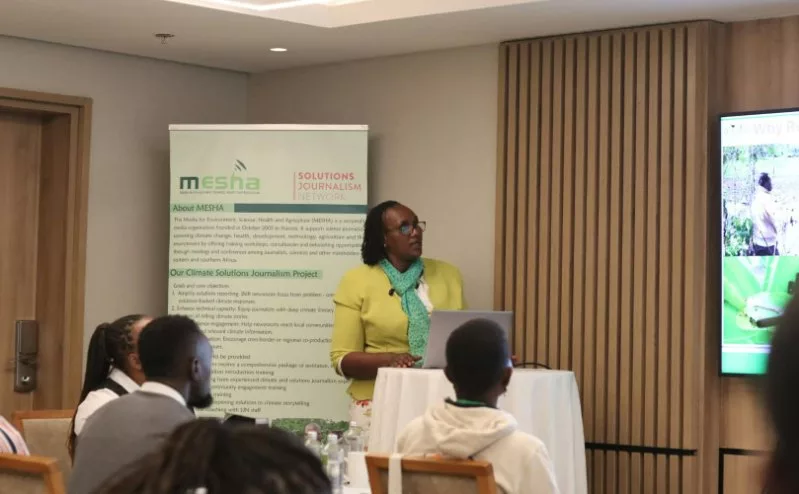 KALRO Director of Corporate Communication Dr Floridah Maritim speaking to journalists and editors attending the Climate Beacons Newsroom Initiative inception meeting in Nairobi./TRACY MUTHONI
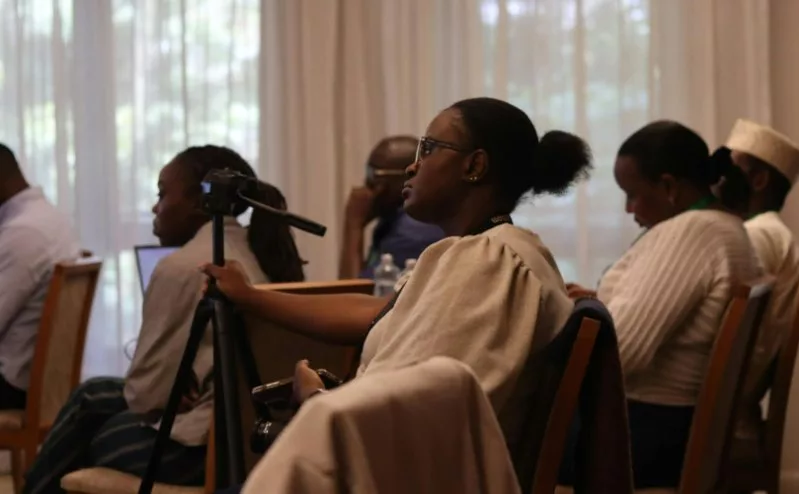 Journalists and editors attending the Climate Beacons Newsroom Initiative inception meeting in Nairobi./TRACY MUTHONI