KENYA's apparel industry has been given a two-year reprieve following the extension of the African Growth and Opportunity Act (AGOA) to December 31, 2028.
Manufacturers however warn that the additional time will count for little unless the country tackles the high cost of doing business and restores its competitiveness.
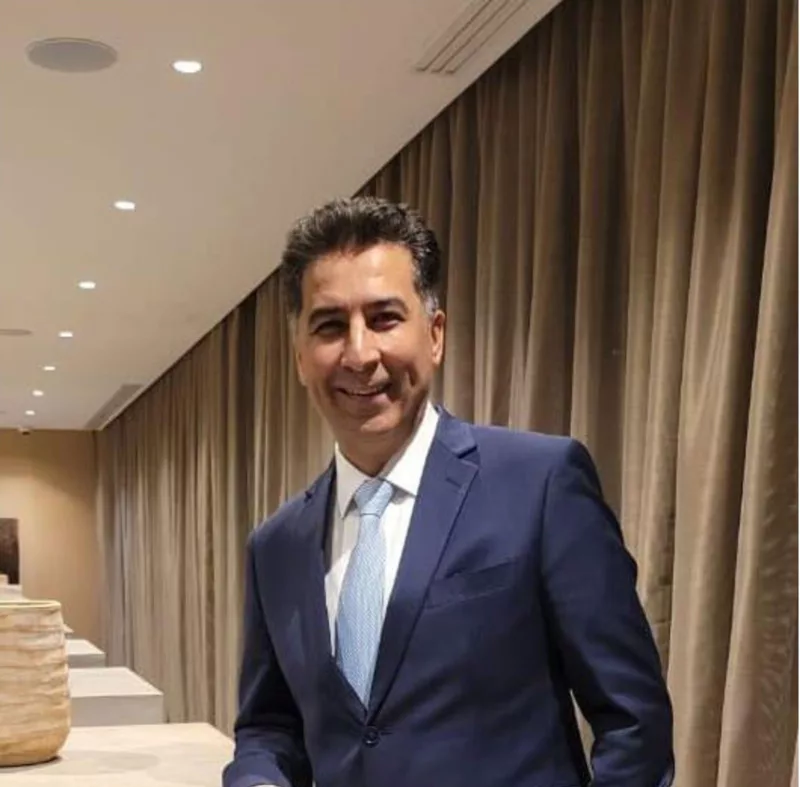
Pankaj Bedi, chairman of the Apparels Manufacturers and Exporters (EPZ) sector and a board member of the Kenya Association of Manufacturers, says the extension provides a much-needed “breather” but falls short of the certainty required to unlock major investments in factories, machinery and textile production.
He spoke to the Star on what Kenya needs to do including supporting industrial growth
How do you view the extension of AGOA to December 31, 2028?
It is very welcome news. We have been looking for a long-term solution, but it was our proposal that, at the very least, we should get a short-term window of two years while we continue discussions on the long-term modernisation of AGOA.
So, from that perspective, it is very positive. It gives the industry a breather.
The important thing is that the US Senate and Congress have demonstrated clear bipartisan support for AGOA. That gives us encouragement that there is an understanding in the US that Africa can be a good commercial partner.
But we should be clear, this is not the final solution. We still need to work towards a longer-term, predictable trade arrangement.
Does the extension to 2028 give investors enough certainty to make major investments in factories, machinery and capacity?
Frankly, two years is not long-term certainty. We are taking it as a breather.
The apparel business has a very long cycle. In many cases, you are looking at roughly a nine-month business cycle from product development and sampling to sourcing raw materials and eventually production and shipment.
If AGOA were expiring in December and we were already in August or September, buyers would not make major commitments because the notice period would simply be too short.
What we were asking for was enough time to cover at least two or three working cycles while discussions on the long-term solution continue.
So, yes, the extension helps us. But it is not enough by itself to unlock major long-term capital investment.
Manufacturing investment requires a factory, machinery, training, backward integration and development of the entire ecosystem. That requires a long-term, sustainable and predictable policy environment.
What does the extension mean for employment in the EPZ apparel sector?
The industry has been through a rollercoaster.There have been new investments, but at the same time some existing companies have reduced their capacity because they have not been able to sustain operations.
At my company, for example, we were at a peak of about 16,000 jobs. During Covid-19, we retained everybody in 2020, but in 2021 employment came down to about 6,000. We subsequently rebuilt it to more than 10,000 and now around 12,000. So you can see the volatility.
Over the past year, some companies have reduced employment by 20 or 30 per cent, while some have reduced even more. A few have closed. At the same time, some new factories have come in.
If you look at the industry over the past decade, employment has remained broadly around similar levels, plus or minus. That tells us something.
With access to the US market, Europe, the UK, China and the African market, why have we not achieved much stronger growth?
The answer, in my view, is that we have lost competitiveness.
What do you mean by competitiveness?
Market access does not guarantee business. Even if tomorrow we get duty-free access to the US, it does not guarantee that Kenyan companies will receive orders. We still have to be globally competitive. Our challenge is the cost of doing business.
We have electricity costs, labour productivity issues, logistics costs, port costs, financing costs, taxation and regulatory costs. All these things add up.
Our competitors are not necessarily local companies. We are competing with China, Bangladesh, Vietnam, India, Cambodia and other major apparel-producing countries.
Therefore, we need to honestly assess ourselves against those countries.
We have a beautiful policy around export-driven manufacturing as a priority sector. The question is whether all our policies are actually supporting that objective.
You mentioned that apparel has roughly a nine-month business cycle. Why is this important in the AGOA debate?
A buyer does not wake up today and decide to place an apparel order tomorrow. For the next season, buyers begin developing products months in advance. They work with suppliers to develop samples, colours, designs, washes and different product categories.
The buyer then selects the products and places the order. We have to source raw materials, which can take around 90 days, and then production can take another 90 to 120 days depending on the product.Then the goods have to be shipped.So you are looking at a full cycle of about nine months.
That is why certainty is so important. Buyers need to know that the trade arrangement will still be there when the product they are ordering today is manufactured and shipped months later.
How badly did previous AGOA uncertainty affect the industry?
The previous extension came late and was made retrospectively. Companies had to pay duties and wait for refunds, and some of those refunds have still not come. That uncertainty affected business decisions.
We have had companies reducing capacity by 20, 30 or even 40 per cent, and some closures.
The extension to 2028 removes some of that immediate uncertainty. But the lesson is that the industry needs predictability.
Kenya has been trying to diversify beyond the US market. How realistic is that?
Diversification is always good. Any market is a good market. But we have to understand the competitive dynamics.
Kenyan companies have tried Europe and the UK. In some cases, we realised that those markets are extremely competitive for us because we are competing with Bangladesh, Vietnam, Pakistan, Cambodia, Egypt, Morocco and other countries.
Price is a major factor, and we cannot always compete on price.
Then there is speed-to-market. We are geographically further from some markets and we do not have the full ecosystem required to respond quickly.
My company, for example, was the first producer of H&M in Africa. But we could not sustain that business. It eventually moved to Ethiopia and then back to Bangladesh, where the ecosystem is much more competitive.
So having market access is not enough. It has to be supported by competitiveness.
What should Kenya do between now and 2028 to prepare for the future of AGOA?
First, we should immediately negotiate for a long-term and predictable US trade agreement.
It could be a modernised AGOA or another arrangement, but we need certainty.
The rules of origin are also critical. We need to retain the ability to use third-country fabric and raw materials.
Kenya and the wider sub-Saharan African region simply do not have enough textile manufacturing capacity to produce everything locally.
If you remove access to third-country fabric, the business model becomes extremely difficult.
Second, Kenya needs an honest 360-degree competitiveness review. We need to ask: where are we going wrong?
Electricity, labour productivity, logistics, port charges, finance, taxation and regulatory costs all need to be examined.
How serious is the financing challenge for textile investment?
It is extremely serious. Imagine a company wants to invest $100 million in backward integration and a textile plant. If our dollar financing costs are around 12 per cent while competitors in China or India can access financing at around 2 per cent, we start the race already $10 million behind them in financing costs.
How can we compete?
We need mechanisms that can provide lower-cost financing for strategic manufacturing investments, particularly capital expenditure and backward integration.
If we want textile manufacturing to be a strategic sector, the financing environment must reflect that.
What does Kenya need to do to build a complete textile ecosystem?
We need backward integration. Cotton is important, but we should also understand that cotton is only part of modern apparel production. Today, cotton may account for only about 20 per cent of the content in some products. There are many other fibres and materials.
Therefore, we need to develop the wider textile ecosystem. We have the skills. We have compliant factories. Buyers are interested in moving some sourcing from Asia to Africa.
But we have not been able to convert that opportunity into the competitive advantage we should have.
Are Kenya's EPZ and SEZ policies adequate?
Policy-wise, I think Kenya has one of the best EPZ/SEZ policies in Africa.The tax exemptions, VAT arrangements and other incentives help companies establish themselves and operate as export-oriented businesses. The problem is that, over the years, we have added many costs and layers of regulation.
We need a genuine single-window system. When we came into the country, some permits cost about $50. Today, some have risen to thousands of dollars. Individually, these may appear to be small costs, but for a company they accumulate.
We need to ring-fence export-oriented manufacturers from policies and costs that make them less competitive internationally.
Should Kenya seek other preferential markets, such as Canada?
Absolutely. Canada could be an interesting market for Kenya. It is smaller than Europe, but it makes commercial sense because many of the brands we already work with also sell in Canada. If you are producing for a company such as Levi's, Walmart or Costco, and those companies have significant operations in Canada, additional duty-free access could potentially allow Kenyan manufacturers to capture more business from existing customers. So diversification makes sense.
The African Continental Free Trade Area (AfCFTA) is also a great opportunity. But again, the rules of origin need to be compatible with the reality of the EPZ sector.
My question is simple: if we are asking for access to the US and Europe using third-country fabrics, why can't we have similar practical arrangements within our own region?
What happens if AGOA is not extended beyond 2028?
Nobody can say that everything will shut down the next morning. Businesses will continue looking for markets and opportunities.
But we have seen what happened in Ethiopia when it lost AGOA benefits. Fortunately, Ethiopia had other advantages, including a relatively strong textile ecosystem and access to other markets. Kenya does not have that same leverage. hat is why we cannot wait until 2028 to start preparing.
What is your message to the Kenyan government?
Use this extension as a window to act. We should continue negotiating for long-term AGOA or a modernised trade agreement with the US, while simultaneously fixing our domestic competitiveness.
We should not operate under the illusion that everything will be fine simply because we have market access.
The market is available. The skills are available. The companies are here. Buyers are interested. But we need to become competitive.
This is a sector that can create significant employment, particularly for young people and women. On average, about 75 per cent of workers in the apparel sector are women, and the industry also supports SMEs and self-employed people through the wider supply chain. So there is a huge opportunity.
What is your message to companies operating in the EPZ sector?
Continue to stay put and continue putting your challenges and opportunities on the table.
At the Kenya Association of Manufacturers, we will continue facilitating that conversation with government and other stakeholders. Our approach is that we want to be at the table instead of on the table.
We have seen that engagement can produce results. We have been able to articulate our concerns on tariffs and other issues and have been listened to at different levels in the US, including Congress and the US Trade Representative. The AGOA extension is a great start.
It gives us at least two more business cycles. But now we have to run fast.
Government needs to work on cost competitiveness, the private sector needs to invest and improve productivity, and together we need to build the ecosystem.