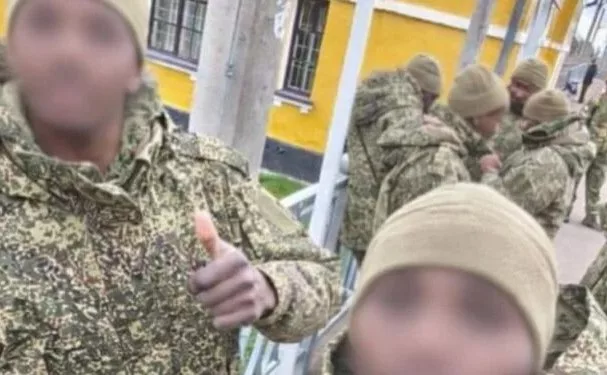
At least 28,391 foreign nationals from 136 countries had been identified as having participated in hostilities as members of Russia’s armed forces by April 2026, according to figures cited in a new Amnesty International report.
The figure, provided by Ukraine’s Coordination Headquarters for the Treatment of Prisoners of War, excludes North Korean forces, the report said.
Amnesty said it could not independently verify the figures or establish the full scale of foreign recruitment into Russia’s war against Ukraine.
However, its investigation documented cases in which foreign nationals were allegedly deceived, coerced or exploited into military service.
The report, titled Russia: Trafficking of Foreign Nationals to Fight in Ukraine, warns that recruitment practices may amount to human trafficking, particularly where people are lured by promises of civilian employment, salaries, legal residency or citizenship.
Amnesty interviewed 15 captured foreign nationals from Brazil, Colombia, Cuba, Egypt, Sierra Leone, Sri Lanka, Somalia and South Africa.
Of those interviewed, seven said they had been promised civilian jobs before travelling to Russia or joining the military. Six gave accounts that raised concerns about whether their recruitment was voluntary.
Only three said they knowingly signed military contracts and understood that they could be deployed to fight.
The organisation said the interviews offered evidence of deceptive and coercive recruitment but were not sufficient to determine the overall number of foreign nationals affected.
Several interviewees told Amnesty they had travelled to Russia expecting to take up civilian employment.
A Sri Lankan man identified as Nalin said he had been offered a security job and travelled to Moscow with 58 other Sri Lankans.
He said he signed a contract written in Russian that was not translated for him before being deployed to Ukraine following basic training.
Another Sri Lankan, Nuwan, had been working in a Burger King kitchen in Russia. After his work visa expired and he was fined by police, a friend allegedly offered him a military contract with a bonus, salary and the possibility of residency and citizenship.
Nuwan said he received two weeks of training before being sent to eastern Ukraine, where he was captured less than a month later.
A South African truck driver, identified as Joseph, was reportedly promised a driving job in Poland but was taken to Moscow and told he would become a soldier.
His wife told Amnesty he had no military experience, received little training and was not paid.
Amnesty said some recruits reported having their passports withheld, their movements restricted or being threatened when they tried to leave.
Alleged threats and exploitation
A Brazilian man, Pedro, said he had been recruited for an IT job before being taken to a military training centre.
He told Amnesty that a commander warned him against attempting to escape.
“At some point you will leave. If you try to escape, you will either go to jail or we will kill you,” Pedro quoted the commander as saying.
A Somali interviewee, Ahmed, said he had joined the Russian forces after facing unemployment and financial hardship.
He described his circumstances as having no job, no income, and no future.
Ahmed said he received almost no training and found himself near the front line without a weapon.
The report also documented accounts from Cuban nationals who said military service had been presented as a way to obtain money or legal status.
One interviewee, Ruben, said he was offered a contract while in prison and promised a passport, an 800,000-rouble bonus and a monthly salary of 400,000 roubles.
“I signed the contract because I did not want to be deported back to Cuba,” he told Amnesty.
He was wounded twice and captured in January 2026.
Amnesty said the accounts it documented indicated that some foreign nationals may have been recruited through practices involving deception, coercion and exploitation.
The organisation said the evidence suggested that, in most if not all of the cases it examined, recruits had not given fully informed and voluntary consent.
It also said Russian state bodies, including the Migration Directorate and Defence Ministry, may have been involved in or enabled the recruitment practices.
Amnesty said further investigation was needed to establish the precise relationships between recruiters and state institutions.
The organisation called on Russia to end abusive recruitment, investigate suspected trafficking and ensure affected recruits receive wages, assistance, remedies and safe return to their countries.
It also urged countries whose citizens have been recruited to warn people about deceptive offers, regulate recruitment agencies and provide consular assistance.
Amnesty called on Ukrainian authorities to screen captured foreign nationals for possible trafficking and protect their rights, including facilitating voluntary return.
The report said the number of foreign nationals identified in Russian forces remains difficult to establish independently, while the interviews point to alleged recruitment abuses affecting people from several regions of the world.