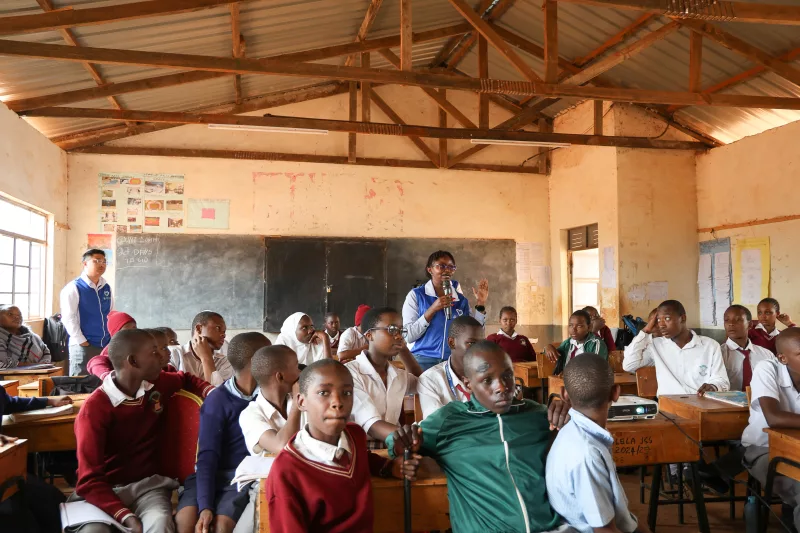
 Winrose Wachira, CSR Coordinator at Afristar, addresses Grade 7 learners at Kalela Comprehensive School in Voi during an SGR safety sensitisation programme. The school is among the beneficiaries of Afristar’s community support initiatives./HANDOUT
For years, the railway has been part of life in Voi, carrying passengers, cargo and economic opportunity along East Africa’s Northern Corridor.
But for the children of Kalela Comprehensive School, the railway is also a place where knowledge can make the difference between a safe journey and a dangerous encounter.
That message took centre stage when Africa Star Railway Operation Company Limited (Afristar) returned to Kalela Comprehensive School in Voi for a railway safety sensitisation and awareness programme.
The visit carried a message that went beyond trains and tracks: building a safer railway also means building informed communities. It was also a return to a school whose learning environment Afristar helped transform two years earlier.
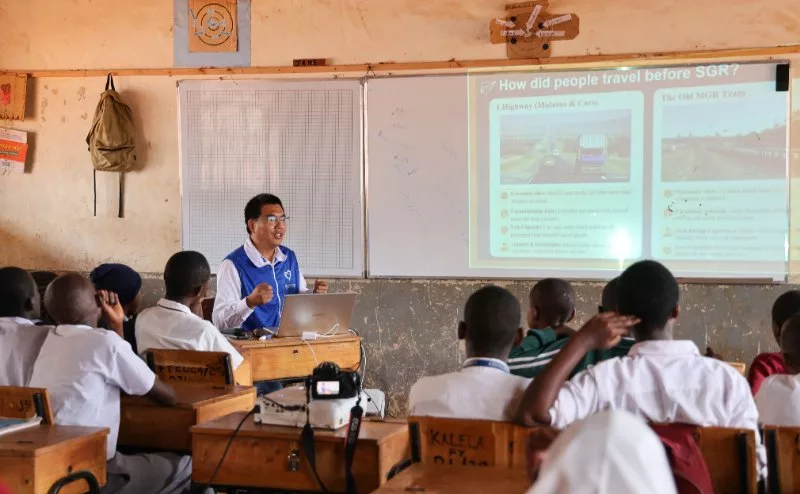 Mr Yin Tiande, an Afristar Track Operations specialist, speaks to Grade 7 learners at Kalela Comprehensive School in Voi on the importance of protecting SGR infrastructure from vandalism./HANDOUT
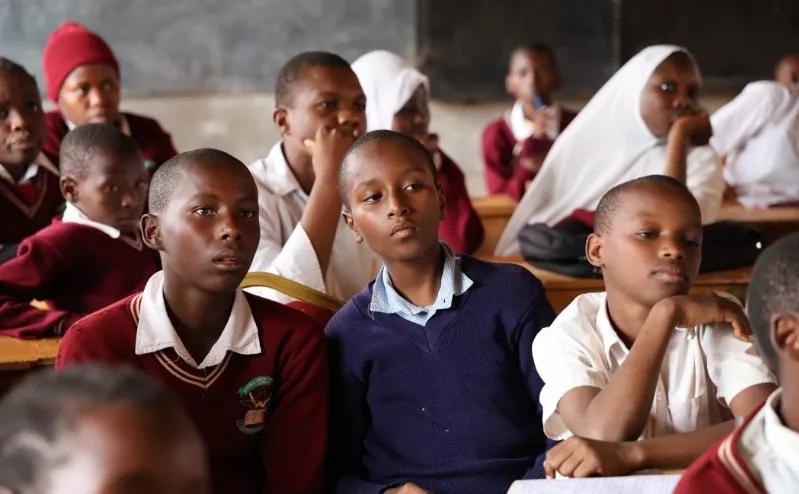 Grade 7 learners at Kalela Comprehensive School in Voi listen attentively during an SGR safety sensitisation session led by Afristar staff./HANDOUT
For teachers who had witnessed the challenges firsthand, the impact was immediate.
“Previously, our children sat on the floor while some learned while standing. A desk meant for two learners was being used by five or six children,” said Agness Mwamiso, a teacher at Kalela Comprehensive School.
“Afristar donated these facilities and it really made learning and teaching comfortable. When the learner and teacher is comfortable, concentration is high and academic performance is expected to improve.”
Mwamiso said the school has since recorded improvements in academic performance and enrolment.
Teacher Mary Waweru said the donation also addressed challenges faced by staff.
“I am a witness to the donation of furniture, printers, balls and many other learning and teaching equipment that was made by Afristar to Kalela Comprehensive School,” she said.
“During staff meetings, some teachers could not sit because of a lack of adequate furniture.”
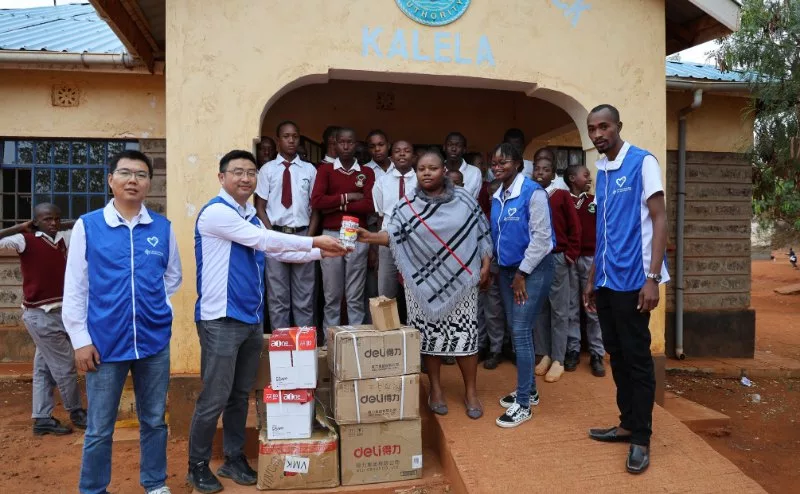 Afristar’s Head of Safety, Mr. Xu Yuanliang, leads staff in handing over stationery to learners and teacher at Kalela Comprehensive School in Voi during the SGR sensitisation programme./HANDOUT
For Joseph Ezekiel, the transformation was personal.
“I was one of the pupils who sat on the floor while studying, but now I have a chair and desk to use courtesy of Afristar,” he said, adding that the donated printers had enabled the school to print examinations internally while the sports equipment and uniforms had strengthened its participation in competitions.
 Learners from Kalela Comprehensive School pose with Afristar staff in blue vests after a sensitisation session on SGR history, railway safety and the protection of railway infrastructure./HANDOUT
But the facilities were not the only reason Afristar returned to Kalela.
With the SGR running through Voi and forming part of the community’s daily environment, the company used the visit to deepen railway safety awareness among the young learners.
Through interactive discussions, warm-up activities, simplified presentations and question-and-answer sessions, the students learned about the history and significance of railways in Kenya, with particular focus on the SGR and its role in connecting communities, moving people and goods and supporting economic activity.
More importantly, they were reminded of the dangers associated with railway infrastructure and the importance of responsible behaviour around tracks and railway facilities.
The learners were encouraged to avoid crossing railway tracks at unauthorised points, use designated crossings and remain alert around railway operations. They were also challenged to become ambassadors of railway safety by sharing the message with their families and communities.
For Mr Yin Tiande of Afristar’s Track Department, safety remains central to the railway’s operations. “The safety of the SGR is very paramount. The SGR has been able to operate safely for over nine years because of the safety measures that were put in place, such as community sensitisation,” he said.
The sensitisation also highlighted the importance of protecting railway infrastructure from vandalism.
Mr Xu Yuanliang, Head of Safety at Afristar, urged members of the public to help safeguard the railway.
“We urge everyone to help protect the SGR. If you see anyone trying to vandalise SGR facilities, please report by calling 0709 388 880,” he said, adding that information leading to action against vandalism can attract a reward.
Beyond safety, the programme exposed the learners to the railway as a potential career path.
The students were introduced to the diverse professionals who keep a modern railway operating, including specialists in track, signalling, safety, operations and other technical and administrative fields.
For Mebo, a Grade 7 learner, the visit offered a new perspective on the company behind the railway she had used while travelling to Mombasa.
“I have used the SGR multiple times while travelling to Mombasa. I was surprised when I heard that the donation had been made by the company that operates the SGR because I knew the SGR was only meant to transport people. Seeing them come to our school really made me happy,” she said.
According to Winrose Wachira, CSR Coordinator at Afristar, education remains one of the three pillars of the company’s corporate social responsibility programme.
“Education is a fundamental and basic right for children in Kenya, and we are going against all odds to ensure teachers and learners have a comfortable environment and adequate facilities for learning and teaching,” she said.
The Kalela intervention demonstrates how that commitment extends beyond infrastructure. The desks and equipment have improved the conditions in which children learn, while sports facilities have created opportunities for participation and competition. The railway safety programme, meanwhile, equips them with knowledge that can protect them beyond the school gates.
For Afristar, the visit reinforced the value of sustained engagement with communities along the SGR corridor.
As the railway continues to connect Kenya’s cities, towns and communities, its impact will depend not only on the infrastructure and technology behind it, but also on the people living alongside it.
At Kalela, a new generation is learning that the railway is more than a means of transport. It is part of their community, a source of opportunity and a shared responsibility.
Because a railway becomes truly transformative not only when it moves people and goods, but when the communities along its path are empowered to understand, respect and protect it.