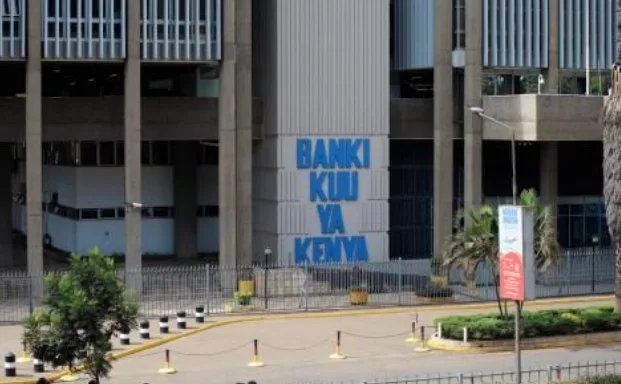
Investors fleeing a sharp correction in large-cap shares at the Nairobi Securities Exchange (NSE) are increasingly turning to government securities, with demand for both Treasury bills and bonds remaining strong despite declining yields.
The shift was evident in the latest Central Bank of Kenya (CBK) auctions, as investors placed Sh42.7 billion in bids for Treasury bills against Sh28 billion on offer in the September 17 auction.
This translated into a subscription rate of 152.6 per cent.
Demand was similarly strong in the Treasury bond market a day earlier.
The re-opened 20-year and 30-year Treasury bonds attracted bids worth Sh81.4 billion against an advertised Sh60 billion, representing a 135.7 per cent subscription rate.
The appetite for government paper is notable because investors are accepting lower returns as yields have generally eased from the highs of the previous tightening cycle.
At the start of 2026, 91-day, 182-day and 364-day Treasury bills were yielding about 7.73 per cent, 7.80 per cent and 9.21 per cent, respectively.
By September, the latest auction rates were around 8.8 per cent, 8.9 per cent and 9.1 per cent, respectively.
This means the 364-day yield has actually fallen slightly over the year, while the shorter bills have risen from their January levels.
The broader trend, however, represents a dramatic decline from 2024, when Treasury bill yields climbed above 16 per cent amid tight monetary conditions.
“For investors, the attraction of government securities is not simply higher yields, but capital preservation and predictable returns at a time of heightened equity-market volatility,’’ market analyst Nick Mwale told the Star.
“The contrasting performance of equities and government securities points to a cautious repositioning by investors. After a powerful equity rally, money is finding a safer parking place in fixed income while investors reassess valuations and global risks.”
The rotation has coincided with an increasingly severe sell-off at the NSE.
During the week ended September 17, the NASI fell 4.96 per cent, while the NSE 25 and NSE 20 declined 5.9 per cent and 6.5 per cent respectively.
Market capitalisation dropped by a similar 4.96 per cent to about Sh3.95 trillion.
This represents a loss of roughly Sh336 billion in market value during the week.
Banking counters have borne a significant share of the correction after leading the market's two-year recovery.
On September 16 alone, the NSE Banking Index dropped 4.14 per cent, alongside sharp declines in major banking stocks.
The retreat comes despite stronger bank fundamentals. CBK data cited in market analysis shows quarterly banking-sector profit before tax rising from Sh73.5 billion in March 2025 to Sh88.9 billion in June 2026, while return on equity reached 24.1 per cent and capital adequacy stood at 20 per cent.
Meanwhile, underlying monetary conditions remained relatively supportive.
The banking regulator reported excess bank reserves of Sh24.2 billion above the cash-reserve requirement, while KESONIA held at 8.75 per cent.
The shilling was also broadly stable at Sh129.62 to the dollar on September 17.
Foreign-exchange buffers provided another layer of comfort, with reserves at $15.09 billion (Sh1.96 trillion), equivalent to 6.1 months of import cover.
Remittances also rose six per cent year-on-year to $451.8 million (Sh58.6 billion) in August, although cumulative inflows for the 12 months to August fell 1.3 per cent to $5.01 billion (Sh649.3 billion).