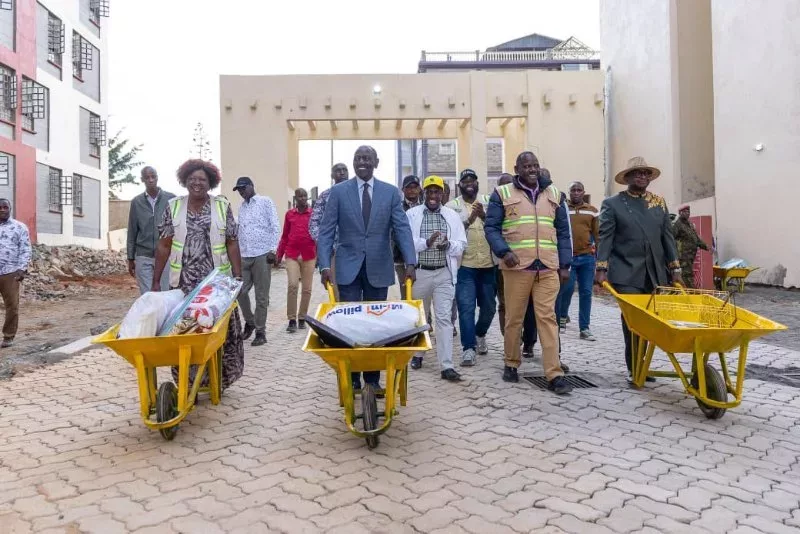
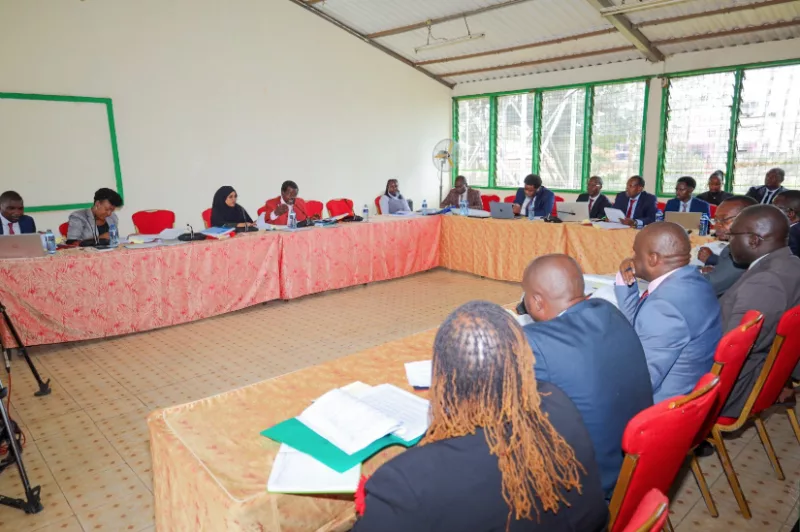
 The Senate has previously taken its sittings outside Nairobi to Uasin Gishu in 2018, Kitui in 2019, Turkana in 2023 and Busia in 2025 /FILE
Next week, the House will leave Nairobi and convene in Kilifi for five days, taking its plenary and committee business to the people in what senators call Senate Mashinani.
The senators are expected to confront some of the most pressing problems
facing Kilifi residents.
The list is long and virtually all-encompassing — healthcare, land rights, insecurity, electricity, roads, fishing, environmental degradation, pending bills and stalled or incomplete development projects.
Senators, whose mandate is county oversight and welfare, will receive petitions and hear directly from residents.
Beyond the oversight agenda, the move carries powerful historical symbolism.
It
evokes the region’s long and turbulent association with the struggle for
decentralised government.
It is a journey that, in many ways, takes devolution back to its roots.
Kilifi was home to Ronald Ngala, the nationalist politician and former minister who relentlessly
championed Majimboism, the decentralisation philosophy that sought to give
regions greater control over their political and economic affairs.
Ngala also advocated pan-Africanism and became one of the most prominent voices in the country’s early debate over how power and resources should be shared.
More than six decades later, that debate has found constitutional expression in the devolved system of government in the 2010 Constitution.
The Senate, the institution at the centre of protecting county
interests, is coming to Ngala's home county.
The historical connection runs even deeper.
Timothy Chokwe, also from Kilifi, served as the first Speaker of the
pre-Independence and Independence-era Senate from 1963 until the House was
abolished in 1966.
Today, Kilifi again occupies a prominent position in the Senate leadership. Amason Kingi, founder and leader of the Pamoja African Alliance, is the Speaker and Kilifi Senator Stewart Madzayo is the Minority leader.
The two leaders have urged residents to make full use of the rare opportunity.
“All Kenyans are invited, and if they have any issues that they want the Senate to address and help them, then this is the best time,” Kingi said.
Madzayo delivered an even more direct message to his home county.
“This
is a lifetime experience for Kilifi people. I want to tell the people of Kilifi
to use this opportunity because we don’t know when the Senate will come to
Kilifi again,” he said.
“Let them bring their petitions and raise any issues that they have and want the Senate to help them address.”
The Senate has previously taken its sittings outside Nairobi to Uasin Gishu in 2018, Kitui in 2019, Turkana in 2023 and Busia in 2025.
Kingi said the House had resolved to hold the Kilifi sittings pursuant to Article 126(1), which allows the Senate to hold its sittings anywhere within the Republic.
But Senate Mashinani is not simply Parliament relocating its chamber.
For Kilifi residents, it brings the country's county watchdog within reach.
Instead of residents travelling to Nairobi to lobby committees or follow proceedings, senators will spend the week in their midst—listening to appeal, inspecting projects and questioning officials.
Nominated Senator Veronica Maina from Murang’a said this up-close-and-personal mission is exactly the point.
“It is important that the work we do becomes relevant to the people. Not many Kenyans can come to Nairobi to follow live proceedings,” she said.
Maina said the Senate's constitutional responsibility as guardian of devolution required senators to engage citizens at the grassroots.
“The best way the Senate can connect with the people of Kenya is to constantly go down to where the people are. This is also an opportunity to check the projects implemented by counties,” she said.
The field visits will also test whether what appears in government reports exists on the ground.
“There have been instances in which counties purport to undertake projects, but there is nothing on the ground. These sittings give us a chance to confirm what is actually happening,” Maina said.
That could make the Kilifi week uncomfortable for some county agencies.
The Senate's Finance and Budget Committee will inspect Equalisation Fund projects in Malindi and Ganze and interrogate the status of pending bills with the county executive.
The
County Public Accounts Committee will inspect the proposed county headquarters
and outpatient block at the Kilifi County Referral Hospital.
The Health committee will visit Malindi and Marafa subcounty hospitals before meeting the governor and county assembly health committee to discuss its findings.
The Education committee will inspect Sabaki, Malindi Central and Sir Ali Bin Salim ECDE centres to establish whether recommendations arising from an audit of early childhood education have been implemented.
The Coast's vast blue economy will also come under focus.
Three Senate committees will visit the Kilifi Central fish landing site, inspecting cold storage facilities, fish bandas, a gear shed, a solar project and waste digester.
They will meet fishermen, traders, women’s groups and beach management units to discuss the sustainability of fishing and the region's blue economy potential.
Maina said the Kilifi visit would help senators gain a deeper understanding of the Coast's economic potential.
“If resources allow, such sittings should even be held twice a year,” she said.
The Land, Environment and Natural Resources Committee will inspect salt and sand-mining activities in Magarini and examine environmental compliance.
It will also revisit the contested ownership of Mnarani Jetty, following a statement sought by Madzayo.
The committee will hear a petition concerning alleged threats, intimidation, harassment and eviction of residents of Ganda ward by private developers claiming to act for absentee landlords.
Other committees will examine electricity connectivity, digital government services, social protection, roads, tourism, industrialisation and county legislation.
The National Cohesion, Equal Opportunity and Regional Integration Committee will hold a town hall in Malindi to discuss inter-community relations, local conflicts and preparations for peaceful election in 2027.
The National Security, Defence and Foreign Relations Committee will meet the governor and county commissioner to examine security threats and disaster-response preparedness.
The Devolution and Intergovernmental Relations Committee will scrutinise functioning of the Malindi Municipal Board and the implementation of delegated county functions.
The breadth of the programme means Kilifi will effectively become the Senate's national oversight laboratory for a week.
The bigger story is the symbolism.
The county that produced Ngala also produced Timothy Chokwe (1921 and 2003), the first Senate Speaker and a founder of Kanu.
The visit comes at a time when devolution remains one of the most consequential features of Kenya's constitutional order.
The old Majimbo debate was about taking power closer to the regions.
The 2010 Constitution transformed that political aspiration into devolved government.
Now the Senate — the House mandated to protect the interests of counties — is taking its work back to the people.