The scale and variety of the expenditure are contained in an annex to the Controller of Budget’s National Government Budget Implementation Review Report for the year ended June 2026.
The annex lists Sh209.99 billion in recurrent expenditure and Sh66.77 billion in development expenditure approved by the National Treasury. The Controller of Budget subsequently approved withdrawals of Sh187.90 billion in recurrent funds and Sh21.47 billion in development funds.
The figures provide a glimpse into how extensively Article 223 was used during the financial year, with additional allocations covering government ‘operations’, security, infrastructure, social programmes, debt-related obligations and events.
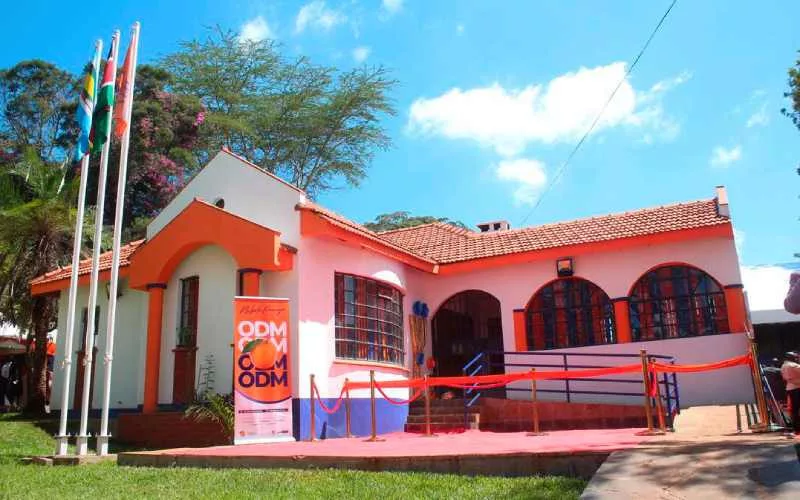
Among the most politically sensitive entries is a Sh200 million request by the Office of the Registrar of Political Parties for the Orange Democratic Party.
The CoB says the money was “to cater for a request by the ODM party in relation to Petition for Outstanding Court Award for Political Parties Fund”.
The National Treasury approved the request on September 25, 2025, while the Controller of Budget approved the withdrawal on January 10, 2026.
The allocation relates to a longstanding dispute over Political Parties Fund arrears.
In a 2019 judgment, the Court of Appeal found that ODM was entitled to arrears under the Political Parties Act from the 2012-13 financial year. The case involved ODM against the National Treasury, the Treasury CS, the Registrar of Political Parties and the National Assembly.
Treasury records put the award at Sh4.136 billion, with Sh1.1 billion recorded as having been paid against it. The claim arose from ODM's contention that it had been denied funds due under the statutory Political Parties Fund.
The court did not, however, enter judgment in ODM's favour for the precise Sh4.136 billion claimed. Instead, it held that the party was entitled to arrears due under the statutory funding formula, with the actual amount to be ascertained from government revenue figures.
ODM officials have continued demanding payment of outstanding Political Parties Fund allocations, with recent reports putting the party's claim at about Sh12 billion.
Pressure had been piling on National Treasury CS John Mbadi over the claim as he served as ODM chairman before his appointment to President William Ruto's Cabinet in 2024.
The CoB table, however, does not establish any connection between Mbadi's previous leadership of ODM and the approval of the Sh200 million.
ODM’s payment from the kitty is, however, just the tip of the iceberg.
The Article 223 schedule reveals billions of shillings going to “other operations” and major projects of the government.
State House is notorious in this regard as it appears several times, with a vote labelled “to cater for other Operating Expenses” at Sh5 billion.
Other State House requests included Sh2 billion, Sh800 million, Sh500 million and Sh1 billion, alongside a series of smaller withdrawals running into hundreds of millions.
Security-related spending also features prominently.
The State Department for Internal Security and National Administration sought additional funds “to cater for ongoing Multi-Agency security operations” and “To cater for Security-Related Expenses”. The table records requests including Sh2 billion and Sh5 billion, followed by further withdrawals.
The National Intelligence Service received Sh1 billion for “enhanced National Security Operations”, followed by Sh3.5 billion for “enhanced security operations”. The National Police Service separately received Sh300 million for security-related expenditures.
Major infrastructure and financial obligations account for some of the largest entries.
The National Treasury table records Sh58.129 billion for “The acquisition of the Disaster Recovery site at Konza Technopolis and the upgrade of KRA ICT and core systems”. The Controller of Budget approved a corresponding withdrawal of Sh58.113 billion.
Another Sh5 billion was approved to facilitate mobilisation fees for Phase III of the Nairobi Intelligence Transport System, while Sh4.1 billion was allocated for termination costs for the Horn of Africa Gateway Development Project annuity-financed Lot 3.
The project covered two road sections: Modogashe–Habasweini–Samatar, about 76.6km and Rhamu–Mandera, about 66.4km. The roads sector also received billions through Article 223.
Some Sh10.5 billion was approved to finance work certificates under the China Development Bank, while Sh1.2 billion was allocated for outstanding interim payment certificates under the Kitale-Morbus road project. A further Sh2 billion was intended to settle an interim payment certificate linked to the Isiolo-Mandera project. Other allocations were directed to social programmes and government obligations.
The State Department for Social Protection received Sh3.71 billion to cater for “full-year payment of the Social Health Insurance Fund,” with the Controller of Budget approving Sh3.56 billion.
The Teachers Service Commission received Sh7 billion to facilitate payments to the Social Health Authority, while Sh3.88 billion was allocated as the first instalment of universities' collective bargaining agreement arrears. The schedule also includes funding for events and programmes. The State Department for Culture, Heritage and Arts received Sh169 million to facilitate the “planning and hosting” of the Kenya Music and Piny Luo Cultural Festival, while another Sh99.97 million was allocated for the Kapkugo Cultural Festival.
The State Department for Sports received Sh3.9 billion to pay Afcon 2027 hosting fees, with the table stating that the fees “would fall due on 30th March, 2026”.