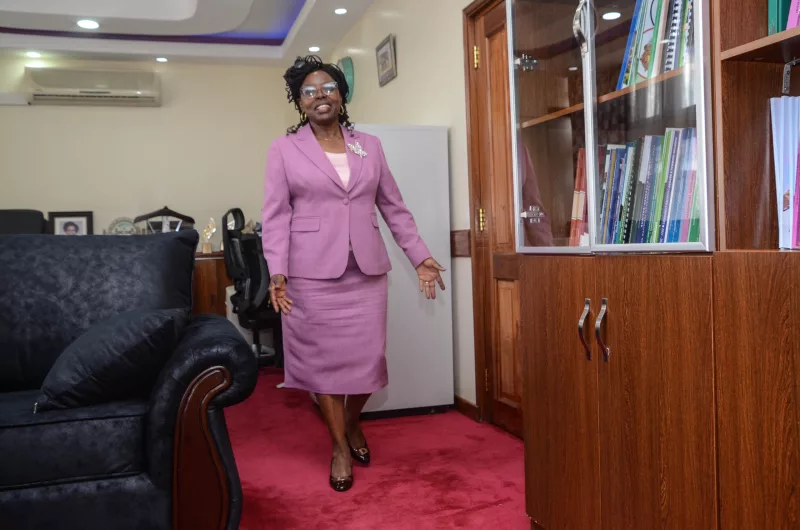
The Controller of Budget is seeking new powers to keep a real-time eye on billions of shillings in government accounts.
The office could also have power to block spending that is above the limits approved by Parliament.
A proposed law would give Margaret Nyakang’o’s office live viewer rights to the national and county exchequer accounts.
If approved, the office would be empowered to monitor public funds at the Central Bank of Kenya and nip unauthorised overdrafts in the bud.
The CoB has subjected the draft Controller of Budget (Amendment) Bill, 2025 to public participation, with memorandums required by October 8.
“The bill seeks to address gaps that have become evident in the course of implementation of the Controller of Budget Act,” the public participation notice reads.
The draft bill says the changes are intended to ensure that the Consolidated Fund, Equalisation Fund, County Revenue Funds and other public funds ‘are not overdrawn’.
A new Section 16A provides for authority to grant the Controller ‘real-time viewer rights’ of the national exchequer account, county exchequer accounts and accounts for other public funds.
If actualised, the budget watchdog would have an unprecedented sight of the movement of government money.
The office says the aim is to spot questionable withdrawals before funds are spent, with regulations to implement the bill providing for more authority.
The regulations provided that the COB's recommendations on budget implementation are binding on entities and their public officers.
The bill also seeks to give Nyakang’o powers to block withdrawals when government entities breach their approved spending limits.
The proposed amendment says the Controller may “decline to approve a request for withdrawal of funds, giving reasons thereof”.
The Budget boss would also be able to recommend that Treasury stop funding entities that persistently breach the limits.
The proposed law provides that COB can recommend to the National Treasury to stop funds where there has been persistent and material breach.
In the new dispensation, the COB is being empowered to investigate matters touching on budget implementation and report to Parliament and county assemblies.
The office would further be empowered to resolve disputes relating to budget implementation through mediation, conciliation and negotiation.
The proposed law also seeks to tighten the flow of financial information to the budget chief.
Accounting officers would have to submit monthly reports within 10 days after the end of every month.
They include approved and actual expenditure, receipts into the Equalisation Fund, Consolidated Fund and County Revenue Fund.
Also required would be reports on the absorption of funds by programme and sub-programme, and reasons for any decline in absorption.
The draft bill further gives the controller powers to demand additional information like outstanding payments overdue for more than 90 days, stalled projects, project implementation status, established public funds, projected revenue and expenditure.
Officers who knowingly submit false or misleading information to the Controller of Budget face fines of up to Sh5 million or two years in jail.
According to the draft bill’s memorandum, the proposal seeks to align the law with the Constitution and the 2020 Court of Appeal decision on the running and appointment to the office of the Controller of Budget.
The proposed changes would also require the Controller and Deputy Controller of Budget to be members in good standing of a relevant professional body recognised by law, in this case the Institute of Certified Public Accountants – Kenya.
Nyakang’o has over time lamented about friction in the existing legal framework.
A parliamentary committee noted that her office currently lacks legal mechanisms to compel compliance or punish violators.
The Constitutional Implementation Oversight Committee in October last year proposed tougher laws to have the CoB deal directly with agencies that fail to comply with budget rules.
The House team proposed the National Treasury implement a system that would see the CoB’s office linked to the Central Bank of Kenya for authorisation of payments.
This would allow the office to track funds from approval to final expenditure.
The draft law has been fronted hot on the heels of a recent budget audit that flagged multiple agencies for breaches.
In the review, Nyakang’o identified gaps she said undermine budget credibility, including gaps in meeting contractual obligations, weak reporting on external loans, underuse of oversight systems and delayed programme implementation.
Budget watchdogs have recommended that the office be granted sufficient legal tools to track flow of funds and punish entities that ignore her warnings.