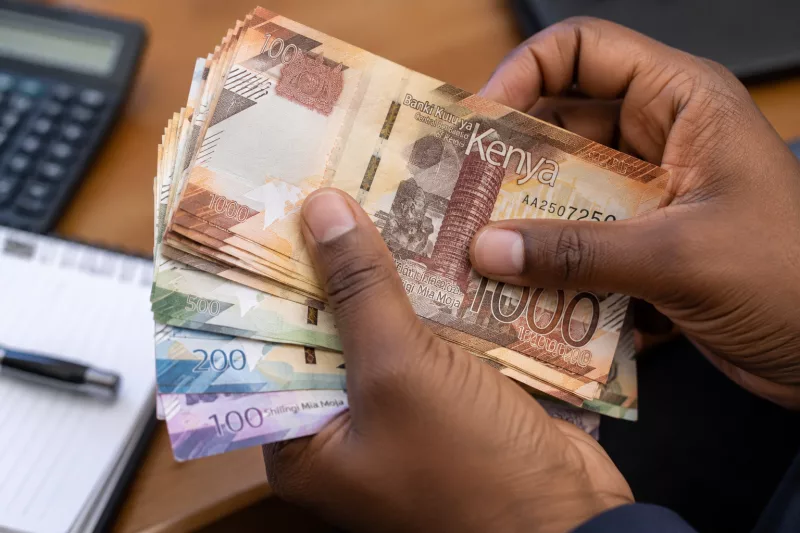
The Institute of Public Finance is now calling for a comprehensive overhaul of Kenya’s Pay As You Earn (PAYE) system, saying the current tax structure is placing a disproportionate burden on low- and middle-income salaried workers.
The think-tank said workers have continued to pay higher taxes on nominally higher incomes even as their purchasing power remains below 2020 levels.
IPF research assistant Earlvin Onyango said the failure to regularly adjust tax bands and the tax-free threshold for inflation has resulted in bracket creep, pushing workers into higher tax rates without corresponding real income gains.
Bracket creep is a process where inflation pushes your nominal salary into a higher tax bracket, even though your actual purchasing power has not increased.
“Kenya’s income tax system is inequitable because the burden falls disproportionately on low- and middle-income salaried workers. the current structure sees marginal tax rates rise sharply at relatively low-income levels, while income from wealth, including capital gains and dividends, is taxed at lower rates,” Onyango said.
Under the current PAYE structure, income up to Sh24,000 is taxed at zero rate, while the next Sh8,000 is taxed at 25 percent. Income above Sh32,000 and up to Sh500,000 attracts a 30 percent marginal rate.
This means a worker earning Sh32,000 and another earning substantially more can face the same marginal tax rate once their income crosses the Sh32,000 threshold.
IPF said about 1.4 million workers, representing 43.8 per cent of Kenya’s formal jobs, earn less than Sh100,000 a month yet enter the 30 per cent tax band once their income exceeds Sh32,000.
Onyango said the narrow tax bands fail to adequately differentiate between taxpayers based on their ability to pay.
“The problem is built into the system’s design. In any sustained inflationary period, narrow and unadjusted bands will continue eroding disposable income for millions of Kenyan workers,” he said.
The institute said real wages fell for five consecutive years through 2024 before recovering marginally in 2025. However, workers remained below their 2020 purchasing power.
IPF is proposing that the government raise the tax-free threshold and widen the lower PAYE bands, while introducing additional graduated rates of, for example, 15 percent and 20 percent before the higher rates take effect.
It also wants the tax bands to be automatically adjusted for inflation to prevent workers from being pushed into higher tax brackets simply because of nominal wage increases.
The proposals come as the National Treasury moves to make changes to the PAYE structure.
Treasury has proposed increasing the tax-free threshold from Sh24,000 to Sh30,000 and introducing a 25 percent tax band covering income between Sh30,000 and Sh50,000.
IPF said the proposal would provide some relief but does not amount to the comprehensive PAYE review promised under the government's Medium-Term Revenue Strategy.
The institute estimates that the existing Sh24,000 tax-free threshold would be equivalent to about Sh32,000 today if it had been adjusted for cumulative inflation.
“The proposed Sh30,000 threshold therefore does not fully restore the purchasing power that workers had in 2020,” Onyango said.
IPF said the revenue lost from widening PAYE relief could be partly offset by increasing taxes on income sources that are currently taxed at lower rates.
It pointed to capital gains, rental income and dividends, which it said are generally subject to effective rates of between 5 percent and 15 percent, compared with the top PAYE rate of 35 percent.
According to the institute, increasing taxation of these sources would shift part of the tax burden towards wealthier taxpayers while creating additional revenue to finance PAYE reforms.
IPF also argued that giving workers more disposable income could increase household consumption and indirectly generate additional tax revenue, although it said the size of this effect would require further analysis.