 10th annual Goalkeepers Report, titled Make This Matter: AI, Equity, and the Choice We Can't Delay.
The Gates Foundation announced on Tuesday that it will spend at least US$1 billion (about Sh129 billion) over the next two years to expand access to artificial intelligence, warning that without deliberate action, the technology could deepen the divide between rich and poor nations rather than close it.
The commitment accompanies the release of the foundation's 10th annual Goalkeepers Report, titled Make This Matter: AI, Equity, and the Choice We Can't Delay. The report argues that AI's direction is still not fixed and that the window to shape who benefits from it is closing fast.
Kenya features prominently in the foundation's case for what equitable AI can look like in practice, through Nairobi-based primary healthcare provider Penda Health, which runs an AI-powered clinical decision support tool called AI Consult across its network of medical centres in Nairobi, Kajiado and Kiambu counties.
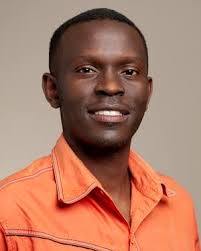
Speaking at a conference call organised by the foundation, Penda Health's Director of Clinical Innovation and Strategic Partnerships Dr Jean Kyula, said the system was designed around the way healthcare workers already work rather than requiring them to adopt a completely new system.
The AI Consult system is embedded in Penda's electronic medical records. It uses a traffic-light system to flag cases for clinicians to review, rather than making decisions independently.
“It was really important that we worked on the workflows that were already there. And so, every medical centre is already digitised. We have electronic medical records across all our 20 centres. And so, we just embedded this AI Consult, which is an AI-powered clinical decision support system, into the workflow that they were using, that they were already used to,” she said.
A green signal indicates that the system has no immediate concern, while yellow prompts a healthcare worker to check something again. A red alert is designed to stop the clinician and require a closer review where the system identifies a potentially harmful issue.
Kyula stressed that the technology is not intended to replace health workers.
“Of course, there are all these discussions of, is AI here to replace healthcare workers? Are we trying to replace them? Absolutely not. At Penda, our healthcare workers are the engine of what we do. They are the driving force,” she said.
“And so, for us, you will always have the clinical judgment remaining with the physicians, remaining with the clinicians in the room because they’re the ones who are seeing the patients. They’re the ones who are there, who are having the conversations.”
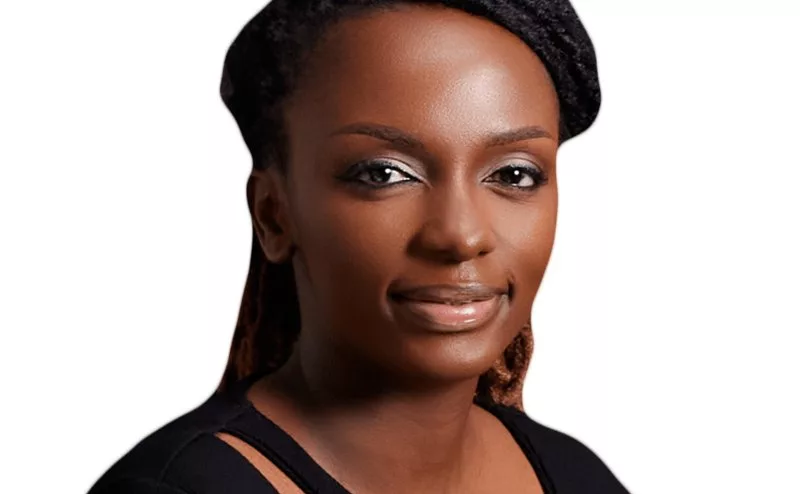 Penda Health's Director of Clinical Innovation and Strategic Partnerships, Dr Jean Kyula.
The foundation's US$1 billion commitment is based on the concern that leaving AI development entirely to market forces could mean that the most advanced tools are designed primarily for people and institutions able to pay the most.
Bill Gates, chair of the Gates Foundation, said the problem resembles the market failure the foundation was created to address.
“The Gates Foundation was created in part to address a basic market failure: the people with the greatest needs often have the least power to shape where innovation and investment go,” Gates writes in the report.
“Much of our work has been about closing that gap. AI presents the same challenge, only at much greater speed. Left to the market alone, the most capable tools will be built first for the people and institutions most able to pay for them—not necessarily for those who could benefit most.”
Gates said AI could nevertheless become a powerful tool for improving people's lives if it is deliberately developed to serve those who stand to benefit most.
“We can harness AI for good. But it won’t happen by accident,” Gates writes.
“It requires a deliberate, specific commitment from government leaders and the companies developing the technology: to measure success not only by what AI can do for the most profitable users but by what it can do for the people who stand the most to gain.”
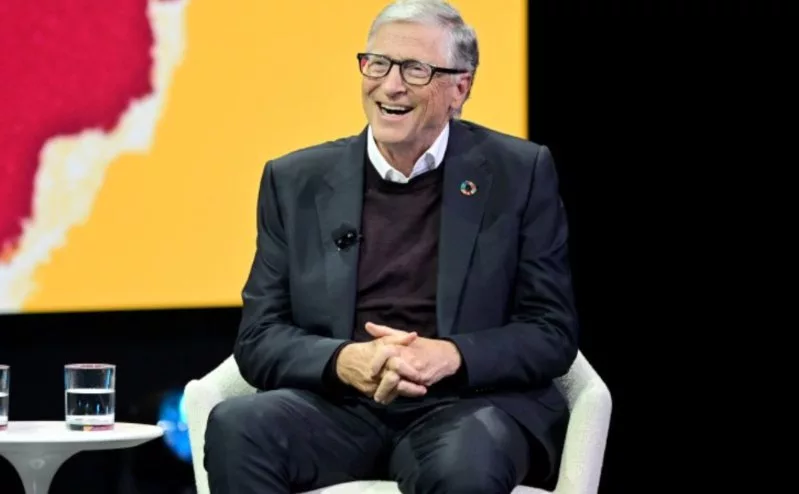 Bill Gates.
The foundation will divide the new funding among four broad areas.
Education will receive 40 per cent, including AI tutoring and teaching tools. Another 40 per cent will support healthcare, including diagnostic and clinical decision support tools, maternal and newborn care and the discovery of drugs and vaccines.
Agriculture will receive 10 per cent, including tools that give smallholder farmers advice based on their soil, weather and crops. The remaining 10 per cent will support the digital foundations needed for equitable AI, including datasets for languages that current AI systems do not adequately understand.
Mark Suzman, Gates Foundation chief executive, said AI could become an important tool for accelerating progress towards the Sustainable Development Goals (SDGs), particularly by helping scale interventions in health, education and agriculture.
He said the technology could help reverse the current stagnation in development progress, but only if it is deliberately applied with the right data, use cases and regulatory oversight.
“We are now living through one of the most transformative technologies, if not the most transformative technology of our lifetime, AI. And there are incredible risks around AI, and Bill Gates has recently written about a number of those, from biosecurity to cybersecurity to psychosocial safety to the impact on the job market. Those are all really important issues, but there are also incredible opportunities,” he said during the global conference call.
“There is still a possibility to achieve tremendous progress, again, at the same rate, if not even faster rates than we have in the first two decades of this century, over the next 20 years, but only if the world really focuses on trying to use AI in a deliberate way to help drive equity for those poorest and most vulnerable and most in need.”
He said the foundation would look for partners with strong local credibility and knowledge when deciding where to put its money.
“It’s no different in AI investments than any of our investments at the Gates Foundation, where we’re always looking for partners who have strong local credibility and knowledge that can draw on the data that they are going to be doing,” Suzman said.
This approach could be relevant to Kenyan companies and organisations developing AI for local use, particularly where they can demonstrate that their products respond to specific local needs.
Suzman said the foundation was not choosing between international technology companies and local players.
“We’re kind of neutral on how and who become the players as long as we’re getting the outcomes. We do have a number of concrete partnerships with a number of the big players already,” he said.
“We’ve had established partnerships with Google, with Microsoft, newer ones with OpenAI and Anthropic, that are very focused on these kinds of use cases in areas like agriculture and health, and to sort of prove cases.”
He said the foundation wanted systems that could work across different platforms and avoid locking users into one technology provider.
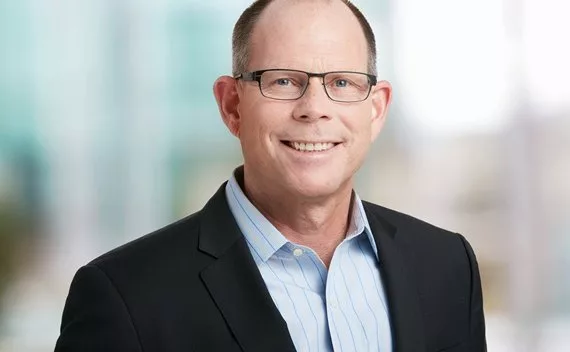 Mark Suzman, the Gates Foundation CEO.
The Goalkeepers report identifies local language as one of the biggest challenges to making AI equitable. More than 90 per cent of the data used to train early large language models came from English-language sources, according to the foundation.
Suzman said AI also needed to be built around local circumstances.
For Kenya, this could include health data, agricultural information, education data and Kenyan languages. The foundation says communities and countries should have a role in deciding how their data is managed and protected.
Suzman said the foundation was interested in AI applications that could eventually reach millions of students, farmers, patients and healthcare workers.
He cited examples from India, including an AI-supported agricultural application providing farmers with weather, soil health, irrigation, government services, markets and pricing information in a local language. He said the model was being used by more than 700,000 farmers in Maharashtra and was being scaled nationally, while similar approaches were being explored in African countries including Ethiopia.
In health, he cited work with Wadhwani AI in India on tuberculosis diagnostics. He said the organisation was developing an AI system that could use a cough recorded on a mobile phone to help triage and identify whether it could be related to tuberculosis, while noting that large datasets were required.
The foundation's report says AI tools should be developed with the expertise of their intended users and that doctors, farmers, teachers and developers need opportunities to learn how to assess and adapt them. It also says affordable access will require action from technology companies, governments and philanthropy.