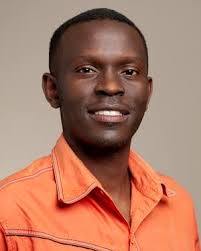
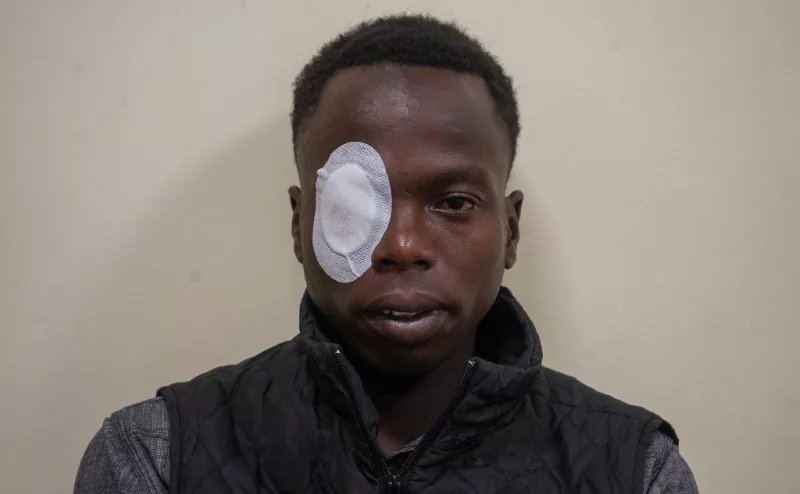
 John Ng'anga after the surgery.
For much of his young life, John Ng'ang'a had known the streets of Nairobi as home. The pavements became his sleeping place, the open air his roof, and each day demanded resilience from a young man with no steady family support to depend on but himself and the kindness of the few people who noticed him.
Life on the streets was never easy. It meant waking up unsure of where the next meal would come from, learning to stay alert through cold nights, and carrying burdens that no young person should have to face alone.
Then, one night last year, John’s difficult life changed in an instant. He and his friends were asleep on the street when, according to him, they were injured during street protests.
“We were hit with sticks. The blows landed on my right eye. What followed was darkness. I couldn’t feel my eye blinking. I was in so much pain,” John recalls.
In the days that followed, John continued to live with pain, fear and uncertainty. Without clear support or the means to seek immediate care, he endured the discomfort while wondering whether he would ever see properly again. For someone already struggling to survive from one day to the next, losing sight added another heavy burden.
Hope came one ordinary day while John was sitting on the streets. He met Lucy Moraa, a social worker involved in street outreach and in connecting children and young people living on the streets with shelters, rehabilitation centers and other support services.
Lucy connected John to Shauri Moyo Rehabilitation Centre, which soon became his new home and the beginning of a different path.
At Shauri Moyo, John met Teacher Tom, who enrolled him in a plumbing and masonry course. For the first time in years, John began to imagine a future beyond the streets: a future with skills, dignity, work and the possibility of standing on his own feet.
But even as a new future was opening before him, his injured eye continued to trouble him. The pain made it hard to concentrate in class, and the fear of losing his sight threatened the progress he had worked so hard to begin.
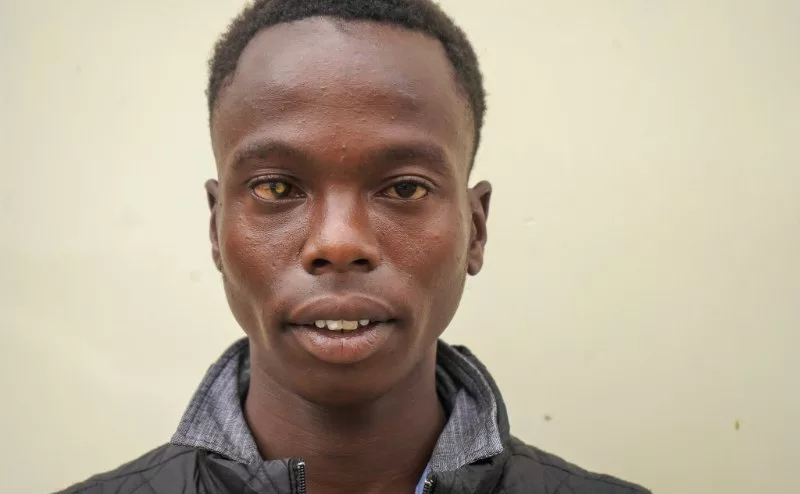 John Ng'ang'a before the surgery.
Lucy shared John’s eye problem with Teacher Tom, and together they began searching for a way to help him access the care he needed.
“A friend eventually searched online and came across The Fred Hollows Foundation, which we learnt was dealing with eye issues,” Lucy said.
With hope and uncertainty in equal measure, Lucy and John made their way to the Foundation’s office in Kilimani, hoping that someone would listen and help them find a solution.
When they arrived, they were informed that the office did not provide eye surgery services directly. However, the guards shared a contact number, which they called. Their enquiry eventually connected them with one of the staff and the Partnership Coordinator, who guided them to City Eye, one of the Foundation’s partners, where John could receive the eye care he urgently needed.
For Lucy, the journey was an unexpected answer to a challenge she had been carrying with concern and determination. She had seen John’s pain and knew that restoring his sight could change the direction of his life.
“To be honest, we didn’t even believe it would be possible to get the surgery done without paying. I just want John to be able to see again. That is what matters the most to me,” said Lucy.
“I am very thankful that The Fred Hollows Foundation is helping him. I am so grateful,” Lucy said as she waited in line with John for his surgery.
For John, the surgery represents far more than a medical procedure. It is the possibility of returning to class without constant pain, of focusing on his plumbing and masonry training, and of rebuilding a future that once felt out of reach. Sight restoration, for him, means dignity, independence and the chance to dream again.