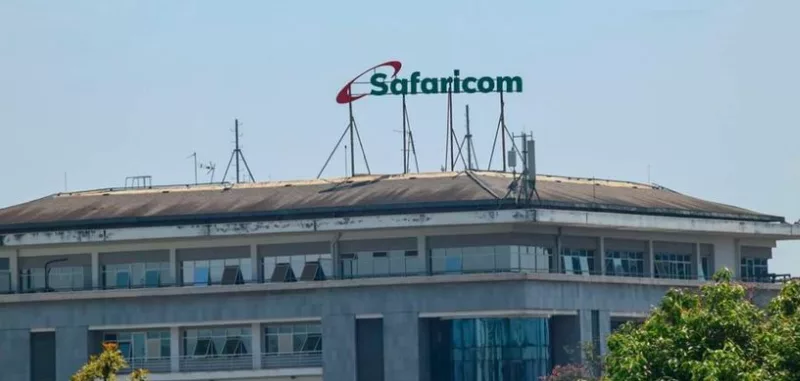
 Safaricom HQ./FILE
The court has nullified the sale of the government’s 15 per cent stake in Safaricom PLC, terming it unconstitutional.
The three-judge bench ordered the shares to be restored to State ownership, ruling that the transaction failed to undertake meaningful public participation and for concealing or misrepresenting material information concerning the nature and effects of the transaction.
The court found that the transaction was undertaken in violation of the Constitution and various laws, faulting the government for failing to undertake meaningful public participation and for concealing or misrepresenting material information concerning the nature and effects of the transaction.
“Based on our analysis, findings and holdings in respect of the various issues identified for determination, we are satisfied that the petitioners have proved on a balance of probabilities that the divestiture in question was undertaken and procured in contravention of the Constitution and the law,” the court said.
“It was, therefore, invalid, null and void.”
The bench relied on Article 2 of the Constitution, which provides that any act or omission in contravention of the Constitution is invalid. The court subsequently issued a series of orders quashing decisions and approvals connected to the divestiture.
Among the orders was a declaration that the decision leading to the partial divestiture of the 15 per cent government stake was a public policy decision subject to the Constitution, particularly Articles 10 and 201.
The bench found that the divestiture had been “formulated, undertaken and approved by Cabinet and the National Assembly without any reasonable meaningful qualitative and quantitative public participation” as required under the Constitution.
The judges further found that the transaction was marred by “obscurities, misrepresentations and concealment of material information” concerning its nature and effects.
According to the court, the transaction was presented to Cabinet and Parliament as a share sale when, in its view, it amounted to a merger, acquisition and takeover that gave effective control to a majority foreign shareholder through a single entity holding 55 per cent.
The court held that this violated the Capital Markets Act, the Capital Markets (Takeovers and Mergers) Regulations, 2002, the Competition Act and constitutional principles on integrity, transparency, openness and accountability in financial matters.
The bench also declared that the divestiture violated constitutional principles of intergenerational and intragenerational equity and sustainable development.
It further found that the transactional advisory services involving KCB Investment Bank Limited had been procured in contravention of Article 227 of the Constitution and provisions of the Public Procurement and Asset Disposal Act.
The court consequently quashed the decision contained in Session Paper Number Three of 2025, which had been approved by the National Assembly in relation to the divestiture.
It also quashed any merger, acquisition or takeover of Safaricom Plc arising from the transaction, together with approvals, exemptions or no-objection decisions issued in relation to the divestiture.
Most significantly, the court ordered the 15 per cent shares to be returned to the government.
“A declaration is hereby made that the 15 per cent shares subject of the partial divestiture having been transferred in contravention of the Constitution and the law are hereby restored to the ownership of the Government of Kenya on behalf of the people of Kenya,” the court ruled.
The judges noted that the shares could be restored despite arguments that reversing the transaction would be irreversible.
The court cited a 2026 Court of Appeal decision which held that shares in Safaricom would remain capable of being restored to the relevant party, with appropriate refunds made if ordered.
The court, however, directed each party to bear its own costs, noting that the proceedings were public litigation.