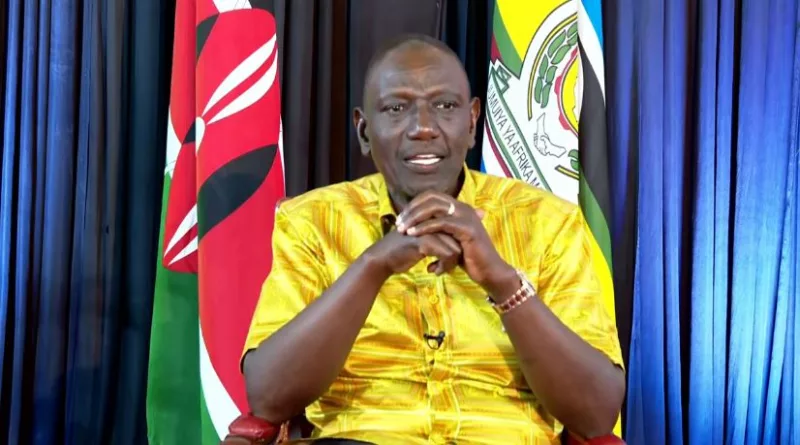
 President WIlliam Ruto speaks during a media engagement at Kisumu State Lodge on September 14, 2026./SCREENGRAB
President William Ruto has invited private investors to set up fish processing facilities in the Lake Victoria region.
Ruto said the government will create incentives while organising fisherfolk into cooperatives to guarantee a steady supply of fish.
Ruto said the government was deliberately building the fish value chain by supporting fisherfolk with grants and creating a market for their produce through private-sector investment in processing.
Speaking during a media engagement at Kisumu State Lodge on Monday, Ruto said the government would not venture directly into fish processing, arguing that private investors were better placed to run such businesses efficiently and cost-effectively.
“What we will not do is try and do it as government, because trying to do it as government is a complicated exercise. We are better off creating incentives for private sector people,” he said.
Ruto said investors would be given the necessary incentives and latitude to establish processing facilities, while the government would organise fisherfolk into Beach Management Units (BMUs) and cooperatives.
He said the arrangement would ensure processing plants have adequate fish supplies, making investments in the sector commercially viable.
“We organise so that citizens, fisher folk, can be organised into BMUs and cooperatives so that even as you invest as an investor in a processing facility, you will have enough fish to process, and therefore it makes economic sense,” he said.
At the production end, Ruto said the government was providing organised fisherfolk with fish cages, fingerlings and feed as grants rather than loans.
He said small groups of about 20 to 30 people could generate between Sh7 million and Sh8 million from fish farming within six months if they managed their enterprises properly.
“The first, the fish cage, when we organise the BMUs into a SACCO, once they are organised, we give them the cages for free. We give them the fingerlings, and then we give them the feed for the first stock,” he said.
Ruto said beneficiaries would be expected to reinvest proceeds from their first harvest to expand production rather than remain dependent on government support.
“When they sell, now it is for them to make sure that they recycle that money,” he said.
He said successful groups could use their earnings to acquire more cages and increase production, creating a cycle of investment that would eventually sustain the enterprises.
“If they turn it around, they cannot only farm on the cages we have given them, but they have actually the opportunity to increase the number of cages, and that is exactly what is happening,” Ruto said.
The President said the government would continue supporting trained fisherfolk who had been organised into cooperatives through grants and start-up inputs.
He said the combination of organised fish producers and private investment in processing would help develop the fish value chain and ensure more value from Lake Victoria’s resources is retained locally.
Ruto said the government’s approach was to create an ecosystem in which fisherfolk could increase production while investors had a reliable supply of raw materials for processing.
“That is the trajectory we are taking,” he said.