Key education projects remain incomplete at a time the new 2-6-3-3 education system requires substantial investment in infrastructure, equipment and human capital between 2026 and 2028, the Controller of Budget has warned.
The National Government Budget Implementation Review Report for FY2025-26 says that while the new curriculum will require these substantial resources over the next three years, some of the critical projects have delayed for decades.
This includes the need for additional and appropriate facilities as learners progress through the new education structure, as well as investment in teacher preparation and equipment.
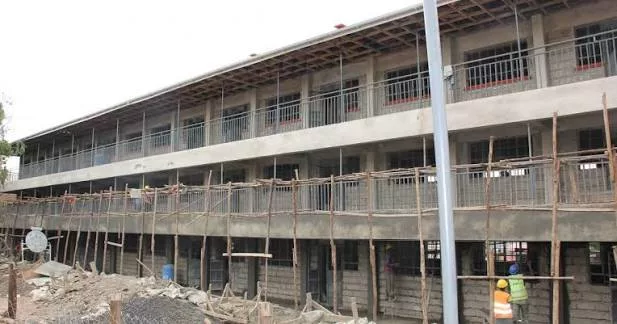
CoB Margaret Nyakang’o says the Sh12.2 billion Primary School Infrastructure Improvement Project, launched in July 2010, was only 30 per cent complete.
According to Vision 2030, the project entails construction and rehabilitation of 46,000 classrooms and 92,000 toilets at ECDE level. It also involves the rehabilitation of 3,000 classrooms in 1,500 primary schools, construction of 60 new classrooms in special needs schools and 10 new classrooms in existing rescue centres.
Additionally, the Sh59.56 billion Secondary Infrastructure Improvement Project, which started in July 2012, was only 34 per cent complete by June 2026.
The programme aimed to improve infrastructure in public secondary schools, including classrooms, WASH facilities, desks and other school infrastructure.
The slowest project was the Sh2.5 billion construction of 10 new Teachers Training Colleges, which had reached only eight per cent completion despite having started in January 2011.
The implementation of the new education structure is being undertaken with several major school and teacher-training infrastructure programmes recording low levels of completion.
The infrastructure shortage is already affecting the transition at both junior and senior secondary level.
The Senate in July raised concerns over critical shortages of laboratories, libraries, ICT hubs and science equipment in Junior Secondary Schools, saying the gaps are hindering implementation of the curriculum.
At Senior School level, the challenge is becoming more acute as learners enter specialised pathways requiring laboratories and workshops.
The Ministry of Education's 2026-27 plans target the construction of 350 science laboratories in public junior schools, 600 laboratories and 326 workshops in senior schools, underscoring the scale of the infrastructure requirements.
The CoB report says the slow implementation of the projects was largely linked to funding constraints.
“The general delays in project implementation were attributed to budget constraints,” the CoB says.
Other projects highlighted in the report also show significant implementation gaps.
The Sh5 billion ICT Integration in Secondary Schools project, which began in August 2009, was 67 per cent complete by June 2026.
The Sh1.5 billion Assembly of Assistive Devices at the Kenya Institute of Special Education project was only 29 per cent complete, while the construction of the Sh1.59 billion Kibabii Diploma Teachers Training College, which started in August 2012, had reached 81 per cent. The Sh500 million Lugari Diploma Teachers Training College stood at 64 per cent.
Meanwhile, the government is allocating substantial resources to education.
The sector received Sh703.07 billion in the original FY2025-26 budget, which was subsequently increased to Sh757.5 billion in the Supplementary Budget II.
However, only Sh31.02 billion, equivalent to four per cent of the revised allocation, was earmarked for development expenditure. Recurrent spending accounted for Sh726.48 billion, or 96 per cent of the sector allocation.
Actual expenditure reached Sh745.44 billion, representing 98 per cent of the revised gross estimates.
But the development budget recorded weaker absorption than recurrent spending, Nyakang’o found.
Development expenditure amounted to Sh26.75 billion, an absorption rate of 85 per cent, compared with 99 per cent for recurrent expenditure.
The report also records significant gaps in enrolment. Public primary school enrolment was 1.94 million learners below the government's target, the largest shortfall recorded among the basic education indicators.
Junior Secondary School enrolment was also 599,580 learners below target.
The enrolment figures add pressure to the infrastructure challenge as the new education system is rolled out.
Teacher training is another area where infrastructure remains important. The slow progress of the 10 Teachers Training Colleges project means that a programme designed to expand training capacity has remained largely incomplete more than 15 years after it began.