According to the National Government Budget Implementation Review Report for FY2025-26, implementation of purchase, construction, repair and renovation of embassies, chancery buildings, government-owned properties and ambassadors’ residences remain uneven.
Project status ranges from fully completed to barely a quarter complete across Africa, Asia, Europe and North America.
CoB Margaret Nyakang’o found that the State Department for Foreign Affairs had 20 property projects in the programme, with a combined estimated value of Sh7.28 billion, based on the individual project estimates in the report.
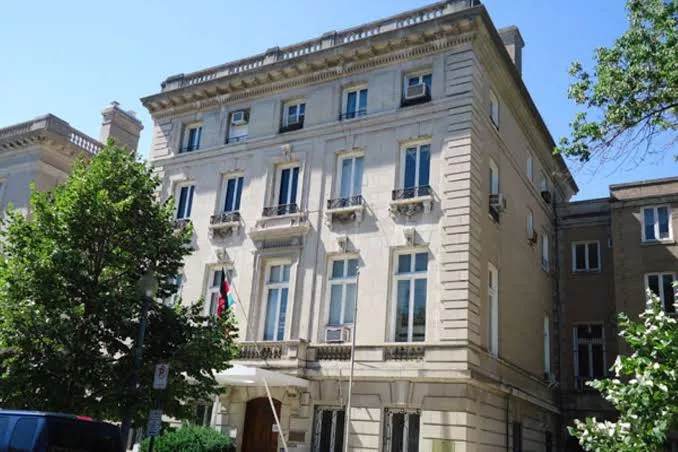
The largest is the purchase of Kenya’s chancery in London, valued at Sh2.67 billion. The project was reported as 100 per cent complete, while renovation of government properties in Washington DC, valued at Sh1 billion, was also completed.
But several other projects have lagged significantly. The Sh600 million renovation of government properties in Kinshasa was only 25 per cent complete by June 2026, while the similarly valued project in Lusaka had also reached just 25 per cent.
In neighbouring Tanzania, a Sh200 million project involving renovation of government properties and fencing of land allocated in Dodoma was only 23 per cent complete. This is despite having started in November 2016 and having an original completion date of June 2025.
The Sh500 million renovation programme in Addis Ababa stood at 43 per cent.
Nyakang’o specifically identified Lusaka, Kinshasa, Dar es Salaam/Dodoma and Addis Ababa as projects that were behind schedule.
The report also exposes an apparent cost-control problem in Abuja, where chancery renovations had an estimated value of Sh15 million but cumulative expenditure reached Sh20 million — equivalent to 133 per cent of the original project value.
The CoB attributed the additional expenditure to a variation in scope after a leaking roof was discovered and required rehabilitation.
The problems are, however, not new as they have persistently been captured in previous CoB reports and Auditor General findings.
Auditor General Nancy Gathungu's 2024-25 audit found significant weaknesses in the management of the diplomatic properties.
In New York, for example, the government owns five properties, but the Auditor General said the maintenance allocation was insufficient.
Although the chancery had undergone major renovations costing $2.49 million (about Sh321.6 million) in 2022-23, the mission had not received funding to implement recommendations on furnishing the renovated facility.
The audit also found that the Kenya House in New York required urgent work on the garage, gutters, drainage pipes, master bathroom and boiler area.
The house, which had reportedly been unoccupied for 13 years, had blocked roof drainage, causing water to leak into ceilings and floors, leaving parts of the building damp. Mechanical and firefighting systems were faulty.
The audit also found that while missions have cited inadequate funding for maintenance, substantial development funds were unutilised or underutilised.
The latest Auditor General report flagged Sh2.65 billion in unutilised development funds held by Kenyan missions abroad, up from Sh1.8 billion in the previous audit. The money had accumulated over several years because missions failed to surrender unused balances at the end of financial years.
Procurement delays, weak project planning, slow implementation and difficulties managing projects under different legal and regulatory systems in host countries have been cited as having contributed to the delays.
The pressure on the conditions of the diplomatic properties come at a time Kenya is simultaneously expanding its overseas diplomatic footprint.
In 2024, the Foreign Affairs ministry announced the opening of missions in Abidjan, Côte d’Ivoire and Rabat, Morocco. New consulates were opened in Jeddah, Saudi Arabia, Guangzhou, China and Port-au-Prince, Haiti.
Kenya subsequently opened its first resident High Commission in Kingston, Jamaica, in July 2026, extending its diplomatic presence into the Caribbean.
The government has also approved the establishment of new embassies in Copenhagen, Denmark, Hanoi, Vietnam and the Vatican, adding to the future demands on the Foreign Service's property and operational budgets.
The Foreign Affairs ministry currently oversees 71 fully fledged diplomatic missions abroad, four consulates-general, one liaison office and 30 honorary consuls.