THE United States has pledged to support Kenya develop its minerals sector through local processing, skills transfer and community investment.
This, as the Kenyan government pushes for a shift from raw mineral exports and demanding value addition by investors.
The affirmation comes amidst a fresh confrontation with Tata Chemicals over its long-running soda ash operations at Lake Magadi in Kajiado County.
The firm has been ordered to end its operations over allegations of extracting Kenya’s resources and exporting them without creating enough local industries, jobs and investment.
US Assistant Secretary of State for African Affairs, Frank Garcia, said American companies seeking opportunities in Kenya’s emerging mining industry would not simply extract minerals and ship them overseas, but would instead support value addition within the country.
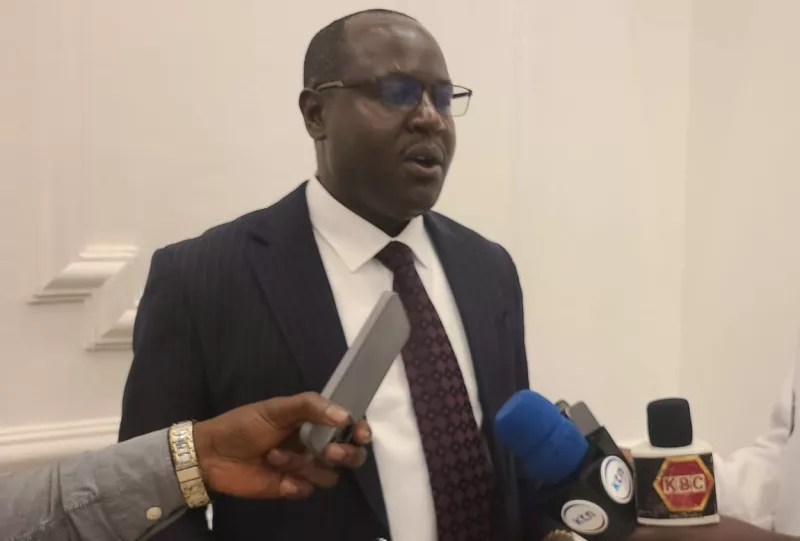
Speaking at the fifth American Chamber of Commerce Kenya Business Summit in Nairobi, Garcia said the US wanted to become a long-term strategic partner as Kenya develops its mining sector.
“American companies are not here to extract and ship. That is not partnership. That is extraction,” Garcia said.
The US has entered into a preliminary critical minerals agreement with Kenya to access and develop the valuable rare earth and niobium deposits at Mrima Hill in Kwale county, estimated to be worth over $62 billion (Sh9.7 trillion).
He said US firms would invest in communities where they operate, train Kenyan workers and transfer skills, creating careers rather than simply jobs.
Garcia's remarks come as Kenya steps up efforts to explore and develop critical minerals, including rare earth elements, titanium, graphite, lithium and niobium, which are increasingly important to global supply chains, clean energy and advanced technologies.
Kenya has positioned critical minerals as one of the priority areas for attracting US investment alongside technology, manufacturing, energy, agriculture and infrastructure.
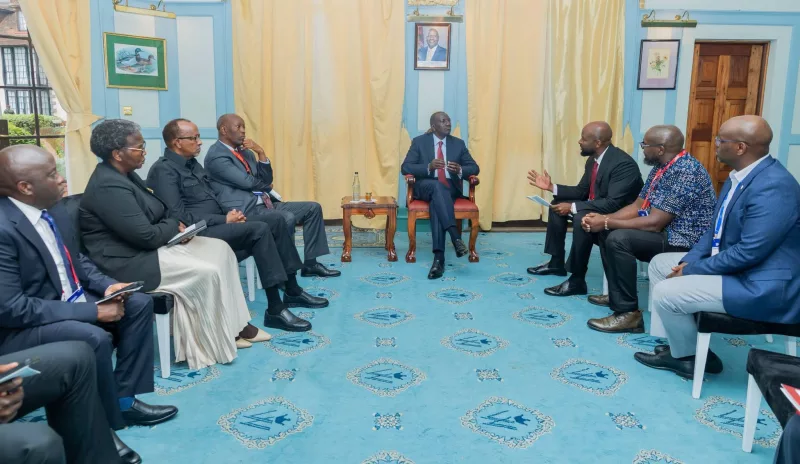
President William Ruto said Kenya was looking for a new model of economic engagement based on sovereign equality and mutual benefit, rejecting relationships that are exploitative or extractive.
He said Kenya wanted partners willing to connect the country’s natural resources and human capital with investment, technology and skills.
“We do not want relationships that extract from Africa or that are exploitative or extractive,” Ruto said.
The President said any future engagement would be open, transparent, competitive and mutually beneficial to investors, communities and the Kenyan people.
The push for local value addition could give Kenya a greater share of the economic benefits from its mineral resources by creating processing industries, jobs and new supply chains.
Garcia said the US wanted processing to take place in Kenya rather than thousands of kilometres away, arguing that local processing would enable the country to retain more value and create jobs.
“Processed locally, you keep the value here. You create Kenyan jobs,” he said.
The US official also welcomed Kenya’s planned competitive process for the development of mineral resources at Mrima Hill, describing the country’s approach as an opportunity to build a transparent mining industry capable of attracting legitimate investors.
Ruto said Kenya was determined to use its resources to support broader industrialisation rather than simply export raw materials.
“Our policy is not simply extract and export. We want investment in processing and downstream manufacturing that creates value for investors while enabling Kenya to retain value, develop skills and create better jobs,” he said.
The renewed focus on mining comes as global competition intensifies for critical minerals needed in electric vehicles, batteries, renewable energy systems, electronics and other strategic industries.
Garcia said critical minerals were a top priority for the administration of US President Donald Trump and Secretary of State Marco Rubio, adding that the US was ready to work with Kenya as it seeks to become a regional leader in the sector.
The mining partnership is part of a broader push to deepen commercial ties between the two countries. Garcia said the US State Department had facilitated 50 transactions worth $28.2 billion across sub-Saharan Africa since the Trump administration came to power.
Ruto said American companies had committed more than $600 million to new projects in Kenya since the countries’ previous investment discussions.
The President said Kenya's broader investment proposition was based on access to regional and continental markets, including the East African Community, COMESA and the African Continental Free Trade Area.
For Kenya, the challenge will be ensuring that promised investment translates into actual processing plants, technology transfer, skilled employment and stronger local supply chains.