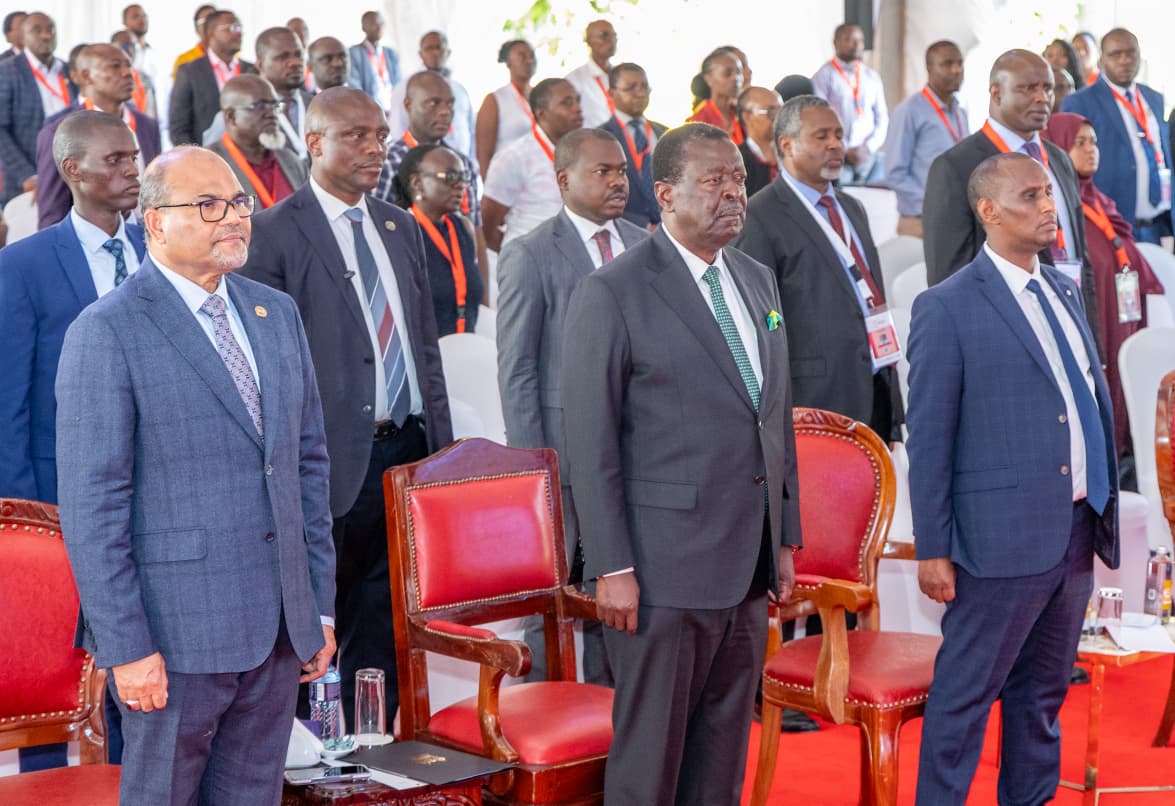
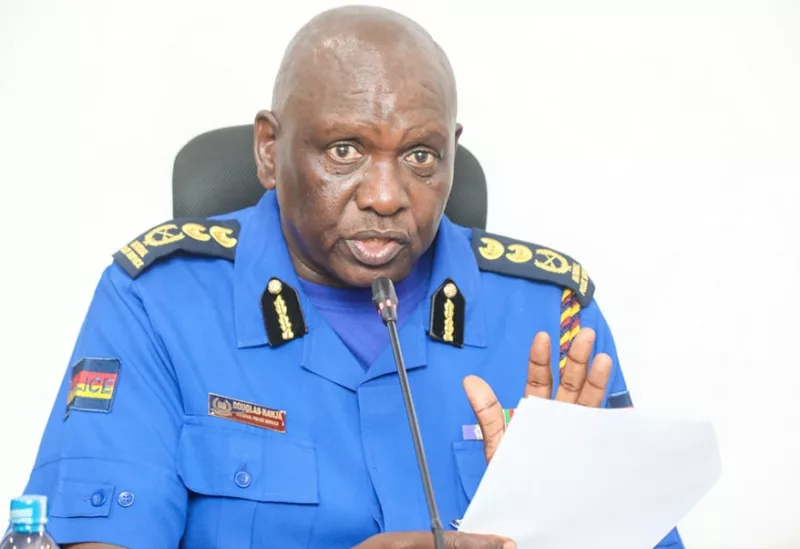
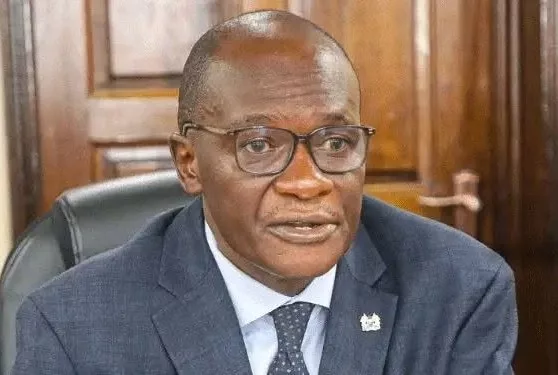
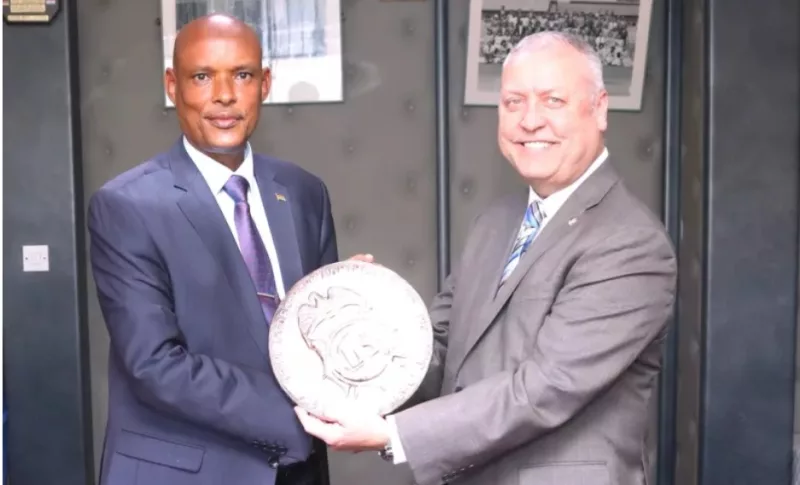
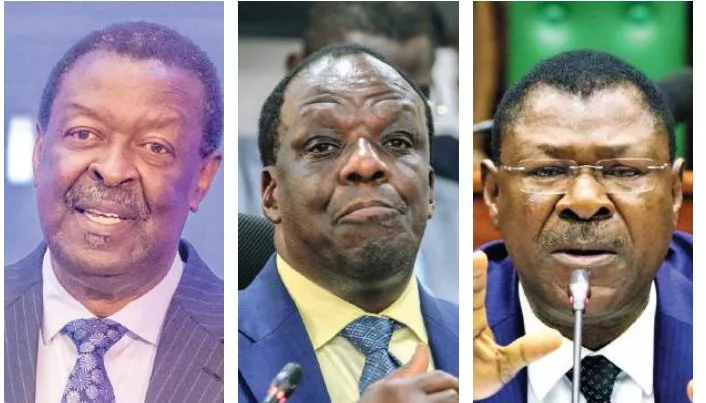
 Prime Cabinet Secretary Musalia Mudavadi, Cooperative CS Wycliffe Oparanya and National Assembly Speaker Moses Wetang’ula/FILE
President William Ruto’s 2027 running mate choice is increasingly exposing divisions among his allies in Western, with rival camps pushing for different leaders to occupy the second-highest office.
The competing demands have laid bare a growing contest among Ruto’s Western allies, with Cooperative CS Wycliffe Oparanya and National Assembly Speaker Moses Wetang’ula emerging as potential beneficiaries should the President consider changing his running mate.
Prime Cabinet Secretary Musalia Mudavadi is also being seen as a potential candidate.
A section of MPs allied to Oparanya on Monday demanded that Ruto pick the former Kakamega governor as his deputy in 2027.
The MPs made the demand after a retreat in Kisumu, arguing that Western deserved the Deputy President’s position as the region prepares to rally behind Ruto’s re-election bid.
The 23 MPs, drawn from different political parties, said they had unanimously agreed to work as one unit to campaign for Ruto while advancing the interests of their region.
“As the Western community, we demand the seat of the Deputy President in the 2027 general elections,” Budalang'i MP Raphael Wanjala said. He read the resolutions on behalf of his colleagues.
Sirisia MP John Waluke said the demand was aimed at strengthening Western's bargaining power and positioning the region for future leadership.
“We are preparing as a region to succeed President William Ruto after 2032,” Waluke said.
Waluke also chairs the Western Parliamentary Caucus.
The MPs also demanded that the Parliamentary Service Commission position currently held by Rachel Ameso be retained by the Western region.
But the call has revived an earlier push by another faction allied to Wetang’ula, which also demanded that the region be handed the position, with the Speaker tipped as its preferred candidate.
In June, another group of Western leaders led by Kakamega Governor Fernandes Barasa said they had settled on Wetang'ula as the region's preferred deputy president pick for 2027. The group is backed by 15 MPs.
Speaking in Lurambi constituency, Barasa said leaders from the region had resolved to fully back Ruto's re-election while positioning Wetang'ula for the country's top seat in the next electoral cycle.
"As the people of Western, we have identified our own leader, and that leader is Moses Masika Wetang'ula. He is equal to the task. After we re-elect President William Ruto in 2027, we expect the presidency to come to Western in 2032," Barasa said on June 27.
Lurambi MP Titus Khamala said he had shifted his political support from Prime Cabinet Secretary Musalia Mudavadi to Wetang'ula.
"I devoted my energy to supporting Musalia Mudavadi's presidential bid, but that chapter is behind us. I now believe Moses Wetang'ula is the leader capable of delivering the presidency for our region," Khamala said.
Mudavadi, however, has taken a different position, arguing that Western should not make the Deputy President’s post a condition for supporting Ruto's reelection.
The Foreign Affairs CS has instead maintained that the region should focus on delivering votes for Ruto while positioning itself for greater political opportunities in the future.
The debate comes as Deputy President Kithure Kindiki and his allies insist that the position is not up for negotiation, dismissing growing speculation about Ruto’s choice of running mate.
Addressing United Democratic Alliance (UDA) grassroots delegates in Tharaka Nithi on Friday last week, Kindiki firmly declared that he will defend his position and cannot be pushed out of office
He dismissed rumours of an early ouster, drawing parallels to how Ruto survived political onslaughts while he served as deputy president
"You think someone can just remove me from this seat and chase me away like a fool? It is not possible. I will defend myself."
INSTANT ANALYSIS
Ruto’s 2027 succession politics are already straining his Western Kenya coalition, with Oparanya, Wetang’ula and Mudavadi representing competing strategies for influence. The region’s competing demands expose deeper questions of trust, bargaining power and post-Ruto succession. Meanwhile, Kindiki’s defiance signals that any attempt to replace him could trigger another major coalition battle.