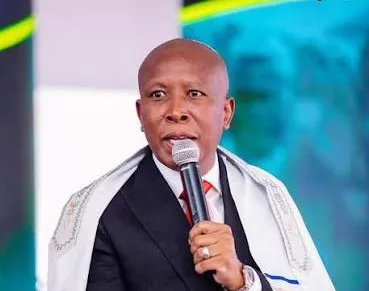
 EFF leader Julius Malema. /EFF
President William Ruto’s directive targeting foreign traders in the informal and micro-retail sectors continues to elicit mixed reactions, even as the government’s 90-day amnesty on immediate shutdowns has helped calm anxiety and panic among affected traders.
The directive, which seeks to bar foreign nationals from engaging in small-scale businesses in a bid to protect Kenyan traders from direct competition, was welcomed by some traders and hawkers in busy trading hubs such as Gikomba, Muthurwa and Marikiti.
Some local traders have accused foreign nationals of undercutting them in the micro-retail sector, arguing that their growing presence has made it harder for Kenyans to compete.
The initial call for immediate shutdowns, however, triggered panic among some foreign nationals, particularly Burundians.
Hundreds flocked to their embassy carrying suitcases as they sought travel documents in a rushed attempt to beat the September 7 deadline to leave the country.
Concerns that the directive could fuel xenophobic attacks prompted the government to urge Kenyans against harassment of foreign nationals.
The government said affected traders should use the 90-day grace period to regularise their permits, documentation and business licences.
Amid the unfolding debate, South African Economic Freedom Fighters leader Julius Malema has challenged the argument that removing foreign traders automatically creates jobs for locals.
Malema cited South Africa’s experience, where the expulsion of foreign business owners has at times been justified as a measure to protect jobs for citizens.
He dismissed the argument as a myth, saying the departure of foreign nationals did not necessarily translate into jobs for locals.
“Because Ghanians have gone, 300 of them, how many 300 jobs were created after the Ghanians have left? So, it's just a myth, a lie which they are using to further divide us to perpetuate colonial divisions that were created in the past,” he said in a recent interview.
Malema urged African countries to pursue dialogue in resolving disputes involving foreign nationals, saying the continent should regard itself as a community of brothers and sisters.
His remarks came as the debate in Kenya widened beyond the question of foreign traders and jobs to include concerns over regional relations and the treatment of migrants.
Wiper leader Kalonzo Musyoka called for alternative ways of protecting Kenyan businesses, while cautioning against measures that could deepen divisions.
“There are better, more deliberate ways to protect Kenyan small businesses and create an environment where entrepreneurs, Kenyan and foreign alike, can thrive within the law,” he said.
Kalonzo said diplomacy was necessary, warning that its absence could deepen divisions between communities, regions and nations while destabilising economic activity.
He also argued that the presence of foreign traders was not the only challenge facing Kenyan small businesses, pointing to an unpredictable business environment and taxation policies as other factors affecting entrepreneurs.
“We must also insist on full transparency in how affected foreign nationals are processed going forward, including any documentation or status changes issued to them.”
Kalonzo further warned that the documentation exercise should not be exploited for purposes unrelated to trade or border management.
The debate has also spilled onto social media, where some Kenyans have rejected the argument that foreign nationals operating small retail shops, kiosks and hawking businesses are responsible for unemployment among locals.
One social-media user, for instance, questioned whether the removal of a foreign trader necessarily created an equivalent opportunity for a Kenyan, using the example of a small-scale trader selling coffee and mandazi.
The contrasting views highlight the complexity of the debate over foreign participation in Kenya’s informal economy, with the government seeking to protect local entrepreneurs while also facing calls to ensure that enforcement does not fuel hostility towards foreign nationals.