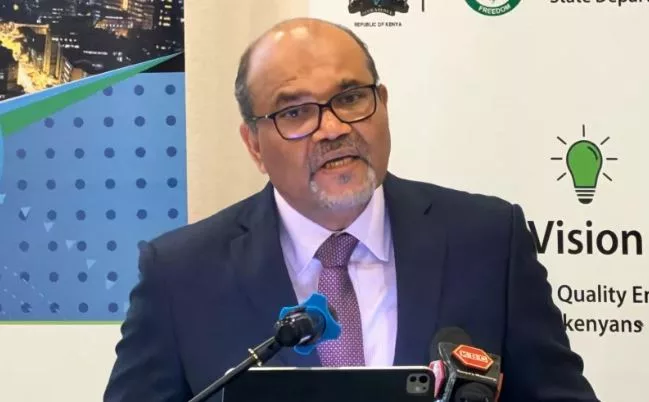
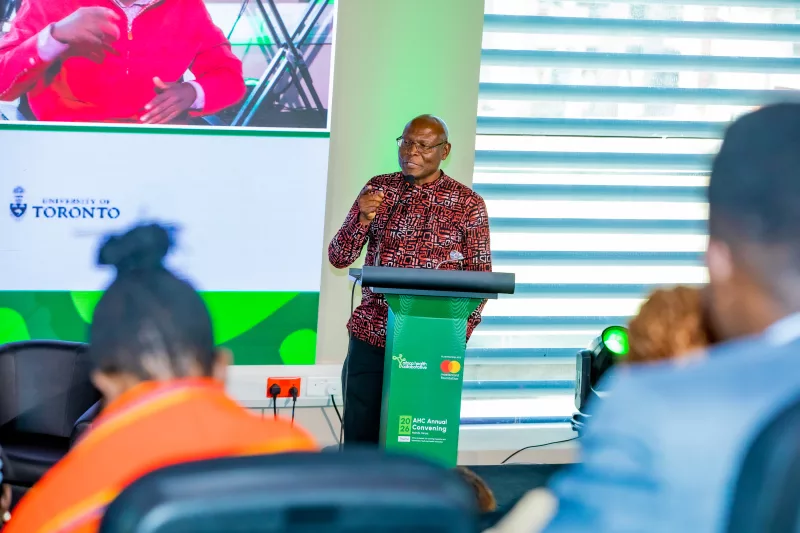
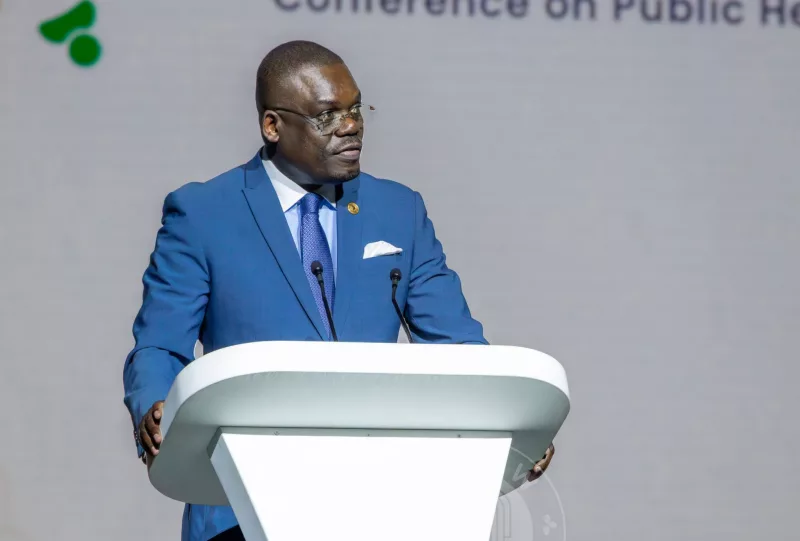
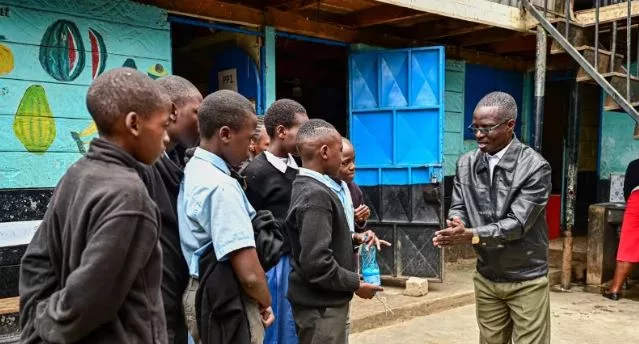
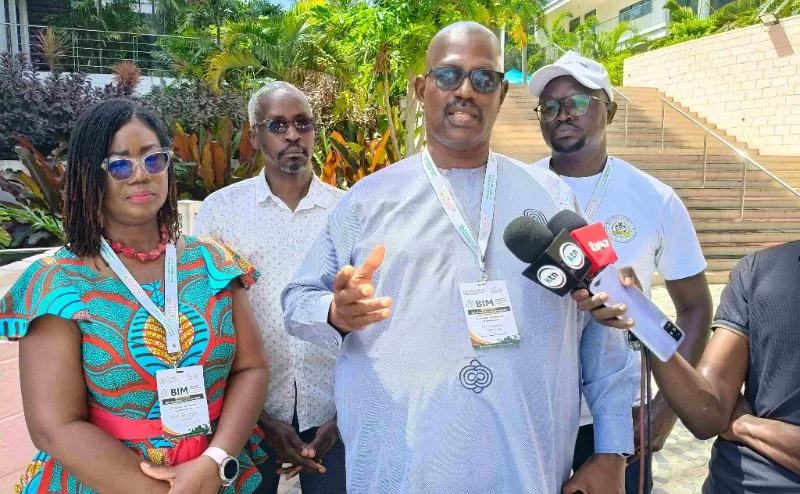
 Ghana’s Bridget Anim, Kenya’s Wycliffe Matinu, Sierra Leone’s Harold Thomas and Kenya’s Joseph Lenai in Mombasa on Friday / BRIAN OTIENO
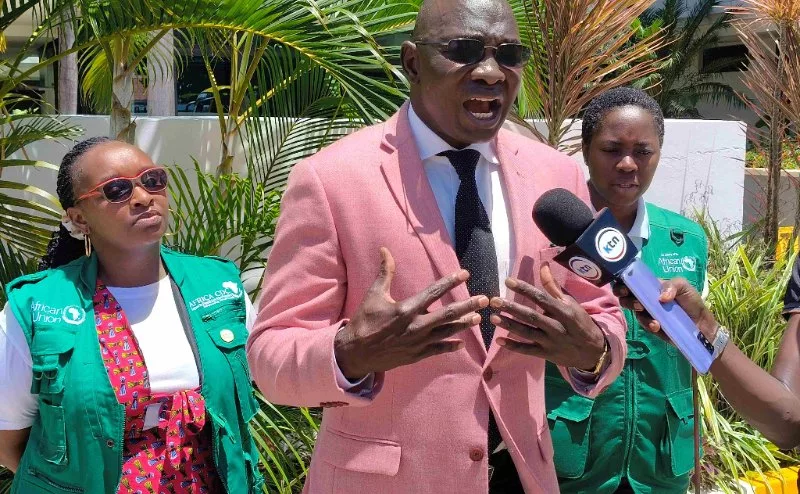 Lul Riek, the senior regional representative and special adviser to the Africa CDC director general Jean Kaseya, in Mombasa on Friday / BRIAN OTIENO
On June 19, a Bible education mission for four preachers in the Soweto area of Nyali sub-county in Mombasa county almost turned tragic.
The four were bizarrely accused of using magic to cause the private parts of two men in the area to disappear.
An angry crowd quickly formed baying for the four preachers’ blood.
It took a reinforced contingent of police officers from at least five different police stations to whisk the four to safety.
The matter caused quite a stir on social media, and it soon caught on, spreading to different parts of the Coast region, including Kilifi and Kwale counties.
A total of five people lost their lives to such false rumours in Mombasa, Kilifi and Kwale counties, according to authorities.
According to the BBC Global Disinformation Unit, more than 80 people were killed between October 2025 and July this year across six African countries following the false accusations of ‘genital theft’.
“All the killings were linked to rumours that a simple tap on the shoulder can cause a man’s genitals to shrink or disappear. They are being fuelled by widespread misinformation on social media,” the BBC Global Disinformation Unit
This is part of what the Africa Centre for Disease Control and Prevention (Africa CDC) is trying to address through the Behavioural Intelligence and Infodemic Management (BIIM).
BIIM is a public health framework and digital tool used by countries to track, analyse, and respond to community perceptions, rumours, and misinformation during health emergencies.
It is a component of health security.
Speaking after a week-long Continental BIIM Harmonisation Workshop in Mombasa, Joseph Lenai, from the office of the Public Health PS Mary Muthoni, said Africa is trying to come up with an infrastructure, software and an architectural model which will handle matters of BIIM in a way that will help Africa achieve the long-awaited Universal Health Coverage.
The workshop brought together health stakeholders from six different African nations, including Kenya, Mauritania, Ghana, Sierra Leone, Zimbabwe and Burundi.
“We are coming up with a system where we can be able to gather information of the signals which can be in various forms, maybe audio, visual or written, then subject it to a system where we can be able to determine how far it is from the truth,” Lenai, who is the BIIM focal person for Kenya, said.
BIIM will then be able to help the health professionals and other authorities address the matter as fast as possible to avert loss of lives.
Lenai, however, said infodemics are very many, but they are at the moment trying to focus mainly on disease outbreaks, like Ebola, and health security.
“But ultimately, what we have agreed, all this needs to be pinned together. Whether it is organs missing or something else, with time, that entire infrastructure in the health ecosystem needs to come together,” Lenai said.
He said public trust is the main challenge that needs to be addressed.
He said once the health sector gains public trust, all the other issues will align themselves for a better and healthier nation and continent.
Health ministry’s risk communication and community engagement focal person Wycliffe Matinu said rumours have become a major problem in terms of disease control.
“Diseases are not really killing us currently as much as we can see. What kills us is know-how, the rumour, the information which goes out of our phone through social media. It is the major undoing,” Matinu said.
He noted that member states across the continent have various ways of gathering information from the community level all the way to the highest level.
“But now they are in a disintegrated manner, and so we came here together to work on a system which fits all of us and we can consume so that even my grandmother in the village can understand and possibly ask questions,” Matinu said.
He said the infodemics about the Ebola isolation centre in Laikipia County would have been handled better had there been BIIM in the country.
Lul Riek, the senior regional representative and special adviser to the Africa CDC director general Jean Kaseya, said strengthening the health security agenda for Africa is key for the continent’s future.
He noted that without institutionalising the pandemic preparedness and response, the continent’s health system will remain incomplete.
“And the health systems need community. We can’t leave the community behind in responding to outbreaks,” Riek said.
He said using the available technology to advance the primary healthcare system and digitalisation is non-negotiable.
“We cannot have a health system for the African continent unless Africa has the ability to manufacture its own vaccine, therapeutics, and medical supplies. That’s what needs to be changed,” Riek said.
The framework, he said, needs to create an enabling environment for communities for them to be listened to and be understood.
“They (communities) need also to understand their unique role in the preparedness and response to outbreaks,” Riek said.
The information gathered, he said, needs to be transformed into decision-making so that outbreaks like the Ebola in DRC and Uganda are quickly and effectively dealt with.
Bridget Anim, the deputy director in charge of health communication in the Ghana Health Service’s health promotion division, said they mostly missed out on the community’s concerns during the Covid-19 outbreak.
This is despite them having been handling health infodemics fairly well before the outbreak.
“The insights from the community were something that we were missing out on – what their emotions were – so that proactively we are able to address their concerns and pick the signals from the community before they become real challenges,” Anim said.
She said BIIM will help advance the African continent’s agenda in terms of funding.
Health promotion, communication and community engagement adviser at the national public health agency in Sierra Leone, Harold Thomas, said his country is one of the first countries that have actually implemented BIIM.
In West Africa, he said, five countries are earmarked for the rollout of BIIM, with countries like Sierra Leone, The Gambia, and Ghana, having already implemented the system, while Cape Verde and Ivory Coast are waiting to implement it shortly.
“Each country has its own BIIM system, but all these systems should be interoperable, meaning they should work together, and they should not overshadow the prominence of each country,” Thomas said.
He said the one health network, comprising human health, animal health, and environmental health, should be embraced.
INSTANT ANALYSIS:
The Africa CDC is a public health agency of the AU to support health initiatives of member states and strengthen the capacity of their health institutions to deal with disease threats. It is headquartered in Addis Ababa, Ethiopia.