The Kenya Revenue Authority (KRA) has defended a new documentation requirement for importers, insisting that it is implementing a law enacted by Parliament.
The tax collector insists that it cannot simply suspend the measure in response to complaints from traders and logistics operators.
The response comes as freight forwarders, clearing agents and motor vehicle dealers raise concerns over slower and more expensive cargo clearance.
Importers argue that additional compliance requirements are adding pressure to an already costly import process.
At the centre of the latest dispute is a requirement that took effect on September 1 under the Finance Act 2026.
Importers are now required to obtain and retain an export declaration, export entry, customs export certificate or equivalent document issued in the country of export.
The document must contain details such as the exporter, importer, description and value of the goods, tariff classification and country of export.
KRA says the requirement is anchored in Section 23B of the Tax Procedures Act and is intended to strengthen verification of imported goods and their declared values.
KRA's Advance Cargo Declaration system, launched for containerised cargo in August, requires information including the commercial invoice, freight invoice, bill of lading and export declaration before cargo is shipped to Kenya.
Industry concerns, however, extend beyond paperwork.
Freight clearer's lobby, KIFWA and other port users have previously complained that delays in cargo processing can translate into demurrage, detention and other charges, increasing the cost of moving goods.
In January, KIFWA led protests over demurrage charges on empty containers, arguing that congestion and limited depot capacity were causing delays outside the control of clearing agents and freight forwarders.
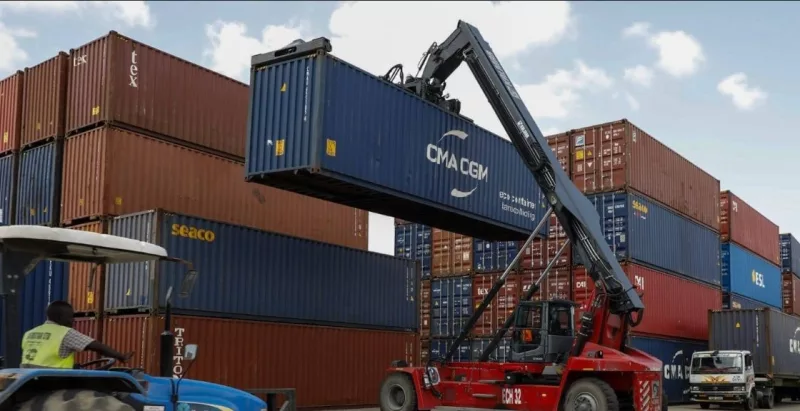
The concerns have been amplified by congestion at the Port of Mombasa.
The port handled 45.45 million tonnes of cargo in 2025, up from 40.99 million tonnes a year earlier, putting additional pressure on cargo-handling and clearance systems.
The revenue man has previously had to defer planned maintenance of its Integrated Customs Management System after traders and clearing agents warned that downtime could worsen disruptions at the port.
The latest disagreement also revives the long-running dispute over motor vehicle valuation.
KRA uses the Current Retail Selling Price (CRSP) system to determine the customs value of used vehicles after applying depreciation.
The authority says the system provides predictability and has historically been developed with industry participation.
But importers have challenged valuations they consider excessive or unsupported.
Courts have previously faulted KRA where the basis of a vehicle valuation was unclear.
In one case involving a Mercedes-Benz, the Tax Appeals Tribunal found that the authority had not adequately disclosed how the valuation was arrived at.
The valuation system has also been subject to prolonged litigation, forcing KRA to undertake fresh stakeholder consultations.
The authority's 2025 CRSP review involved the Car Importers Association of Kenya, Kenya Auto Bazaar Association and KIFWA, among others.
KRA says it will not comment on the merits of the current motor vehicle valuation dispute because it is before the courts.
The authority seems to be keen on drawing a line between enforcement and consultation.
Last week, the government was forced to retain the customs benchmark for general consolidated cargo at Sh2.5 million and promised to slash it further to Sh2 million.
This is after small importers staged protests against an increase to Sh3.2 million, attracting President William Ruto's intervention.
KRA had defended the higher benchmark as part of efforts to curb under-declaration and undervaluation of imports, arguing that such practices hurt compliant businesses and local manufacturers.
The authority had also stressed that the benchmark was a reference point for valuation rather than a fixed price at which every consignment would be assessed.