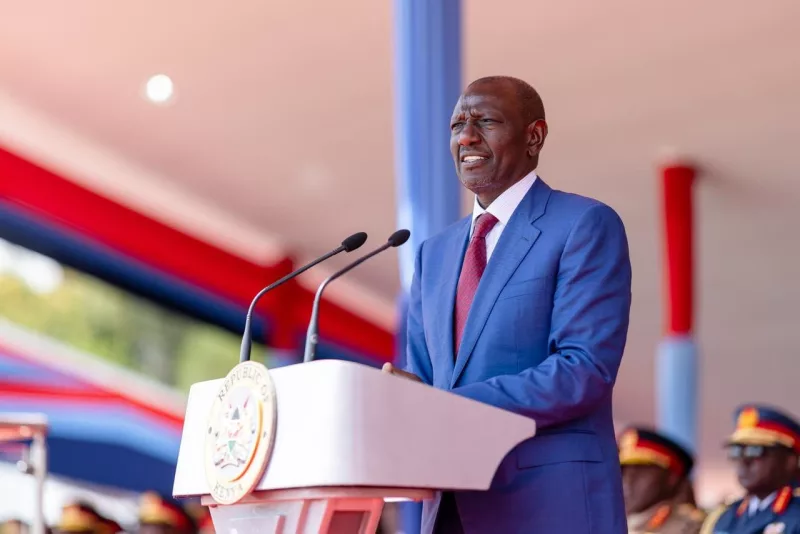
 President William Ruto/PCS
President William Ruto has pledged continued engagement with traders and businesses as his administration moves to implement measures aimed at reducing the cost of doing business and easing pressure on small and medium-sized enterprises.
Ruto said the government was committed to dialogue with traders and practical interventions that would protect livelihoods, support businesses and strengthen the wider economy.
“We are committed to constructive dialogue and practical solutions that protect livelihoods, strengthen businesses and support our economy,” Ruto said.
The President said the government had listened to concerns raised by traders and that agreements reached with them must now be implemented.
“We have heard the concerns raised by traders. The measures agreed upon must now be fully implemented, guided by continued engagement, mutual respect and a shared commitment to our country’s economic progress,” he said.
Ruto described traders as a critical component of Kenya’s economy, noting that many of them employ thousands of people and contribute significantly to economic activity across the country.
“Our traders are entrepreneurs, employers and a vital part of Kenya’s economic strength,” the President said.
He added that the government would continue working with businesses to create an environment that is fair, predictable and supportive of enterprises of all sizes.
“We will continue working together to create a fair, predictable and enabling environment in which businesses of every size can thrive,” Ruto said.
The statement followed a meeting between Ruto, Micro, Small and Medium Enterprises (MSMEs), traders and stakeholders in the consolidated cargo sector, held amid disagreements over taxation, customs clearance and the handling of imported goods.
The government agreed to a raft of measures intended to lower the cost of doing business for Kenyan traders, including a reduction in the benchmark used for general consolidated cargo.
Under the agreement, the Kenya Revenue Authority (KRA) will reduce the applicable benchmark for general consolidated cargo from Sh2.5 million to Sh2 million.
The reduction is expected to ease the financial burden on traders who had raised concerns that the previous benchmark had significantly increased their operating costs.
Traders had argued that the higher benchmark was making it more expensive to import goods and threatened the survival of thousands of small and medium-sized businesses.
The agreement also provides that existing rates for ready-made garments, footwear and fabrics will remain unchanged.
Newly negotiated rates for air cargo will also continue to apply under the arrangement reached between the government and traders.
In another major intervention, Kenya Railways will substantially reduce the cost of transporting cargo from the Inland Container Depot (ICD) to the Bomaline De-consolidation Centre.
The charge will be reduced from Sh58,000 to Sh10,000 with immediate effect.
The reduction represents a significant cut in transportation costs for traders who have raised concerns over the high cost of logistics and cargo handling after their goods are cleared.
The government is expected to implement the measures as part of efforts to address long-standing complaints from the trading community and improve the business environment.