Speaker after speaker at the Africa Food Systems Forum 2026 in Kigali, Rwanda said Africa spends between $70 billion and $100 billion on food imports annually, with wheat being number one, followed by rice, maize and then edible oils.
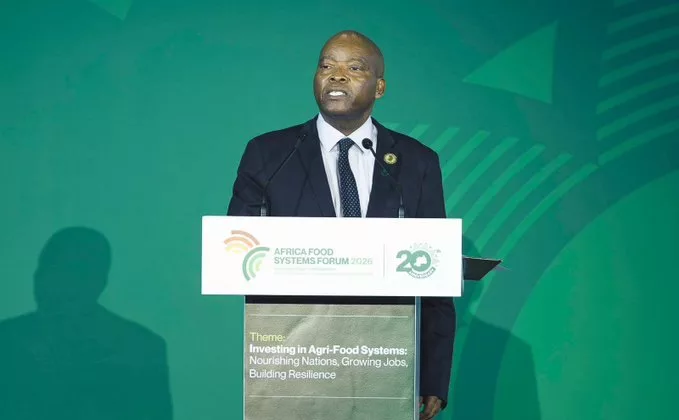
United Nations Economic Commission for Africa Executive Secretary Claver Gatete said it is ironical as the continent possesses 65 per cent of the world’s uncultivated arable land, totalling approximately 874 million hectares.
“It's just an irony because we are importing US$118 billion in agriculture products. Even if we reduce and remove the Africa trade in terms of importation, it's still at US$97 billion. By importation, we are using foreign currency. We are not using our own currency. That means depleting also our reserves in all our governments. And this is the challenge that we are having,” Gatete said.
A joint report by the Food and Agriculture Organization of the United Nations (FAO), the United Nations Economic Commission for Africa (ECA), the World Food Programme (WFP) and the African Union Commission (AUC) showed that there are an estimated 306 million people undernourished in Africa – more than 45 percent of the global total.
Meanwhile, 892 million people face moderate or severe food insecurity, driven by conflict, climate shocks, economic downturns, and widening social inequalities.
Gatete said agriculture has a big contribution to macroeconomic stability, to political stability, to the creation of jobs.
“Without it, you can't move. It's one of the top priorities that you can see.”
Gatete decried that the sector continues to get less resources.
He said there is a need to come up with a structure to accompany any resources that are coming into the sector.
“If you are going to venture into the private sector, if you have blended finance of some kind, it has to be structured in a way that can be absorbed by as many people as possible who are in agriculture, because it creates jobs.”
Gatete said there is a need to have a long-term strategy that has to be implemented at the country and regional level.
He said there is a need to also look at the past declarations and ensure that they are fully implemented.
AU Commissioner for Agriculture, Rural Development, Blue Economy and Sustainable Environment Moses Vilakati was brutal in his response to the challenge.
Vilakati said the growing food import bill represents jobs that are exported abroad, opportunities lost to African youth, and precious foreign exchange diverted from investments in our economies.
“Every bag of grain, every litre of edible oil, every carton of milk, and every kilogram of meat that can be competitively produced in Africa should represent an opportunity for African farmers, for African businesses, and African workers.”
Vilakati said food imports substitution must become a continental priority if countries are serious about nourishing nation's growing jobs and building resilience.
“Africa must move from being a net importer of food to becoming a proper competitive producer, to be a proper processor and exporter of agricultural products.”
Vilakati said governments and development partners, financial institutions, private sector, and international organisations collectively spend millions of dollars each year participating in conferences and workshops and forums across the continent.
He said such investments are important because they facilitate dialogue, strengthen partnerships, and enable knowledge exchange.
He added: “However, we must continuously ask ourselves an important question. What would happen if even a fraction of the resources mobilized around the meetings and conferences were directly invested in African farmers, African youth, African women entrepreneurs, African state systems, African education systems, African historians, African fisheries, and African value chains?”
Vilakati said Africa needs a decade of implementation as the time for diagnosis has lapsed.
Power Shift Africa’s project associate officer Fredrick Otieno said adding value to our food is the surest intervention to make Africa’s agriculture profitable and investable.
He said the move will help minimise rampant food waste estimated at 40 per cent by extending the shelf life of our produce.
“Africa must establish a multi-agency unit linking all sectors that support agriculture to ensure coordinated planning and execution of agriculture-related initiatives. A hydropower, flood control, and land reclamation project would embody agricultural transformation instead of simply solving disasters whenever they occur,” Otieno said.