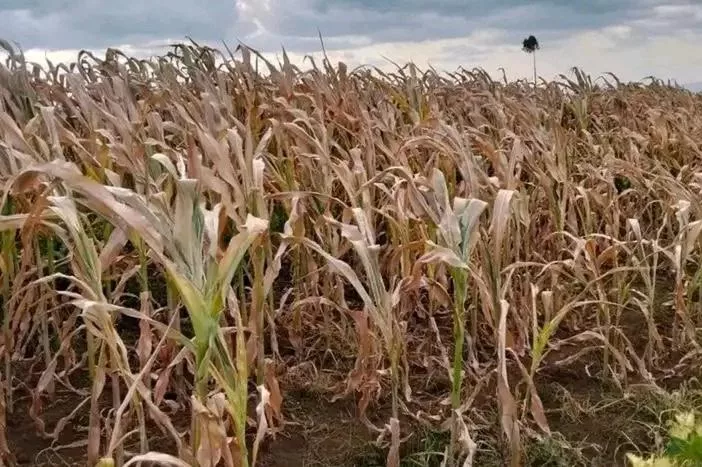
 Maize crop damaged by drought in Trans Nzoia county. /FILE
The government is considering importing yellow maize to ease competition between animal-feed manufacturers and millers producing flour for human consumption amid dwindling white-maize stocks.
The yellow-maize plan dates back to April 2025, when the government announced a 50 per cent duty waiver for the importation of 5.5 million bags over one year.
The move would be separate from the planned importation of up to 25 million 90-kilogramme bags of maize intended to bridge the national food deficit following widespread crop failures.
Agriculture and Livestock Development Cabinet Secretary Mutahi Kagwe attributed the shortage to adverse weather conditions in key maize-growing areas like Uasin Gishu and Trans Nzoia counties.
The government has also raised concerns over hoarding and speculative trading, which have further constrained supplies available for purchase from the local market to replenish the National Strategic Food Reserve.
Speaking on August 19, Kagwe announced plans to allow the government and private traders to import up to 25 million bags of maize to stabilise supplies and contain flour prices.
"Yes, we will import maize; we have already made arrangements for that, so it's not a big deal; we will manage. The country is not going to go hungry."
Kagwe said annual national maize demand stands at about 75 million bags, but production in the current season is expected to fall to about 50 million bags because of adverse weather.
"There's a drought within most of our areas where we grow maize, and these are some of the things we are talking about transformation - overreliance on rainfed agriculture. It's time for us to move more into irrigation-fed agriculture so that the kind of climatic changes that are happening will not impact us as much as they are at this time."
The government gave maize holders a 30-day ultimatum to release stocks into the market before subsidised commercial imports are fully activated.
The yellow maize imports were to be handled by vetted animal-feed millers and were intended to shift feed manufacturers from white maize, with the aim of cushioning consumers from rising unga prices.
Competition between animal-feed manufacturers and maize millers had contributed to a 26 per cent rise in the price of a 90-kilogramme bag of maize over three months.
The intervention was designed to keep white maize available for human consumption while directing yellow maize towards animal feeds.
However, the status of the 5.5 million-bag yellow-maize import remains unclear as the latest official information available on the measure dates to the April 2025 announcement.
The issue has gained renewed relevance as maize supplies tighten. Data from the 2026 Economic Survey showed that Kenya's maize imports increased by 51.4 per cent to 468,109 tonnes in 2025, following the government's decision to open the yellow-maize import window.
Domestic maize production, meanwhile, rose by only 2.2 per cent to 45.8 million bags in 2025 from 44.8 million bags the previous year.
The yellow-maize policy has also revived memories of past food shortages when the grain was imported as emergency relief.
During the severe drought of 1984, Kenya imported yellow maize as part of efforts to address widespread food shortages after rains failed in many parts of the country.
The grain was used as relief food alongside other measures to prevent starvation, with ugali made from it associated with hardship and famine relief.
The government's current approach, however, is to reserve imported yellow maize primarily for animal-feed production rather than human consumption.
The latest plans underscore the pressure facing Kenya's maize sector as drought and declining production threaten supplies, while demand from both households and industry continues to grow.