
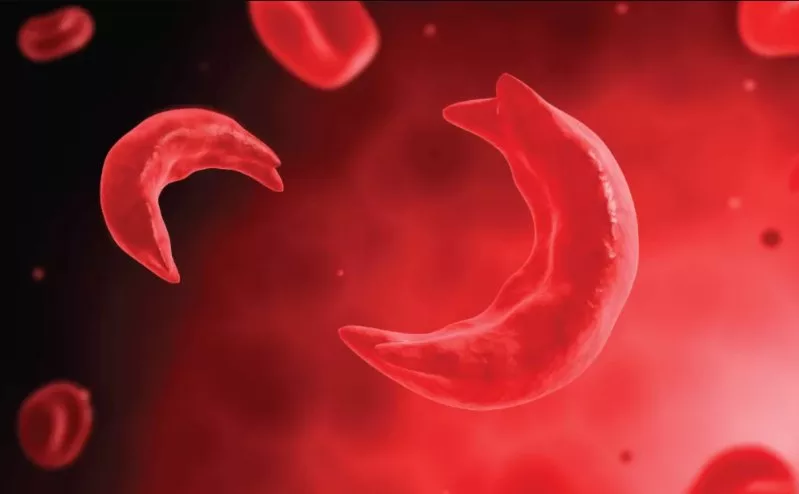
 Sickle-shaped blood cell.
Kenya is one of only two countries where children died during the trial of a sickle cell drug called voxelotor; new data released by the investigators has revealed.
The drug, sold under the brand name Oxbryta, was pulled from every market globally in September 2024, after more children died while taking it in the trial than while taking a placebo pill.
Investigators said the drug did not directly cause the deaths.
A newly released full scientific paper on the trial, called HOPE Kids 2, reveals that eight children taking the drug died in Kenya and Nigeria.
The study took place at 21 hospitals in eight countries between November 2020 and January 2023. It was sponsored by drug manufacturer Pfizer.
Doctors were testing whether voxelotor could protect children with sickle cell disease (SCD) from having a stroke. Children with SCD have a significantly higher risk of having a stroke.
The results indicate the drug actually worked and lowered children's stroke risk.
The danger was the unexplained deaths and also increased severe pain crises in patients who received the drug compared to those who received the placebo.
“Our primary concern is for patients who suffer from SCD, which remains a very serious and difficult-to-treat disease with limited treatment options,” said Aida Habtezion, chief medical officer and head of worldwide medical and safety at Pfizer, when the company withdrew the drug in 2024.
The full results, which the investigators have published in the American Journal of Haematology, show they tested the drug on 236 children with sickle cell in the eight countries.
Half received the drug, half received a placebo, for close to two years. Eight children died in the voxelotor group compared to two in the placebo group.
Doctors running the trial did not blame the drug for the deaths, saying each death was linked to known dangers like malaria or the sickle cell disease itself.
Even so, the imbalance was severe enough to trigger the 2024 withdrawal, and it is only in this newly published data that the full geographic pattern has come to light.
“FDA understands the importance of having safe and effective medications available to improve the health of patients living with this rare, serious disease,” the US Food and Drug Administration said.
Voxelotor was never sold commercially in Kenyan pharmacies. It was not listed as registered for sale by the Pharmacy and Poisons Board (PPB), the government body that approves which medicines can be sold in the country.
The trial in Kenya was run partly through the Kenya Medical Research Institute (Kemri) and the University of Nairobi.
The failed drug shows the struggle SCD patients face in getting a drug that actually works for them.
The standard treatment for most patients remains a much older and cheaper drug called hydroxyurea.
Kenya carries one of the heaviest sickle cell burdens in the region. Dr Gladwell Gathecha, acting head of the Division of Non-Communicable Diseases at the Ministry of Health, said Kenya has 250,000 people living with sickle cell.
"Each year we have around 14,000 infants who are born with sickle cell, and sadly we lose around 400 people, or 400 warriors, every year," she said.
"Out of the 47 counties in Kenya, 17 are considered highly vulnerable for sickle cell, mostly around western Kenya, Lake Victoria and the coast."
Dr Gathecha also revealed that access to even the basic, approved drug remains patchy.
She said a recent check of the health information system found that among high-burden patients, only about a third of facilities had hydroxyurea in stock in June, and that the ministry is now working with manufacturers and county governments to bring the price and supply problem under control.
She spoke at the ongoing third global sickle cell disease conference in Nairobi.
Health Cabinet Secretary Aden Duale, speaking at the same forum, said the Social Health Authority now pays for outpatient care, transfusions and specialised procedures for sickle cell patients.
He said the ministry is building a live national digital registry within the next two months so every patient's status and needs can be tracked.
"A child's access to early diagnosis and quality care must not depend on the birthplace of the family, or the income of that family," he said.






