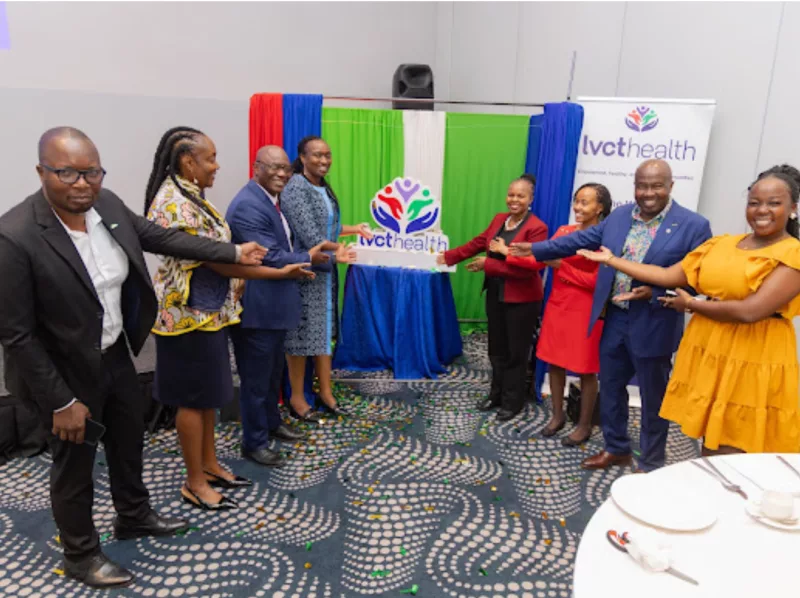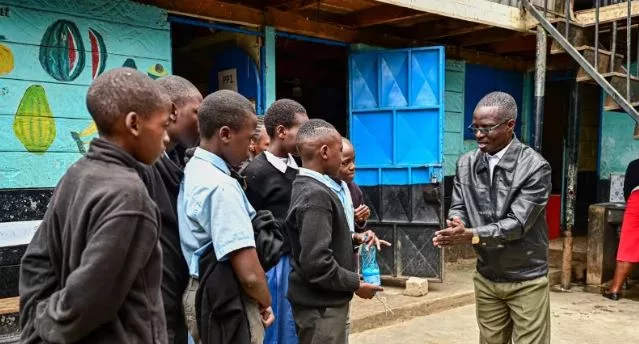
 Rachel Ruto arrives in Homa Bay on August 26.
First Lady Rachel Ruto has stepped up her campaign to protect Kenyan girls from new HIV infections, teenage pregnancy and sexual and gender-based violence, warning adults that they must do more to protect children from exploitation and abuse.
Rachel made the call in Homa Bay, one of Kenya’s counties most affected by the three interconnected problems, as she joined the National Syndemic Diseases Control Council (NSDCC), the county government and other partners in a campaign to end what is known as the “Triple Threat”.
The First Lady said protecting children cannot be left to campaigns and government programmes alone, urging parents, teachers, health workers and other adults who interact with young people to take greater responsibility.
“A mother’s instinct is to protect,” Rachel said, adding that her commitment as a champion was to ensure that challenges affecting young people were not ignored.
She said society must look beyond statistics and see the children behind the numbers.
“Behind every number is a young person, a daughter, a son, a future,” she said. Rachel challenged adults to reconsider how they respond to children facing exploitation and vulnerability.
“We can’t keep asking what is wrong with our children. We must ask what are we as adults doing to protect them,” she said.
She said vulnerable children should not be condemned but protected by the adults and institutions responsible for their welfare.
The First Lady also cautioned that government campaigns would have little impact unless communities became actively involved in protecting children.
“Let us be clear, a campaign alone will not protect our children; people will. A teacher who notices, a parent who listens, a health worker who welcomes a teenager without judgement,” she said.
Her intervention comes as new figures show the scale of the challenge facing adolescents in Homa Bay.
According to data presented during the Triple Threat meeting, Homa Bay had an HIV prevalence of 11.74 per cent in 2026. Of 997 new HIV infections recorded in the county, 205 were among adolescents aged 10 to 19, accounting for 20.6 per cent of all new infections.
The county also recorded 7,582 pregnancies among girls aged 10 to 19 in 2025. Of these, 366 involved girls aged 10 to 14, while 7,216 involved girls aged 15 to 19.
There were also 379 reported cases of sexual and gender-based violence among adolescents aged 10 to 17. Of the survivors, 147 who were eligible received post-exposure prophylaxis to prevent HIV infection, while 117 were eligible for emergency contraception.
The figures underline why NSDCC has made the Triple Threat a major focus of Kenya’s HIV and adolescent health response.
NSDCC chief executive officer Douglas Bosire said Kenya had made important progress against HIV but could not afford to become complacent while young people continued to face multiple risks.
“We have made significant progress in the HIV response, but the continued vulnerability of adolescents and young people demands renewed and coordinated action. We cannot address HIV, adolescent pregnancies and SGBV in isolation because these challenges are interconnected,” said the CEO.
He called for national and county governments, communities, parents, schools, healthcare providers, development partners and young people themselves to work together.
“Our young people need accurate information, access to youth-friendly health services, protection from violence and the opportunity to make informed decisions about their health and future. Ending the Triple Threat is a shared responsibility,” he said.
National figures show that Homa Bay’s experience is part of a wider problem.
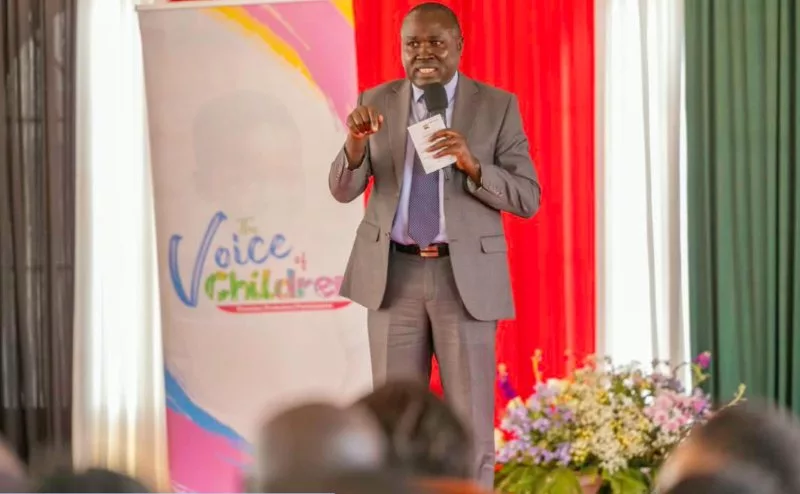 NSDCC chief executive officer Douglas Bosire speaks in Homa Bay on August 26.
The 2025 Kenya AIDS Response Progress Report estimates that 2,799 new HIV infections occurred among adolescents nationally, equivalent to about 54 new infections every week. Young women aged 15 to 24 accounted for 31 per cent of new adult HIV infections.
The same report shows that adolescent pregnancies accounted for 16 per cent of all pregnancies in Kenya in 2024, or 240,915 pregnancies. This included 9,857 pregnancies among girls aged 10 to 14.
There were also 17,361 reported cases of sexual and gender-based violence involving adolescents aged 10 to 17 in 2024, representing 36 per cent of all reported SGBV cases. NSDCC says the three problems reinforce one another. Sexual violence can expose girls to HIV and unintended pregnancy, while pregnancy can interrupt education and increase economic vulnerability. HIV infection can also impose a lifelong health burden on adolescents.
Homa Bay has long recorded teenage pregnancy rates above the national average. The 2022 Kenya Demographic and Health Survey found that 23.2 per cent of girls aged 15 to 19 in the county had ever been pregnant, compared with a national figure of 14.8 per cent.
Governor Gladys Wanga said the county’s young people were central to its future but were being confronted by several threats at the same time.
“These forces drive school dropouts, entrench lifelong health risks, and trap families in generational poverty,” Wanga said.
She said Homa Bay would, with the backing of the First Lady, strengthen interventions on HIV prevention, reproductive health, child protection, SGBV response and youth empowerment.
The partnership is intended to create a safer environment in which children can remain in school and pursue their ambitions without being derailed by circumstances beyond their control.
The First Lady’s campaign is being implemented under the broader national commitment to end the Triple Threat. NSDCC says the response requires sustained cooperation across government, communities and health services rather than treating HIV, pregnancy and violence as separate problems.