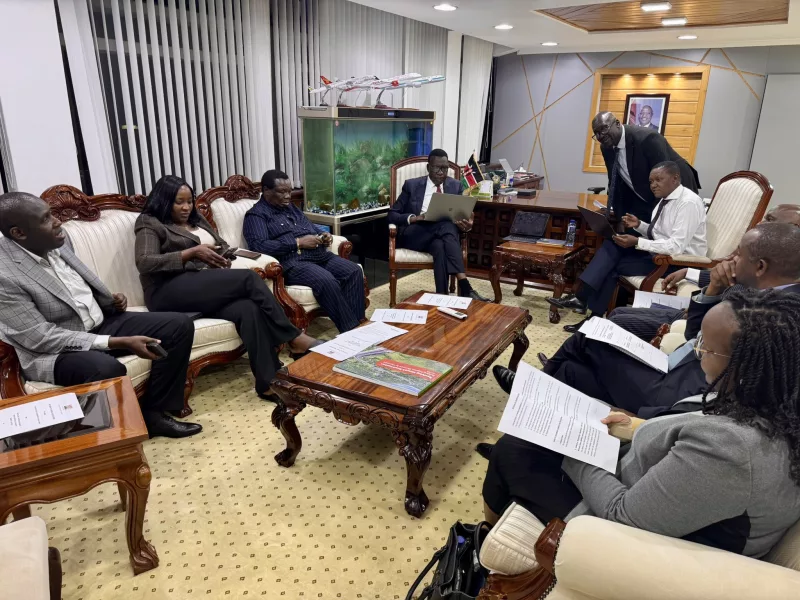
The marathon negotiations that ended the aviation workers’ industrial action stretched through the night and into dawn, with Cabinet secretaries, principal secretaries, union leaders and aviation executives shuttling between positions before finally striking a deal at 5.30am.
Labour Cabinet Secretary Alfred Mutua said the negotiations involved an entire day and night of back-and-forth discussions to resolve the dispute that had disrupted operations at airports and left hundreds of passengers stranded.
“Yesterday we spent a whole day and entire night negotiating, going back and forth to find a solution to the Kenya airport workers strike,” Mutua said.
The talks eventually produced a Return-to-Work Agreement between the Kenya Aviation Workers Union (KAWU), Kenya Civil Aviation Authority (KCAA), Kenya Airports Authority (KAA) and Jambojet, paving the way for the immediate restoration of normal aviation operations.
In a statement, Mutua apologised to passengers inconvenienced by the industrial action, while acknowledging that workers had legitimate grievances that required attention.
“My sincere apologies to all who were inconvenienced due to this strike and also to airport workers who felt injured and, in our view, deserved a hearing and improvement of their welfare,” he said.
The CS had travelled from Mombasa to Nairobi to join the negotiations, thanking the Mombasa Civil Aviation team and air traffic control tower for clearing his flight to the capital.
The negotiations brought together his Transport counterpart Davis Chirchir who led the talks at his Transom office, Principal Secretaries Teresia Mbaika (Aviation and Aerospace Development), Shadrack Mwadime (Labor) and COTU-K secretary general Francis Atwoli.
Also at the table were acting KCAA director general Nicholas Bodo, KAA managing director Moses Wekesa, Jambojet CEO Karanja Ndegwa and KAWU leaders.
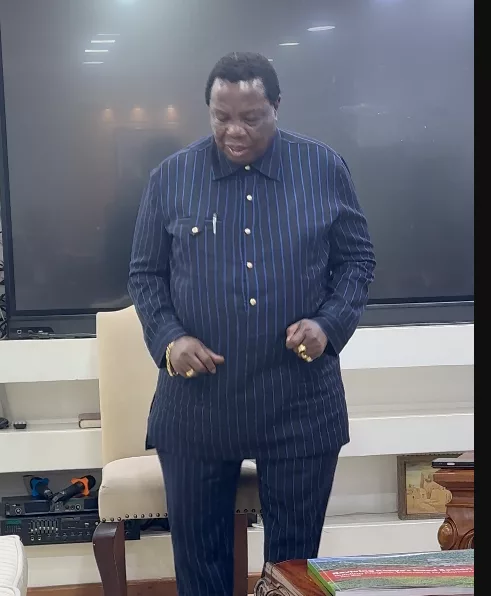
Mutua singled out Atwoli for remaining at the negotiations until dawn, describing him as a source of energy during the exhausting talks.
“We are extremely grateful to Hon. Francis Atwoli’s wisdom and his patience, staying with us until 5.30 in the morning,” Mutua said.
Mutua revealed that Atwoli at one point entertained the exhausted negotiators with music and dance as the marathon talks continued into the early hours of the morning.
“At 3.30am, Atwoli was entertaining us with a Rhumba dance, a real maestro,” Mutua said, sharing a video of the COTU-K boss dancing inside the negotiation room.
Journalists who were present also had to endure the long night, waiting for updates as the closed-door talks dragged on, with hopes of a breakthrough rising and fading several times before the final agreement was reached at dawn.
At one point, union officials led by KAWU Secretary Ndiema Moss Ndiema were seen emerging from the meeting for consultations before returning to the negotiating table.
A section of aviation workers and union members remained at a nearby conference room consulting and, patiently waiting for what they described as “white smoke” from the marathon talks.
The breakthrough came after intensive consultations over several issues raised by the union.
Under the agreement, agency fees held by the KAA will be remitted to KAWU immediately.
The parties also agreed that the Salaries and Remuneration Commission (SRC) would engage stakeholders on outstanding Collective Bargaining Agreement issues involving KCAA within the applicable legal and regulatory framework.
The recognition agreement dispute between KAWU and Jambojet will, however, remain before the courts, with the parties agreeing to respect the ongoing judicial process.
Chirchir announced that the government had successfully brokered an agreement to end the go-slow and restore normal operations.
“The government has this morning successfully brokered an agreement between the Kenya Aviation Workers Union, the Kenya Civil Aviation Authority, the Kenya Airports Authority and Jambojet Limited, bringing to an end the ongoing go-slow,” Chirchir said.
Following the agreement, KAWU called off the industrial action with immediate effect and directed affected employees to resume normal duties.
A key safeguard in the agreement was a commitment that no employee would be victimised or subjected to disciplinary action solely for participating in the industrial action.
“All parties therefore commit to a swift restoration of normal aviation operations, maintaining industrial peace and resolving any outstanding and future grievances through dialogue, conciliation and established legal mechanisms,” Chirchir said.
The Ministry of Transport said the agreement marked the end of a tense standoff that had paralysed sections of the aviation sector and disrupted travel.