
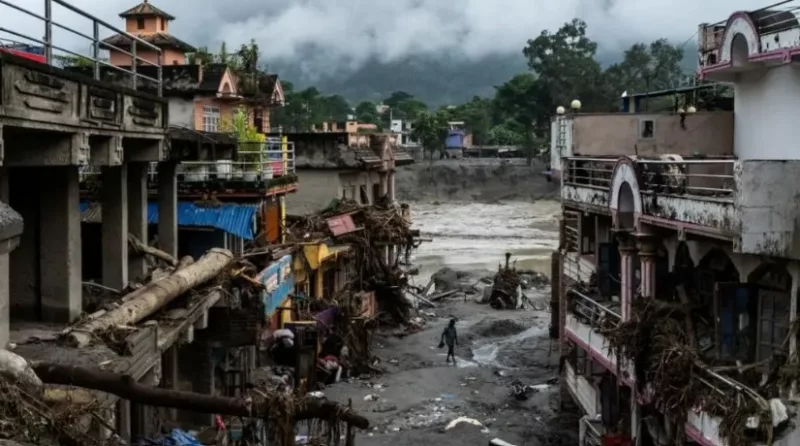
At least 734 people have died and more than 2,400 people are missing in Nepal, local officials say, after flash floods on Wednesday.
In Tibet, the official death toll is 16, with 546 reported to be missing, according to Chinese state media.
Nearly 20,000 security forces are deployed in rescue efforts on the Nepal-Tibet border as the UN says rough terrain and rain is making aid delivery "extremely difficult".
Chinese state media says a new barrier lake, formed after a landslide detected on Saturday, is being assessed.
Fears of flooding from another barrier lake had already sparked panic on both sides of the border earlier this week.
Tibet, which China annexed in the 1950s, is one of the most strictly controlled regions in the country.
It has long demanded greater autonomy and is heavily monitored because Beijing fears any signs of instability such as protests.
That is why orders have come personally from the top leader Xi Jinping and why Premier Li Qiang visited the site on Thursday. It is rare for him to make a visit so soon after a major disaster.
To get into Tibet requires a special visa and it is difficult, if not impossible, for foreign media to gain entry. Trying to contact people there is just as hard.
This makes it very difficult for us to know what is happening and we are relying heavily on reports from Chinese state media.
Pilgrims making their way from Nepal through Tibet to the sacred mountain of Mount Kailash need four separate permits, which includes special permission from the Chinese military.
A new lake has formed in Tibet after a landslide occurred downstream of the existing barrier lake, Chinese state media says.
A barrier lake is a body of water formed when debris dams up a river. An existing barrier lake, which formed in the aftermath of the flash floods, had reportedly been depleting naturally following concerns it could result in more flooding.
Chinese Central TV (CCTV) says a monitoring drone detected a landslide on Saturday, which then resulted in debris forming a new blockage and a new barrier lake.
The landslide is reported to have occurred about 2.8 kilometres (1.7 miles) downstream of the barrier lake on the Pruqpu Qiang Zangbu River.
China's Ministry of Emergency Management quickly gathered experts to assess the situation and rescuers near the Gyirong Port have been moved to a safe location, it adds.