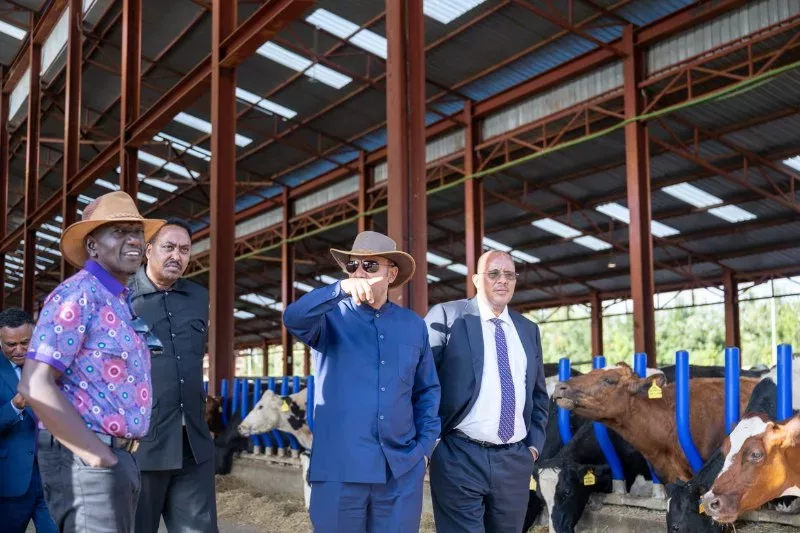
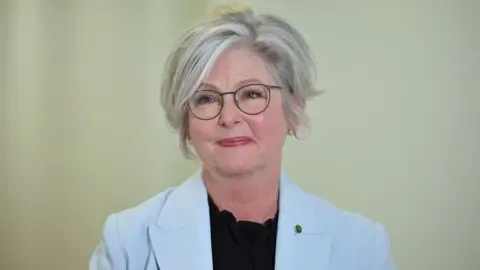
 Head of Public Service Felix Koskei (centre) with KEBS Managing Director Esther Ngari and other officials during the gala dinner/COURTESY
Head of Public Service Felix Koskei has been appointed a Goodwill Ambassador of the African Organisation for Standardisation (ARSO), becoming the third African leader to receive the continental honour.
Koskei joins former Nigerian president Olusegun Obasanjo and former Mauritius president Ameenah Gurib-Fakim in the distinguished role, which seeks to promote standardisation as a tool for strengthening intra-African trade and economic integration.
The appointment was announced during the ARSO Gala Dinner in Mombasa on Thursday, held as part of the organisation’s 32nd General Assembly under the theme, “Standards Enabling Intra-Africa Trade under the AfCFTA: One Certificate Working for You.”
Accepting the appointment, Koskei said he would use his position in public service to advance standardisation and support efforts to make trade across African borders easier.
“I am humbled to be appointed Goodwill Ambassador of ARSO. I accept this responsibility with deep humility and a profound sense of duty,” Koskei said.
He thanked the ARSO Council for its confidence and the Kenya Bureau of Standards (KEBS) for nominating him, saying the position came with a responsibility to promote a more integrated and competitive African market.
“I join the distinguished service of His Excellency Olusegun Obasanjo and Her Excellency Professor Ameenah Gurib-Fakim, accepting this role not simply as an honour to hold, but as a duty to carry,” he said.
 Head of Public Service Felix Koskei during the event/COURTESY
Koskei said Africa's market of more than 1.4 billion people and a combined gross domestic product of about $3.4 trillion provided enormous opportunities for businesses if barriers to cross-border trade could be reduced.
He noted that the African Continental Free Trade Area (AfCFTA) had created an important platform for expanding trade among African countries but warned that differences in product standards and repeated inspections continued to increase the cost and time of doing business.
Small and medium enterprises, he said, were particularly affected by the multiple requirements imposed on goods moving from one African market to another.
“Standards do more than ensure compliance because they help our farmers reach new markets, enable our manufacturers to trade across borders and position African products to compete globally,” Koskei said.
He said harmonised and mutually recognised standards would make it easier for products certified in one African country to access other markets without undergoing unnecessary duplication of inspections and certification.
Koskei said his new role would focus on building support among governments and institutions for the One Certificate agenda championed by ARSO.
“I will use my role in public service to champion standardisation as an instrument of national competitiveness and advance the One Certificate agenda,” he said.
He added that the objective would be to help transform mutual recognition of standards from a policy commitment into a practical reality for African traders and consumers.
The ARSO General Assembly brings together standards bodies, policymakers and industry stakeholders from across the continent to discuss ways of using standards to facilitate trade under AfCFTA.
The organisation has been pushing for greater harmonisation of African standards to eliminate technical barriers that make it difficult for businesses to sell products across borders.
Koskei’s appointment comes as Kenya continues to position itself as a regional hub for trade and manufacturing.
The One Certificate approach is expected to reduce duplication in conformity assessments, lower compliance costs and improve the competitiveness of African products.
For millions of farmers, manufacturers and entrepreneurs, harmonised standards could also open access to a wider continental market while strengthening consumer confidence in locally produced goods.
Industrialisation Principal Secretary Juma Mukwana who spoke during the event said the discussions held during the ARSO General Assembly demonstrated a shared commitment to using standards to drive economic development.
“The depth and richness of these conversations demonstrate our collective commitment to leveraging standards as catalysts for economic growth, regional integration and sustainable development,” Mukwana said.
 KEBS managing director Esther Ngari speaks during the gala dinner on August 27, 2026, in Mombasa/FILE
He said African countries had reaffirmed their determination to dismantle technical trade barriers and strengthen confidence in regional quality infrastructure systems.
“We have reaffirmed our shared determination to dismantle technical trade barriers, advance the harmonisation of standards across Africa, and strengthen confidence in regional quality infrastructure systems,” he said.
Mukwana said the implementation of initiatives such as the ARSO Conformity Assessment Programme and the ARSO Quality Mark would be critical in facilitating the movement of goods and services across the continent.
He also cited progress towards the ISO strategic plan for 2027-2032, implementation of the ISO-ARSO cooperation agreements and the launch of sustainability and circular economy standards as key milestones.
Kenya Bureau of Standards (KEBS) managing director Esther Ngari said standards should be viewed as a passport that enables African products to move freely across borders.
“What we have been speaking about and agreed upon is that standards drive prosperity. By trading with each other, we will prosper,” Ngari said.
She challenged African countries to increase value addition locally instead of relying heavily on products from outside the continent.
“We do not have to get products from Europe to come to Africa when we have the potential to do value addition in Africa and trade with each other,” she said.
Ngari said the General Assembly had resolved to increase intra-African trade and reduce unnecessary barriers between countries.
“We do not have to create barriers between each other, but we will provide our products with that passport to trade,” she said.
She also welcomed the establishment of a permanent ARSO home in Nairobi, describing it as the fulfilment of a longstanding commitment by Kenya.
The development, she said, fulfilled a promise made by the Kenyan government under an accord signed in 1981.