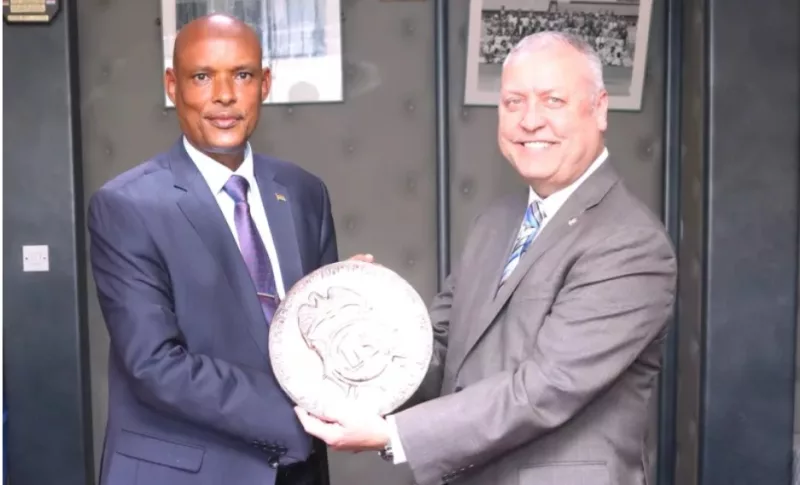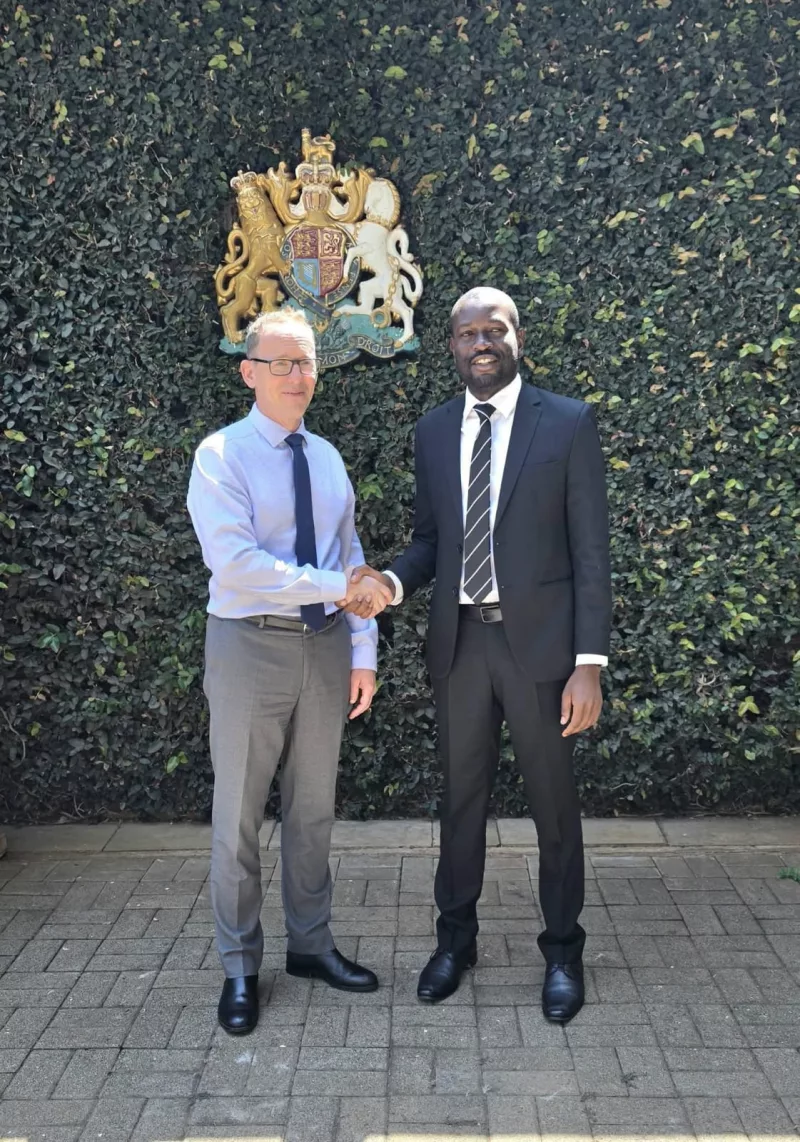
The swift political rise of Nairobi Senator Edwin Sifuna, which has catapulted him into the ranks of leading presidential contenders, has caught the attention of the international community.
Sifuna has held a series of closed-door meetings with several Western diplomats, making him arguably one of the most sought-after opposition politicians.
The back-to-back engagements come amid the latest opinion polls showing Sifuna has eclipsed opposition luminaries to emerge as the team’s strongest potential challenger to President William Ruto.
Wiper leader Kalonzo Musyoka and Jubilee’s Fred Matiang’i have also held private talks with diplomats.
“His [Sifuna] popularity is catching attention worldwide. They [diplomats] see him as a potential president,” University don Prof Gitile Naituli told the Star.
Diplomats are avid consumers of intelligence and closely study aspirants during such meetings
Analysts say the sudden interest in the senator is telling.
Sifuna has in recent days held meetings with outgoing French Ambassador Arnaud Suquet, British High Commissioner Matt Baugh and Australian High Commissioner Andrew Barnes.
The Nairobi senator has also held talks with European Union Ambassador and Head of Delegation to Kenya Henriette Geiger and German Ambassador Sebastian Groth.
Western diplomats, particularly the US and the EU, have always influenced the direction of the country, especially when there is a political stalemate.
At the height of the 2007 post-election violence, then Secretary of State Condoleezza Rice told then President Mwai Kibaki to his face that he had lost the election.
As a consequence, the US demanded nothing other than “real power sharing” with Raila Odinga.
“Rice “turned to the President stating matter of factly; “You know Mr President, you never won,” Martha Karua, then Justice Minister writes in her book of how the former American diplomat tore into the PNU brigade.
Before the December 2007 Kenyan general election, U.S Ambassador Michael Ranneberger sent confidential and sensitive diplomatic cables to Washington.
These sensitive information were later laid bare by whistle-blowing agency WikiLeaks.
The envoy detailed assessments of key political players, campaign strategies, and election expectations.
Ranneberger for instance described Raila as "looking presidential" and evaluated his growing momentum and strategy.
However, he did not have good things to say about Kalonzo, then running on an ODM-Kenya ticket.
Ranneberger characterised Kalonzo as an "opportunist" and "intellectual lightweight" acting as a "spoiler".
Ranneberger reported that Musyoka aimed to act as a "kingmaker" for Mwai Kibaki after realising his limited path to victory.
"Though Musyoka is polished and glib, some astute observers consider him an intellectual lightweight. Thus far he has not presented a credible national political agenda,” Ranneberger wrote to Washington.
Kalonzo rubbished his assertions
On Thursday, Vihiga senator Godffrey Osotsi, a close ally of Sifuna, said Kenyans should expect more high-level engagements with the international community.
“We have advised him (Sifuna) to meet as many envoys as possible,” Osotsi told the Star.
While diplomatic meetings do not amount to an endorsement, they are rarely politically meaningless.
Osotsi said the engagements are a sign their candidate is getting not only the local but also international attention.
“It is a good sign, it means our candidate is alive to the fact that we are operating in an international space and he is being recognised as potential leader in this country,” Osotsi stated.
As consumers of intelligence, diplomats are keen to understand ideas that could shape the political direction of countries where they have strategic, security and economic interests.
Naituli billed such engagements as a recognition of the leadership potential of the Nairobi senator.
But former Foreign Affairs Cabinet Secretary Raphael Tuju doesn’t want to read much from the engagements terming them normal.
“There are strategic interests of other countries in this country. They have invested here, so what they are doing is what we call public diplomacy and even Kenya should be able to play the same thing in other countries only that we don’t have the kind of muscles that they have,” Tuju told the Star.
“Them (envoys) meeting people who are associated with opposition is normal in democracies, because you want to hear both sides of the political divide. At any given time there is a government in waiting in a democracy.”
While Sifuna is still building his political vehicle and nationwide network, the fact that Western representatives are engaging him at this relatively early stage suggest he is on the radar of the international community.
If Sifuna eventually emerges as a serious presidential contender, envoys who have interacted with him early will already have a sense of his personality, political instincts, economic philosophy and views on Kenya’s relationship with the outside world.
One of the issues likely to interest foreign missions is Sifuna’s policies especially those touching on the economy and the outside world.
Sifuna has pledged that a government under his leadership would significantly reduce public expenditure, with spending cuts featuring prominently in his emerging political message.
He has also criticised the government over the country’s rising debt burden.
According to Osotsi, amongst the agenda on the table during the meeting is the discussion on the constitutionalism and respect for the rule of law.
“We also want them (envoys) to help Kenya in ensuring free, fair and verifiable elections,” he said.
For Western nations, international financial institutions and foreign investors, the issue is important because Kenya’s fiscal stability affects investment confidence, debt sustainability and the country's ability to finance development.
The opposition's alternative economic message has also emphasised constitutionalism, education, healthcare, job creation, reducing the cost of living and lowering the fiscal deficit.
Sifuna's economic position could therefore become an important part of the intelligence diplomats gather about him.
His position on governance and accountability is another area likely to attract attention.
Sifuna has built much of his political profile around criticism of government excesses, institutional accountability and what he portrays as a disconnect between the political establishment and ordinary citizens.
For Western partners, these questions matter because governance, rule of law, human rights and institutional stability remain central to Kenya's international partnerships.
Kenya is not an ordinary diplomatic posting for Western governments. Britain, for instance, has extensive interests in Kenya spanning trade, investment, security and defence cooperation.
Britain maintains military personnel in Kenya and trains Kenyan soldiers, particularly in the context of regional security and the fight against al Shabaab.
The two countries have also been working to expand trade and investment ties.
The European Union, meanwhile, has deep economic and strategic interests in Kenya, including trade, investment, climate action, digital connectivity and regional infrastructure.
The EU and Kenya are implementing cooperation around the Northern Corridor and digital connectivity, while the Kenya-EU Economic Partnership Agreement provides Kenyan exporters with duty-free and quota-free access to the European market.
France also has significant diplomatic, economic and security interests in Kenya and the wider East African region.
The United States, Britain and European countries additionally view Kenya as an important security partner in East Africa, particularly because of its role in Somalia, regional peace initiatives and counterterrorism.
Consequently, a possible change of government in Nairobi would matter greatly to Western capitals.
They would want to know whether an incoming administration would maintain existing security arrangements, honour investment and trade commitments, preserve diplomatic relationships and continue Kenya's regional role — or seek to substantially recalibrate them.
A politician who hopes to occupy State House must eventually convince not only Kenyan voters but also international partners that his administration will be predictable, competent and capable of protecting Kenya's interests.
Early diplomatic contact gives Sifuna an opportunity to begin shaping that perception.
The diplomatic attention on Sifuna also raises an intriguing question within the opposition, DCP boss Rigathi Gachagua despite being one of the most prominent figures in the United Opposition has not featured in a similar engagement with Western envoys.
Both Wiper leader Kalonzo Musyoka and Jubilee’s Fred Matiang’i have held talks with envoys.