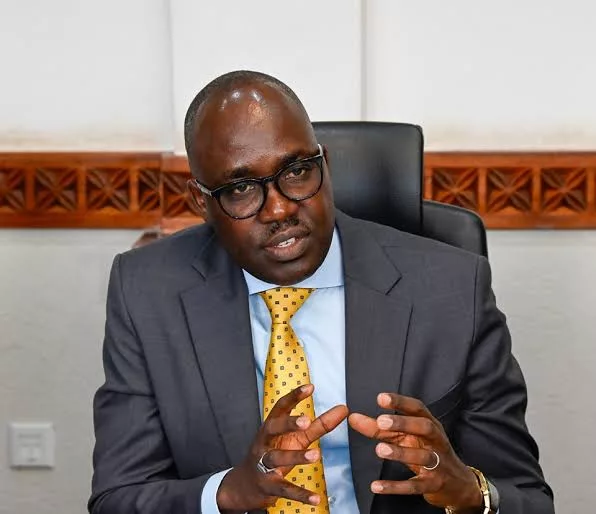
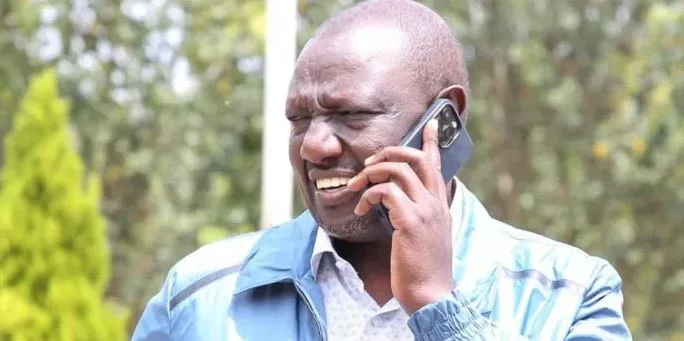
 President William Ruto./FILE
President William Ruto has opened up about his final encounters with former Prime Minister Raila Odinga, revealing that the two spoke about Kenya’s future just days before his death.
In an interview with the Nation over the weekend, Ruto said their last face-to-face meeting took place at Odinga’s home in Nairobi, where they shared dinner and discussed his health and plans for further medical treatment.
The President said he had chosen to visit Odinga at home after the former Prime Minister returned to Nairobi from Malindi, where he had gone following medical advice to seek a warmer climate.
Ruto arrived at the residence at about 7.30pm and met Odinga, his wife and children.
“I met with him, his wife and children,” Ruto recalled in an interview with the Nation at the weekend.
The former Prime Minister told Ruto that he was not recovering as expected and wanted to seek a second medical opinion.
“I encouraged him to do so,” the President said.
The meeting came after a series of conversations between the two leaders as Odinga’s health deteriorated.
Ruto said Odinga had earlier called him to say he was unwell and wanted to see him. The former Prime Minister subsequently visited State House in Nairobi.
During that meeting, Ruto said he noticed that Odinga was visibly unwell.
“I noticed that the former Prime Minister was visibly unwell,” he said.
Odinga later travelled to India accompanied by his daughter, doctors and other members of his team.
Despite the distance, the two remained in contact. According to Ruto, Odinga initially sounded optimistic about his treatment and told him that several doctors had examined him.
He said Odinga believed the medical team had identified the appropriate treatment for his condition.
Ruto later received news that Odinga had been discharged from hospital and planned to rest.
It was the last conversation that gave him any indication of Odinga’s condition before the devastating call that came on October 15 last year.
Ruto said he was walking to his office at around 6.30am when his phone rang.
The caller was Dr Oburu Oginga, Odinga’s elder brother.
“There is a problem. I think I have lost my brother,” Ruto recalled Oburu telling him.
Odinga had died in India, where he had travelled for treatment weeks earlier.
The President said the news was particularly difficult to absorb because he had spoken to Odinga only days earlier and understood that he had been discharged and was preparing to rest.
Soon afterwards, Odinga’s sister, Ruth Adhiambo, also contacted Ruto.
The family explained that Odinga had woken up that morning and exercised before his condition suddenly worsened.
“His life could not be saved,” Ruto said.
The death brought to an abrupt end a political relationship that had taken the two men through decades of rivalry, cooperation and partnership.
Ruto said they began their political careers on opposing sides before eventually joining forces in ODM.
“We started on different sides when we were in Kanu; they were in Ford and the others. We came together in ODM and forged ODM together,” he recalled.
The two later parted ways and became opponents in the 2022 presidential election.
Ruto won the contest with 7,176,141 votes, while Odinga secured 6,942,930.
Political developments following the 2024 protests later brought their camps together, with Odinga becoming part of the broad-based government.
Ruto said their relationship in the period before Odinga’s death had developed beyond political calculations.
He recalled their frequent conversations and meetings, saying Odinga had also played a role in efforts to stabilise the country during a period of political tension.
“When there were challenges in the country, Raila came forward and said we must stabilise the country,” Ruto said.
He described Odinga as having stood “on the right side of history” in defending democracy.
After Odinga’s death, Ruto became involved in arrangements to return his body to Kenya.
He said he held discussions with Indian Prime Minister Narendra Modi, who had personally known the former Prime Minister.
For Ruto, however, the most painful aspect was the speed with which events unfolded.