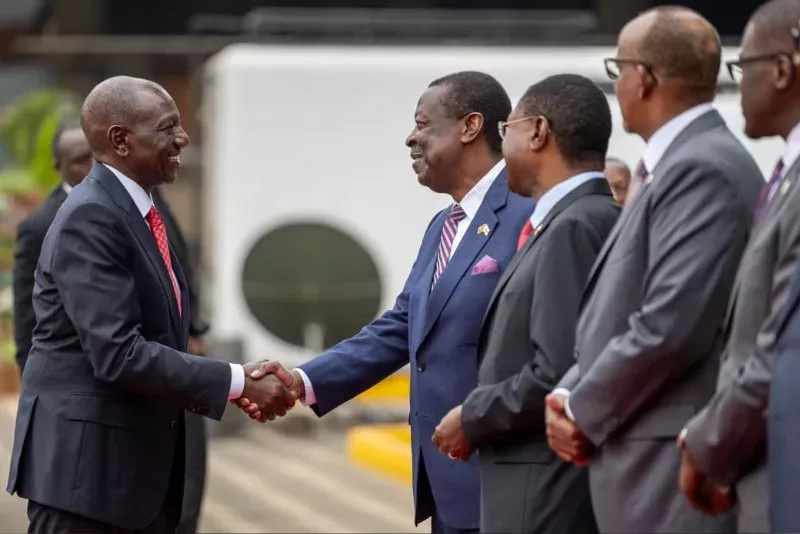
For two days in August, the Kenyatta International Convention Centre became the country's biggest consulting room. Health workers, county officials, patients, development partners and the President himself sat in the same hall and asked one question: are the reforms working for ordinary Kenyans?
The inaugural Kenya Health Summit, convened by the Ministry of Health on August 18 and 19 under the theme "Reforms Delivered, Health as a Right", was built around that question. It was the first time Kenya has held a national health summit of this kind, and it brought together more than 5,000 delegates, over 50 speakers and participants from more than 40 countries.
Two sessions gave the summit its character: the Presidential Town Hall on the opening day, and the Presidential Listening Session that followed on day two. Between them, they turned a policy review into a conversation.
Day one: The Presidential Town Hall
President William Ruto opened the summit on Tuesday, August 18, alongside Deputy President Kithure Kindiki, Prime Cabinet Secretary Musalia Mudavadi, National Assembly Speaker Moses Wetang'ula and Health Cabinet Secretary Aden Duale. After touring the exhibition and innovation marketplace, the President sat down for the session Kenyans had been waiting for.
The Town Hall format was a deliberate break from the usual conference script. Instead of speeches, it gave health practitioners, county leaders and members of the public a chance to raise questions directly with the Head of State on the Social Health Authority, primary healthcare, health financing and access to services.
The President used the session to give an account of the commitments he made in 2022, and the numbers told the story:
- 32.3 million Kenyans are now registered under the Social Health Authority, up from about eight million under the old NHIF.
- Since October 2024, SHA has received more than Sh209 billion and paid more than Sh178 billion to contracted health facilities across all 47 counties.
- More than 10,000 health facilities are accredited to offer services under SHA.
- 107,800 Community Health Promoters have been trained, deployed and are receiving their Sh5,000 monthly stipend, funded jointly by the national and county governments.
- The share of households protected from catastrophic health costs has risen from six per cent to 24 per cent.
- KEMSA's order fill rate has improved to more than 90 per cent, from about 40 per cent.
Maternal care featured strongly. The President said normal deliveries now attract a Sh10,000 reimbursement in both public and private facilities, up from Sh2,500 and Sh3,500 respectively, while caesarean sections are now reimbursed at Sh30,000. He also confirmed that provision of diapers will be added to the maternity package in the tariff review due for gazettement in October.
He pointed to the Emergency, Chronic and Critical Illness Fund as the answer to a long-standing complaint: hospitals demanding payment before treating emergencies. Under the new law, any Kenyan in an emergency is entitled to care, including ambulance support, regardless of insurance status.
On digital health, the President was direct. Digitisation, he said, is not simply about replacing paper with screens. It is about making every patient visible, every payment accountable and every treatment traceable.
Perhaps the most-watched moment came when the President took up the health workforce question head-on. With health workers in several counties raising concerns over pay and terms, he committed to resolving the human resource issue within a week and to meeting governors to find a way forward. Union leaders in the room welcomed the pledge.
He closed with a promise that landed well with the audience: that by the end of his first term, every commitment on the 2022 health list would be delivered, and that he would be ready for what he called the "exams" next year.
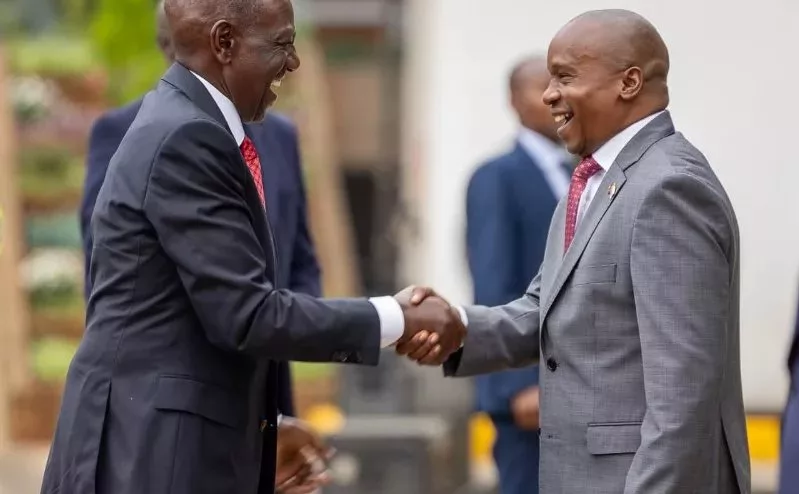
Day two: The Presidential Listening Session
If day one was about accounting for what has been done, day two was about listening to what still needs doing.
The second day, themed "Building Excellence in Maternal and Newborn Health, Specialised and Referral Services", was graced by First Lady Rachel Ruto and led on the government side by Deputy President Kithure Kindiki and CS Duale. The Listening Session put counties, practitioners and patient groups on the floor to speak about their day-to-day experience of the reforms.
Deputy President Kindiki set the tone. A trained health worker without medicine cannot treat, he said, and modern equipment without personnel or maintenance cannot deliver a service. Counties, he stressed, remain central to Universal Health Coverage and primary healthcare, and the national and county governments must work as one system.
Maternal and newborn health took centre stage. Delegates reviewed progress under the Every Woman Every Newborn Everywhere (EWENE) Acceleration Plan 2026-2028, launched by the President in May, and the recently signed five-year, US$80 million partnership with the Beginnings Fund that will extend the programme to 26 priority counties and 200 facilities, with a goal of reaching six million women and newborns by 2031. The planned recruitment of an additional 5,000 nurses and midwives under EWENE was also discussed.
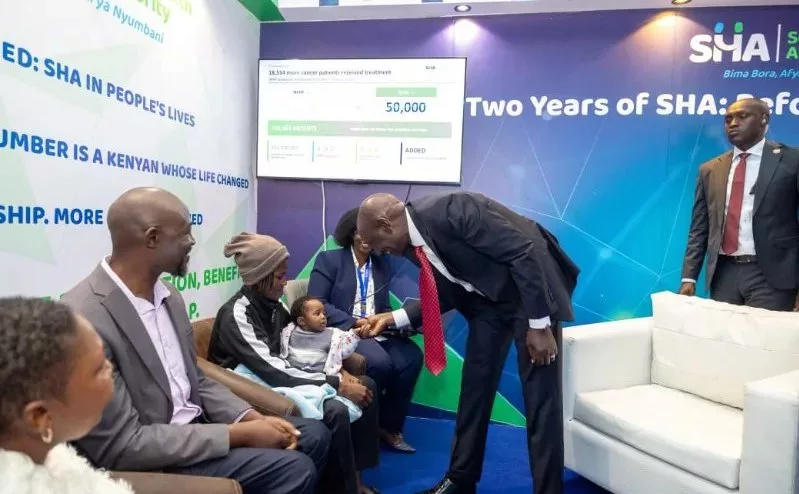
Development partners added their voice. WHO Representative to Kenya Dr Neema Kimambo described Kenya's health reforms as a model of what sustained political leadership can achieve, and confirmed WHO's continued technical support, including for the Kenya Health Products and Technologies Local Manufacturing Strategy 2026-2030.
The session also gave space to civil society and professional bodies to say plainly what needs attention: staffing, the integration of HIV and TB programmes into SHA, and prevention. Amref Health Africa CEO Dr Gitahi Githinji urged the country to invest as much in producing health, through community care and healthier food environments, as it does in treating illness. The President had already committed on day one to take that conversation forward.
The outcome: A plan with names, dates and numbers
The summit closed with the adoption of a Joint UHC Acceleration Plan and a Summit Communique. Prime CS Mudavadi had challenged delegates to ensure every commitment answered three questions: who will do it, by when, and how will Kenyans know it has been done. The plan reflects that. Its headline targets are:
- Grow SHA enrolment from 32.3 million to more than 45 million Kenyans.
- Bring out-of-pocket health spending below 15 per cent of total health expenditure.
- Close the community health coverage gap in all remaining counties by June 2027.
- Resolve the long-pending framework for managing the health workforce.
- Raise locally manufactured products to 75 per cent of KEMSA-supplied commodities by 2028.
The communique assigns timelines and responsibilities to the institutions that will deliver the next phase of reform, and the resolutions will guide the Ministry of Health's work programme in the coming year.
Why it matters
Summits are easy to hold and easy to forget. What set this one apart was that the people responsible for the health system and the people who depend on it were in the same room, on camera, answering to each other. Counties were asked about referrals and stock-outs. KEMSA was asked about supply. Unions were asked about solutions. The President was asked about his own promises.
As one union official put it, everybody who might be accused was present to answer. That openness, and the concrete targets that came out of it, is the real result of the Kenya Health Summit 2026. The next test is delivery, and Kenyans now have a list to measure it against.