What started as a dumping site that one wouldn't look at twice has transformed over the past few years into a serene getaway: John Michuki Memorial Park. A nature park tucked away in the heart of Nairobi CBD at Kijabe Street.
The park, now a public green space along Nairobi River, has undergone a remarkable transformation from a neglected and polluted site into an urban nature haven. Stretches of green, trees swaying, the sound of the river flowing, with people strolling around the park and friends catching up, is a sight that is appealing to the eye and very therapeutic, I must say.
The story of the park, however, goes beyond the trees and ambience. It is a story of an environmental legacy.
The park was initially reclaimed from a dumpsite in 2008 during the tenure of the late John Michuki as the Minister for Environment. The park, which was formerly known as Mazingira Park, was later renamed John Michuki Memorial Park in his honour in 2012.
Michuki, who died in 2012, was widely recognised for his firm approach to environmental conservation and his efforts to clean up the environment, including the Nairobi River, which had been heavily polluted. And due to his passion and commitment, he garnered many accolades in his lifetime.
His work left a mark on Kenya's environmental conservation efforts, and the park bearing his name offers one of the more visible reminders of that legacy.
After the park's initial transformation during Michuki’s tenure as Environment Minister, it later fell into neglect. The area became associated with insecurity and illegal activities, such as theft, drug dealing and a hub for street children and stray dogs, while sections of the Nairobi River became heavily polluted with solid waste.
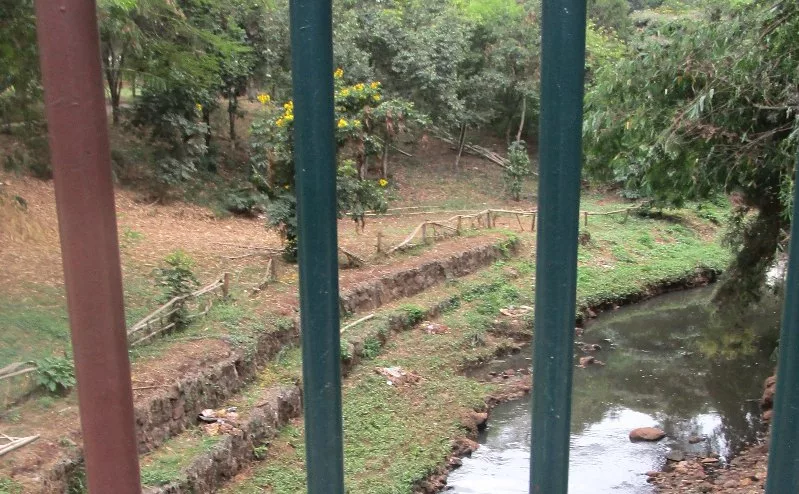
Eventually In 2020, the government revived efforts to reclaim the space as part of the wider Cleaning Up Kenya campaign. The Nairobi River was also targeted as part of the restoration efforts, with work carried out to clear waste and illegal discharges and stabilise sections of the riverbank. Gabions were also constructed to help protect the riverbanks from erosion and flooding.
A community forest association was formed to encourage residents and surrounding communities to participate in the sustainability of the green space. By August 2020, the rehabilitated park was finally open to the public.
Walking into Michuki Park today offers a striking contrast to the site's former identity. The sounds of Nairobi's busy roads remain nearby, but inside the park, the atmosphere changes to a tranquil, serene vibe.
The Nairobi River winds through the park, while a bridge provides one of the spots from which visitors can take in the landscape. For someone working or doing business in the CBD, it offers a space where one can have a quick escape and slow down for a day.
That accessibility is perhaps one of the park's biggest attractions. Unlike some recreational destinations that require visitors to dig into their pockets before enjoying the outdoors, Michuki Park has generally remained accessible to the public without an entrance fee, although visitors may be required to register at the gate and parking may attract a charge.
The transformation, however, should not be mistaken for a finished story. The park is still a work in progress, particularly when viewed against the larger challenge of restoring the Nairobi River. Some sections require continued maintenance and investment, while the condition of the river remains an important part of the park's overall experience.
Nevertheless, John Michuki may be gone, but the work he championed continues to live in places such as this.
And for anyone looking for an affordable way to tap into nature without leaving Nairobi, Michuki Memorial Park is worth a visit.