
The Pharmacy and Poisons Board (PPB) has outlined comprehensive reforms aimed at strengthening patient safety, enhancing regulatory oversight, and enforcing strict compliance across Kenya's healthcare system
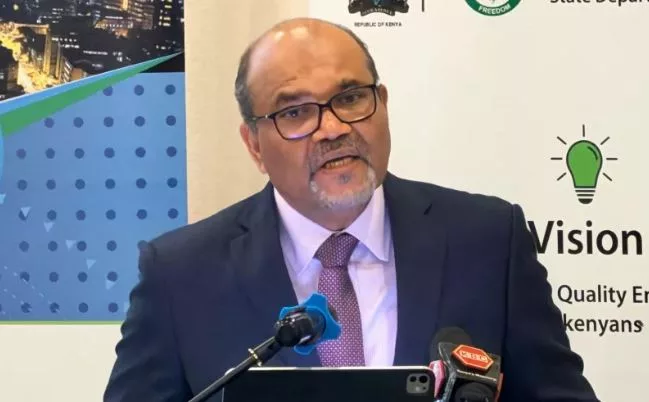
Speaking during the 22nd Annual Scientific Conference on July 30, 2026, PPB Chairperson Dr John Munyu emphasised that the healthcare landscape is changing rapidly through new technologies, evolving care models, and increasing patient expectations
However, he noted that amid these changes, every Kenyan deserves medicines that are safe, effective, and of assured quality, provided by qualified professionals operating within a robust regulatory framework
He stressed that regulation and professional practice are partners in the same mission, stating that a strong profession requires a strong regulator and that both exist for one purpose: to protect the patient.
Addressing ongoing structural transformations, Dr Munyu explained that the board has undergone far-reaching institutional reforms over the past 10 months
These changes aim to build a modern, transparent, and internationally respected National Medicines Regulatory Authority as the agency prepares for the WHO Global Benchmarking Tool assessment in September to reach WHO Maturity Level 3
He reaffirmed that these reforms are not meant to create unnecessary regulatory burdens, but to strengthen public health protection while allowing ethical professionals and legitimate businesses to thrive
A central focus of the address was the full implementation of Good Storage and Distribution Practice (GSDP) across the entire supply chain
Pointing to the risk-based inspection framework adopted on October 30, 2025, anchored on WHO standards, Dr Munyu reminded practitioners that these rules apply equally to wholesalers, community pharmacies, and hospital pharmacies
"Medicines do not become poor quality only because they were poorly manufactured," he warned
"They also become poor quality when they are poorly stored, poorly transported or poorly handled
He called on all pharmaceutical technologists, superintendents, and proprietors to review their premises, quality systems, and documentation to ensure strict compliance
 Public Health PS Mary Muthoni and the Pharmacy and Poisons Board (PPB) Chairperson Dr John Munyu during the 22nd Kenya Pharmaceutical Association Scientific Conference in Mombasa/HANDOUT
Dr Munyu also tackled systemic breaches in professional ethics, highlighting instances where inspectors encountered non-qualified individuals—including spouses, relatives, and children—dispensing medicines while licensed professionals were absent
"If it compromises patient safety, it has no place in pharmaceutical practice. If it undermines professional integrity, it has no place in our profession. If it violates the law, it has no place in Kenya's healthcare system"
He warned that the integrity of the profession cannot coexist with licence renting, absentee superintendents, unqualified practice, unlicensed premises, or sourcing products through unlicensed suppliers, noting that such illegal practices place lives at risk and damage public confidence
To curb these abuses, the PPB, in collaboration with the Digital Health Agency, announced the rollout of Kenya's National Authentication and Traceability System alongside Practice360 and Facility360
Beginning August 3, 2026, systems for Track and Trace, Practice360, and Facility360 officially go live, establishing end-to-end visibility and batch-level traceability before transitioning to full serialisation on January 1, 2027
Dr Munyu noted that this digital overhaul will end the practice of professionals registering licenses in Nairobi while permanently residing elsewhere without providing oversight
He urged all practitioners and facilities to complete onboarding by October 31, 2026, cautioning that there will be no deadline extensions or negotiations, and that no practice or premise licenses will be processed for the 2027 licensing cycle without completed onboarding
Turning to enforcement, Dr Munyu highlighted recent intelligence-led operations that led to the arrest of over 95 individuals operating unlawfully
He revealed that recovered documentation allowed inspectors to trace non-compliant supply routes back to wholesale dealers, leading to regulatory and disciplinary actions against 22 wholesale entities allegedly involved in supplying illegal outlets

He stressed that accountability extends across the entire supply chain and warned that practitioners who delay compliance risk facing the same consequences as legacy product holders whose unregistered items were removed from the official register earlier in the year
In his closing message, Dr Munyu urged all practitioners to embrace the changes early and prepare for the 2027 licensing cycle, asking the fraternity to "choose professionalism over shortcuts and ethics over expediency.
The conference was officially opened by Principal Secretary for Public Health and Professional Standards Mary Muthoni.
It brought together pharmaceutical professionals, regulators, academia and industry leaders.
The conference was held under the theme, “Optimising Pharmaceutical Practice to Advance Patient Safety, Medicine Access and Healthcare Excellence.”
Also in attendance were Kenya Pharmaceutical Association President Chitchi Aman, Secretary General Eric Gichane, and other leaders in the pharmaceutical sector.



![Africa CDC Director General Dr Jean Kaseya at a past event. [Photo: Arthur Mbuguah, WHM]](https://cdn.radioafrica.digital/image/2026/10/8ced213c-affb-4dff-97ca-1b6bac1f958e.webp)