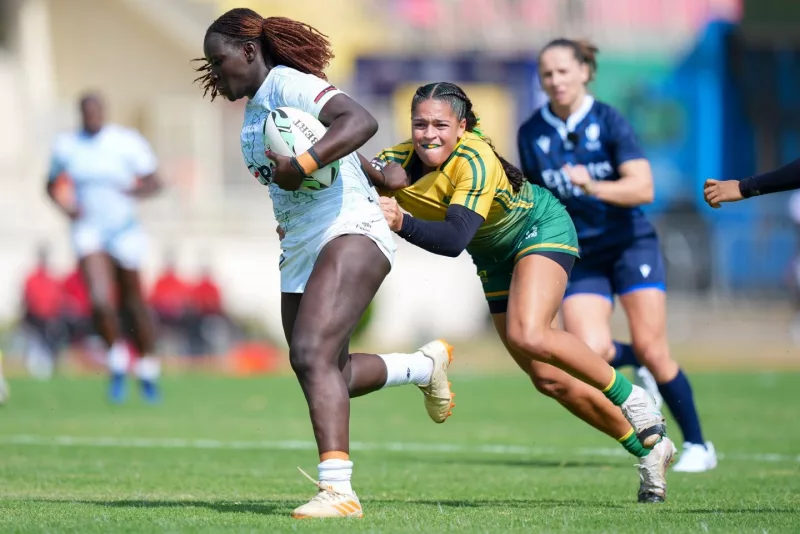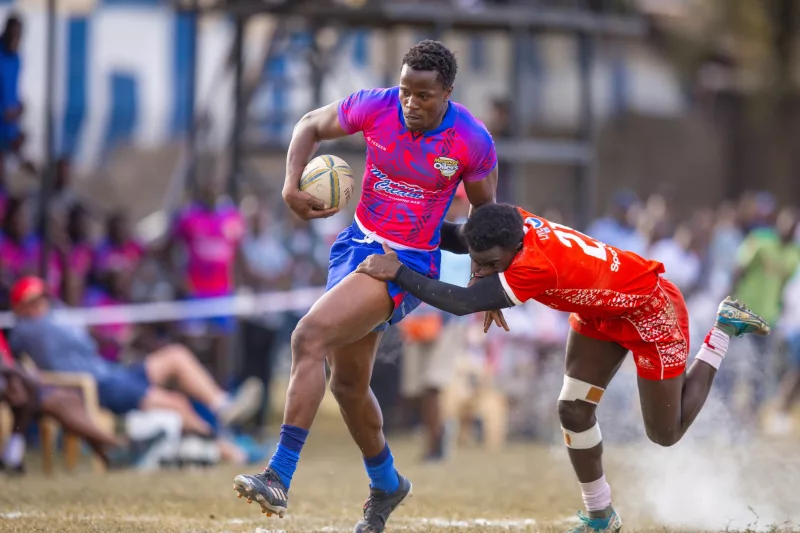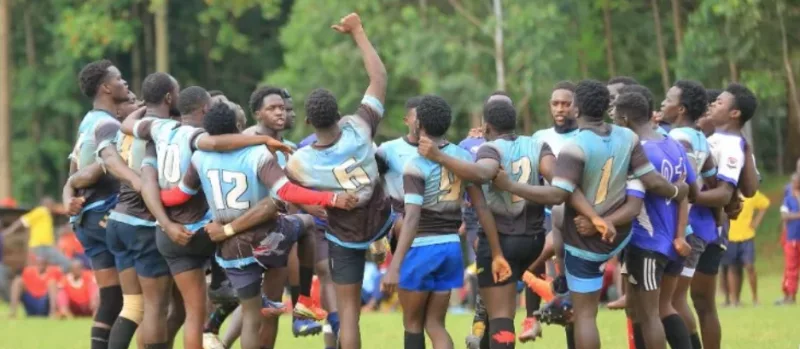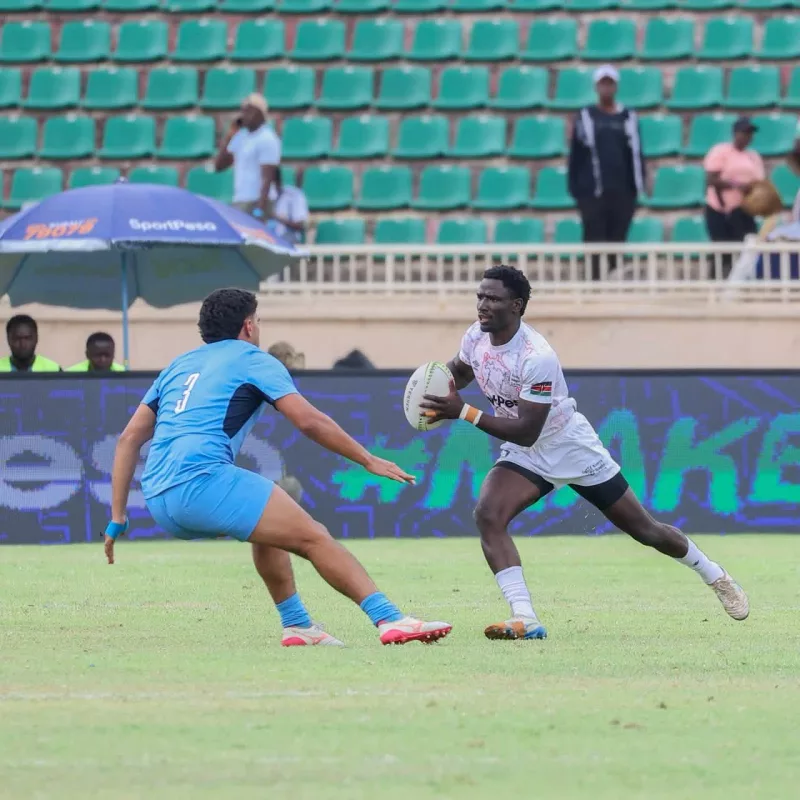
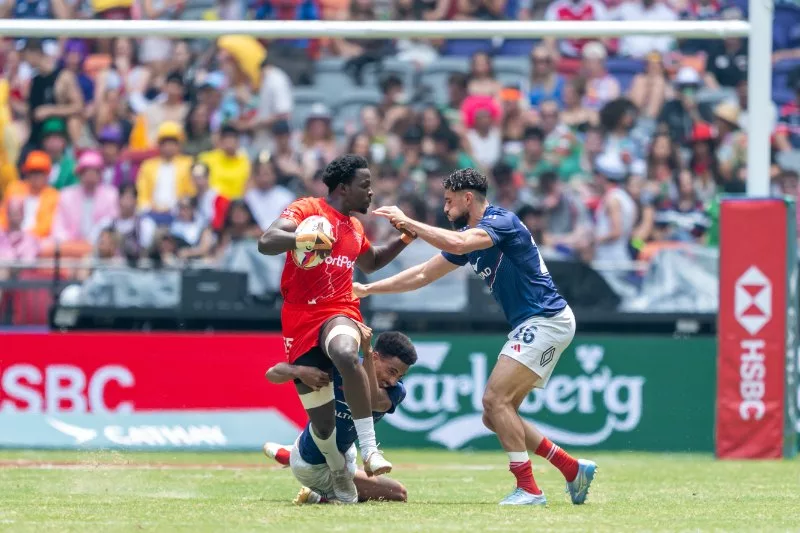
 Gabriel Ayimba in action for Shujaa/HANDOUT
 For Gabriel “Gabby” Ayimba, the sound of his surname carries a meaning that extends far beyond personal identity.
It represents a history of sacrifice, achievement and belief, a legacy built by a father whose contribution to Kenyan rugby remains firmly etched in the memory of a nation.
Every time Gabriel steps onto the rugby field, he carries the weight of expectations that come with being the son of Benjamin Ayimba, the former Shujaa player and coach whose name remains attached to one of Kenya’s greatest sporting triumphs.
Benjamin’s leadership at the 2016 Singapore Sevens, where Kenya lifted its first-ever World Rugby Sevens Series title, transformed him into one of the most respected figures in the country’s sporting history.
For Gabriel, however, the Ayimba name is not a burden he wants to escape. It is a source of inspiration, a reminder of the standards he must pursue and a challenge to chase achievements that will eventually be associated with him alone.
“My main target has always been and will always be to beat his achievements,” Gabriel said. “They say aim at the sun and land on the moon, so he is my sun, and I hope I get to the moon. His achievements are what keep me going and what make me want to keep improving.”
The ambition is clear, but so is the respect. Gabriel does not speak about surpassing his father from a place of comparison or competition. Instead, he views Benjamin’s success as the foundation upon which he wants to build his own journey.
The path to becoming a senior national team player has been gradual, shaped by patience, discipline and a willingness to earn every opportunity.
Unlike athletes who arrive with immediate attention, Gabriel’s rise has been built through Kenya’s rugby development system, where each stage has demanded more from him.
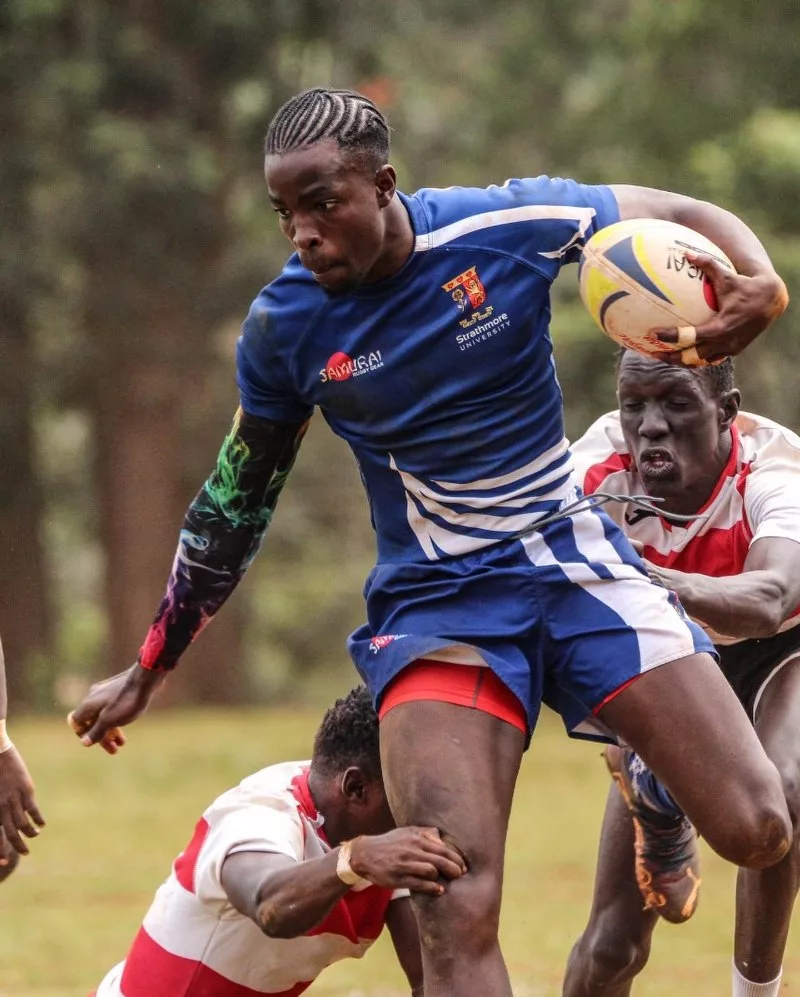 Gabriel Ayimba in action for Strathmore Leos/HANDOUT
 His story began at Maseno School, the same institution where Benjamin Ayimba developed his own rugby credentials. The connection was obvious, and comparisons were inevitable, but Gabriel understood that a famous surname could only take him so far.
“At Maseno, people already knew who my father was, but when you get onto the field, nobody gives you anything because of your name,” he said. “You have to work hard and prove yourself.”
Between 2018 and 2021, Gabriel established himself as one of the school’s leading players, combining physical strength with an understanding of the game that continued to improve with experience. His leadership qualities were recognised when he was appointed assistant captain, a role that reflected his ability to influence teammates both on and off the pitch.
Although rugby would eventually become his career ambition, Gabriel admits his early introduction to the sport was driven by practical realities rather than dreams of international success.
“When I first got into rugby, I didn’t really have clear goals. It was mostly about school fees,” he revealed.
His journey mirrors that of many Kenyan athletes who discover their potential through opportunities provided by sport. What began as a pathway for education gradually became a pursuit of excellence.
“But after finishing high school and pushing to break into the national team, I started seeing the bigger picture,” he added.
That bigger picture involved representing Kenya, but Gabriel knew that reaching the top would require patience. His progression through the national structures reflected a player willing to learn at every stage.
After Maseno, he earned selection to the Chipu, Kenya’s Under-20 national team, where he gained valuable international experience and continued to develop as a forward. The step exposed him to higher levels of competition and helped him understand the demands of succeeding beyond school rugby.
“Once you get into the national set-up, you realise that talent alone is not enough,” Gabriel said.
“You have to keep improving because everyone around you is talented. The difference comes from discipline and commitment.”
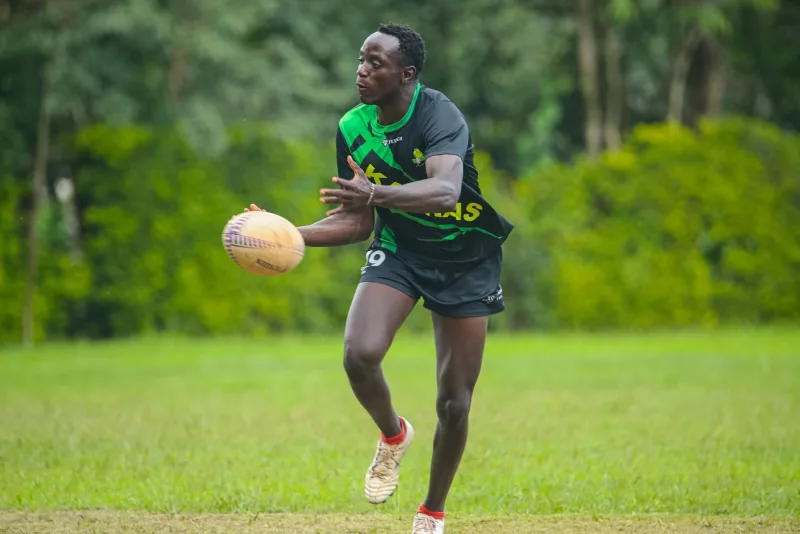
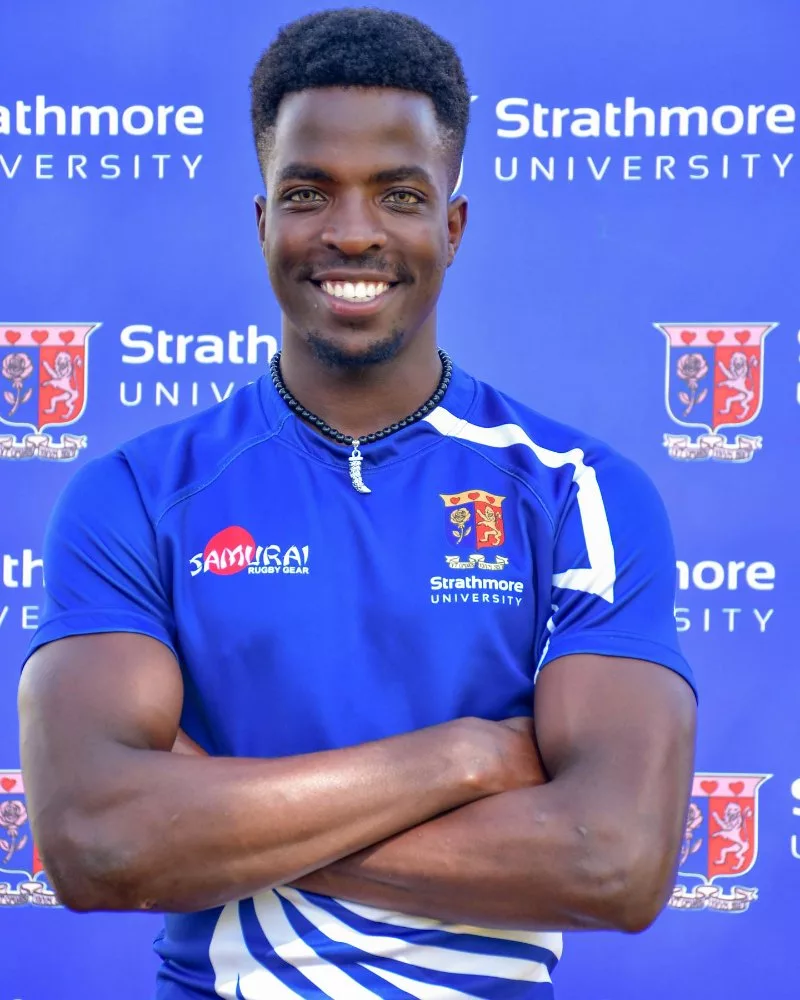 Gabriel Ayimba in Strathmore Leos colours/HANDOUT
 His performances earned him promotion to Kenya Morans, the country’s second-string Sevens team and a crucial bridge between emerging talent and Shujaa.
For Gabriel, Morans represented an important stage of his development because it placed him closer to the dream he had been chasing.
“It means a lot considering I have been trying to get into Shujaa for the longest time,” he said. “I first got into Morans and having that build-up has been such an important opportunity for me.”
The experience strengthened his confidence while exposing him to the intensity and tactical demands of international rugby.
Away from the national setup, Gabriel continued to make his mark at club level with Strathmore Leos, where he combined university studies with competitive rugby. The environment helped him mature not only as a player but also as a leader.
His influence at Strathmore extended beyond his physical qualities as a forward. He became a dependable figure within the squad, someone teammates looked up to when challenges emerged, and someone coaches trusted to set the standards.
Leadership eventually followed naturally, with Gabriel being appointed captain after first serving as co-captain.
His time at Strathmore coincided with a successful period for the club. The Leos captured the Embu Sevens and Prinsloo Sevens titles during the 2025 National Sevens Circuit before finishing runners-up overall, confirming their status among Kenya’s strongest rugby programmes.
For Gabriel, those achievements were built on unity rather than individual brilliance.
“This being a team sport, bonding is one of the biggest things that helps a team win,” he explained. “If there is no bond in a team, there will be no victory. The bond in this group has been great.”
The same mentality has shaped his approach to the national team. However, Gabriel’s road to Shujaa was not without disappointment. Ahead of the HSBC SVNS Division Two campaign, he missed selection for the Nairobi leg despite being part of the wider preparations.
It was a difficult moment for a player who had spent years working towards that opportunity, but Gabriel chose to view the setback as another lesson rather than a reason to give up.
“There are moments when things do not go your way, but that is part of sport,” he said. “You have to keep working because another opportunity can come when you least expect it.”
That opportunity eventually arrived when he earned his maiden senior call-up, marking the realisation of a dream that had been built through years of commitment.
For Gabriel, wearing the Shujaa jersey carries emotional significance because it represented not only personal achievement but also the continuation of a family connection with Kenyan rugby.
Still, he understands that being Benjamin Ayimba’s son means comparisons will always exist. “There is a lot of pressure that comes with it because some fans compare me to him,” Gabriel admitted. “It’s really tough, but I just focus on the main thing and ignore the rest of the noise. That’s what keeps me going.”
His response reflects a player who has learned to embrace expectations without allowing them to define him.
He is proud of his father’s achievements, but he is equally determined that his own career will not be measured only by comparison.
“My goal now is to win an HSBC circuit title,” he said. “I want to win one or two, either as a player or a coach, and in doing so, beat my father’s legacy.”
It is a target that demands ambition, resilience and consistency, qualities Gabriel has displayed throughout his rise from Maseno School to the national stage.
Benjamin Ayimba’s legacy in Kenyan rugby is already secure. His son’s journey, however, is still unfolding. The Ayimba name may have opened the first chapter, but Gabriel is determined to write the remaining pages with his own performances, his own victories and his own story.