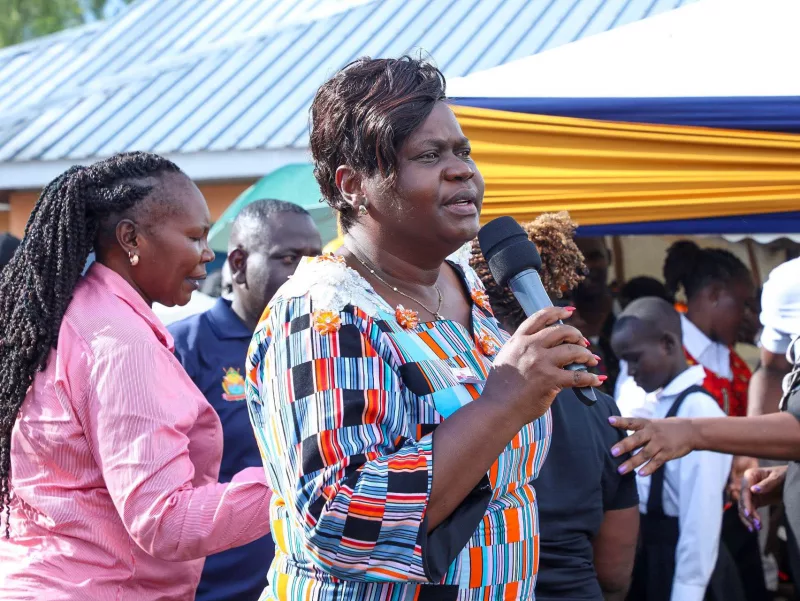
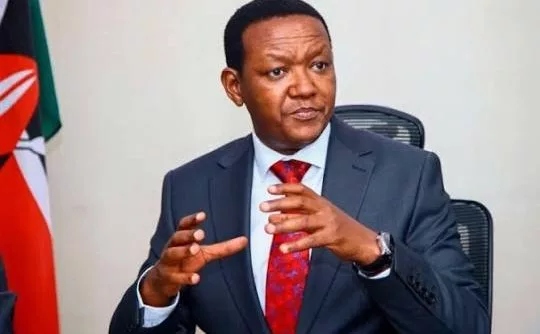
 Labour CS Alfred Mutua /HANDOUT
Labour CS Alfred Mutua has warned that government offices, private buildings and construction sites that fail to comply with disability access and occupational safety laws face closure.
Appearing before the Senate on Wednesday, Mutua said his ministry would begin a nationwide crackdown on buildings without facilities for persons with disabilities (PWDs).
He also vowed to crack down on construction sites and businesses that expose workers and the public to excessive noise.
"We have passed a disability law. If you have a building, that building needs to comply. It must have ramps and lifts. Once a blind person can touch the buttons, they should be able to read the floors," Mutua told senators.
"Do not be surprised if some Senate buildings are shut down. We are going to enforce this to ensure all government agencies, whether national government, county government, the Judiciary or even Parliament, comply with the law."
The CS said disability rights would no longer remain on paper, adding that public institutions must lead by example before demanding compliance from private developers.
His remarks came as he responded to several Senate questions touching on disability inclusion, occupational safety and social protection programmes.
Mutua also announced plans to publish new national guidelines on acceptable noise levels.
The regulations will target construction sites, public transport vehicles, churches, bars, and entertainment joints that expose workers and residents to harmful noise.
"It is important for us as a country to realise that heavy noise, whether in matatus, construction sites, churches, bars or discos, has an effect on people's lifestyle and the long-term impact on their lives," he said.
"I am going to publish guidelines very soon on what we expect in terms of noise levels. County governments are mandated to ensure that noise protection is managed."
The CS expressed concern that some contractors provide hearing protection equipment but fail to ensure workers actually wear it.
"Some contractors have protective gear for the ears but their workers do not have them. That is something I will investigate," he said.
"Do not be shocked if you see me walking around and shutting down some construction sites or stopping constructions where people behave in a manner that is not proper."
Mutua's comments followed concerns raised by senators over hearing loss and workplace safety.
He noted that under the 2019 Kenya Population and Housing Census, about 153,381 Kenyans aged five years and above reported significant hearing difficulties or deafness.
However, he clarified that the figures reflected self-reported functional hearing challenges rather than medically diagnosed hearing loss.
He added that information on patients receiving hearing rehabilitation services is held by the Ministry of Health, which oversees ear and hearing care.
On healthcare, Mutua said persons living with disabilities are entitled to full treatment under the Social Health Authority.
"Any person who is disabled in this country gets free treatment through SHA. It is 100 per cent treatment through SHA," he told senators.
The CS also defended his ministry's enforcement record following the death of a worker at the Talanta Stadium construction project.
He disclosed that labour officers inspected the site in December last year and directed the contractor to correct labour violations.
When the contractor failed to comply, the ministry issued a notice of intended prosecution in January.
"The Ministry is currently preparing the case file for referral to the Office of the Director of Public Prosecutions to prosecute and enforce the law, including recovery of arrears owed," Mutua said in his written response.
He, however, said the ministry had not received complaints regarding delayed or unpaid wages from workers at the Talanta Stadium project.
Mutua said the Ministry of Labour has labour offices in all 47 counties to receive and investigate complaints related to unpaid wages and unfair labour practices. Nairobi alone has two labour offices because of its high volume of employment activities.
He said the Directorate of Occupational Safety and Health Services has established a specialised Construction Safety Division that regularly inspects major projects across the country.
The ministry also reminded contractors that all construction sites must be registered before work begins to ensure compliance with occupational safety standards.
On compensation for workplace deaths, Mutua said the Work Injury Benefits Act provides clear protection for injured workers and families of those killed while on duty.
He said employers are legally required to report workplace accidents, after which the Directorate of Occupational Safety and Health Services assesses the incident and determines compensation payable to the affected worker or dependants.
The CS also updated senators on government social protection programmes.
He said the Inua Jamii programme had 1.14 million older persons and 63,958 persons with severe disabilities on its payroll by the end of March this year, bringing the total number of beneficiaries to more than 1.21 million.
Mutua said the government's Enhanced Single Registry now contains data on 4.4 million households, representing more than 17.6 million Kenyans, and continues to be updated to improve targeting of vulnerable families.
He added that while the Social Protection Act, 2025, allows periodic review of cash transfers to reflect changes in the cost of living, the government has prioritised expanding the number of beneficiaries over increasing the amount paid to each recipient.
INSTANT ANALYSIS
Mutua's hardline stance signals a shift from policy to enforcement on disability rights and workplace safety. If implemented, the crackdown could force public institutions and private developers to invest heavily in accessibility and occupational health standards. His warning also raises pressure on county governments, which are responsible for enforcing noise regulations. However, the success of the initiative will depend on consistent inspections, political will and adequate funding, as previous laws on accessibility and workplace safety have often suffered weak enforcement.