Western Kenya is rapidly emerging as the defining political battleground ahead of the 2027 General Election, with both President William Ruto and a rejuvenated opposition intensifying efforts to win over the region.
With projections indicating the region could have more than 3.2 million registered voters by the time Kenyans go to the polls, Western Kenya is shaping up as one of the country's richest electoral prizes.
The region has become the focus of an aggressive political contest as both camps seek to consolidate alliances, court influential leaders and appeal directly to voters through development promises and sustained grassroots mobilisation.
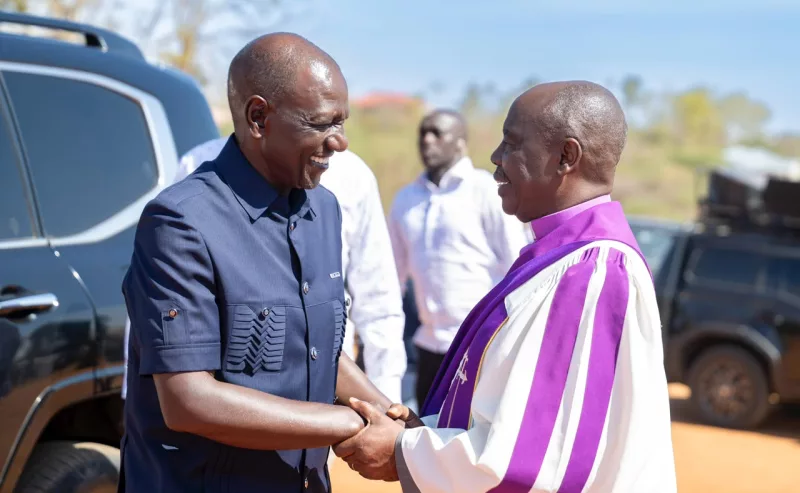
Ruto has made repeated tours of the region, commissioning infrastructure projects, launching development initiatives and rallying support behind his broad-based administration.
His allies argue that sustained government investment in roads, electricity, agriculture and markets demonstrates the administration's commitment to addressing long-standing concerns in the region, while laying the foundation for his re-election bid.
The opposition, however, is equally determined to reclaim and strengthen its influence in the region. Opposition leaders, led by Nairobi Senator Edwin Sifuna, have intensified visits to Kakamega, Bungoma, Busia, Vihiga and Trans Nzoia counties, portraying the next election as a referendum on the country's economic direction and governance.
Their message centres on the rising cost of living, youth unemployment and what they describe as unmet promises by the Kenya Kwanza administration.
Political observers say the opposition believes it can make significant gains in Western Kenya, buoyed by Sifuna's growing popularity and speculation that he could feature prominently on the coalition's presidential ticket either as its flag bearer or running mate.
Political analyst Fred Sasia said the growing electoral importance of Western Kenya could also reshape Ruto's calculations on his running mate ahead of the 2027 polls.
"While the President has not publicly indicated any intention of changing his running mate, speculation has persisted within political circles that selecting a candidate from Western Kenya could significantly bolster his support in the region," Sasia said.
He argued that such a move would signal the administration's commitment to giving Western Kenya a greater stake in national leadership, while helping to consolidate support in one of the country's fastest-growing electoral blocs.
Sasia noted that unlike some regions that traditionally vote overwhelmingly for one political formation, Western Kenya has increasingly become competitive political terrain.
"For both President Ruto and the opposition, Western Kenya represents far more than another campaign stop," he said.
“It is an electoral prize whose sizeable voting population could prove decisive in a race expected to be fiercely contested.”
The region's growing importance has also revived debate over who should occupy the Deputy President's slot in the 2027 election.
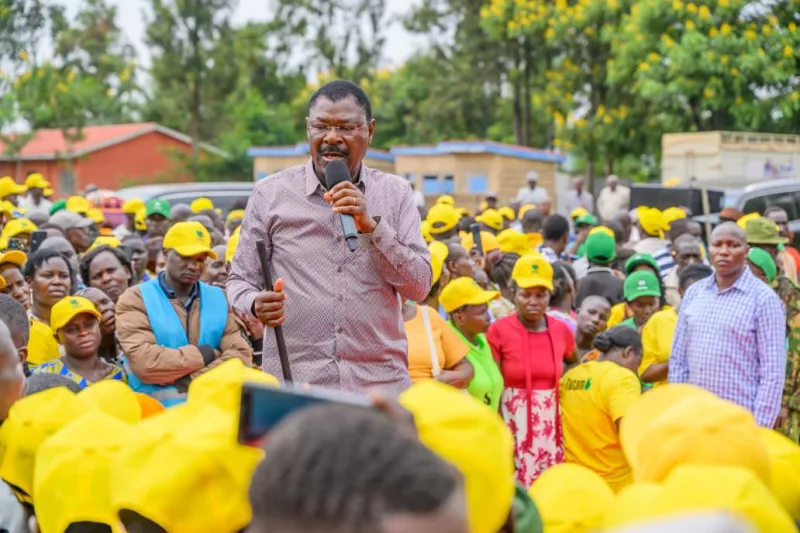
Already, political leaders from Western Kenya are actively pushing for National Assembly Speaker Moses Wetang'ula to be considered for the position, arguing that the region's voting strength entitles it to a greater share of national leadership.
Kakamega Governor Fernandes Barasa has been among the strongest proponents of the proposal.
"As the people of Western Kenya, we have identified our own leader, and that leader is Moses Masika Wetang'ula. He is equal to the task," he said during a women empowerment programme in Lurambi constituency on June 27.
“After we re-elect President William Ruto in 2027, we expect the presidency to come to Western Kenya in 2032.”
Wetang'ula has also maintained that Western Kenya possesses sufficient political leverage to negotiate for the Deputy President's position in the next government.
In a twist that underscores the region's growing political value, National Assembly Minority Leader Junet Mohamed recently endorsed former Kakamega Governor Wycliffe Oparanya as Ruto's possible running mate.
"I will be very happy if Ruto picks Oparanya as his running mate. He will have fulfilled Baba's dream of having one ODM member on the road to being the President of Kenya," Junet said during an event in Busia county, referring to ODM leader Raila Odinga.
On the opposition side, DAP-K Western Kenya coordinator Caleb Burudi argued that Sifuna's inclusion on the presidential ticket would significantly strengthen the coalition's appeal in the region.
"Although Sifuna's political base is in Nairobi, his roots in Western Kenya and his prominence in the opposition have elevated his profile across the region," Burudi said.
He argued that Sifuna's presence on the ticket could energise young voters, reinforce regional solidarity and help the opposition consolidate support across the Western counties.
"A Sifuna candidacy would give the opposition a compelling campaign narrative in Western Kenya, allowing it to present one of the region's own as a potential occupant of the country's second-highest, or even highest, office," he said.
According to Burudi, such a move could increase voter turnout and make it more difficult for Ruto's allies to make further inroads into the region.
He, however, cautioned against viewing Western Kenya's politics purely through the lens of regional identity.
"The economy, development record, local political alliances and the eventual composition of the presidential tickets are all likely to influence how Western Kenya votes in 2027," he said.
“While Sifuna's inclusion could enhance the opposition's prospects, it would not, on its own, guarantee overwhelming support from the region.”
Kakamega Deputy Governor Ayub Savula also described Western Kenya as one of the regions that will determine the outcome of the 2027 General Election.
He said leaders allied to Ruto are already putting in place strategies to ensure the region votes overwhelmingly for the Kenya Kwanza coalition.
"Western Kenya has enough votes to significantly influence the national outcome if its electorate turns out in large numbers," Savula said.
He expressed confidence that, unlike in previous elections when the region's vote was split among competing presidential candidates, leaders are working to unite Western Kenya behind a single candidate.
"We are confident that this time the votes will go into one basket. If Western Kenya speaks with one voice, it will play a decisive role in determining who forms the next government," Savula said.