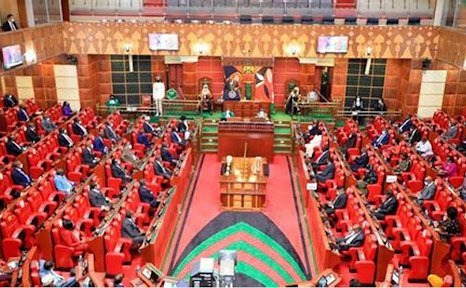
 Lawmakers/FILE
The funds were subscription fees paid by public technical training institutions.
Read Also
KATTI is an umbrella body that brings together national polytechnics, technical institutes, vocational colleges and other middle-level training institutions across the country.
Members of the Public Investment Committee on Governance and Education have questioned the association’s legal status, operations and accountability in handling public funds received from TVET institutions.
The issue emerged during the committee’s meeting with Meru National Polytechnic to consider the audit report for the 2024-25 financial year.
Auditor General Nancy Gathungu flagged the irregular transfer of funds by Meru National Polytechnic to the association.
Gathungu said the polytechnic transferred Sh894,800 without adequate assurance that the association had proper financial management and internal control systems, as required under the Public Finance Management regulations.
“The management was in breach of the law,” the audit report stated, noting that there was no assurance KATTI was recognised within the Government of Kenya framework.
Meru National Polytechnic chief principal Dr Mutembei Kigege, however, defended the association, describing it as a key stakeholder in the TVET sector.
“KATTI is the national umbrella body that brings together TVET institutions in Kenya, including national polytechnics, technical training institutes, vocational colleges and other middle-level training institutions,” Dr Kigege told the committee chaired by Luanda MP Dick Maungu.
He added that KATTI works closely with the Ministry of Education, the Technical and Vocational Education and Training Authority (TVETA) and the Kenya National Qualifications Authority (KNQA) in advancing competency-based education and training.
“Our programmes are usually approved by the Ministry of Education State Department for Vocational Education and our schedule of activities is approved by the ministry,” he told the committee.
He compared KATTI to the Kenya Secondary School Heads Association and the Kenya Primary Schools Heads Association, saying it serves as a coordination and consultative body for TVET institutions.
However, MPs questioned whether the association was properly registered and whether it should continue receiving money from public institutions without clear accountability mechanisms.
Maungu said the committee needed to establish the association’s legal standing and financial operations.
“I think it is upon this committee to dig deeper because KATTI is a beneficiary of public funds. We may need to know where they are, how they operate and possibly have them audited because they are consumers of public funds,” he said.
Central Imenti MP Moses Kirima backed the proposal to summon KATTI officials before the committee.
“We have the mandate and authority to summon institutions which receive public money from institutions of higher learning,” he said.
Dr Kigege acknowledged that KATTI’s status had remained an audit query in many TVET institutions for years but urged lawmakers not to disband the association.
“The initiative should not be to kill KATTI because it adds value and is highly consulted on matters affecting the running of TVET institutions,” he said.
“The spirit should actually be to see how to register it properly and have it fully operational because it serves us well.”
He also suggested the government fast-tracks the establishment of a TVET Trainers Service Council, saying such a body could provide a more formal framework for coordination within the sector.
Lunga Lunga MP Mangale Manga said the Ministry of Education should also be invited to present its position on KATTI before the committee makes a final determination.
Maungu warned that large sums of money could be flowing through the association from TVET institutions across the country.
“If one institution can give Sh1 million, you can imagine the kind of money KATTI is controlling,” he said.
The committee indicated that it would summon KATTI officials to explain the association’s operations, registration status and management of funds received from public learning institutions.
INSTANT ANALYSIS
KATTI is an umbrella body that brings together national polytechnics, technical institutes, vocational colleges and other middle-level training institutions across the country.