The public threat by a section of UDA MPs to quit the party over Hassan Omar’s controversial remarks has laid bare the growing hostility President William Ruto is facing in Mt Kenya.
What began as anger over Omar’s ‘profiling’ remarks in Mombasa has now snowballed into a wider expression of dissatisfaction.
Mt Kenya was once considered UDA’s strongest political base, and its votes propelled Ruto to power in 2022.
The sharp response by MPs on Wednesday was not just about defending the Kikuyu community against what they termed ethnic profiling.
It is also a reflection of the pressure they are increasingly facing from the ground.
Association with UDA is becoming politically difficult in the region, especially after the impeachment of Rigathi Gachagua as Deputy President.
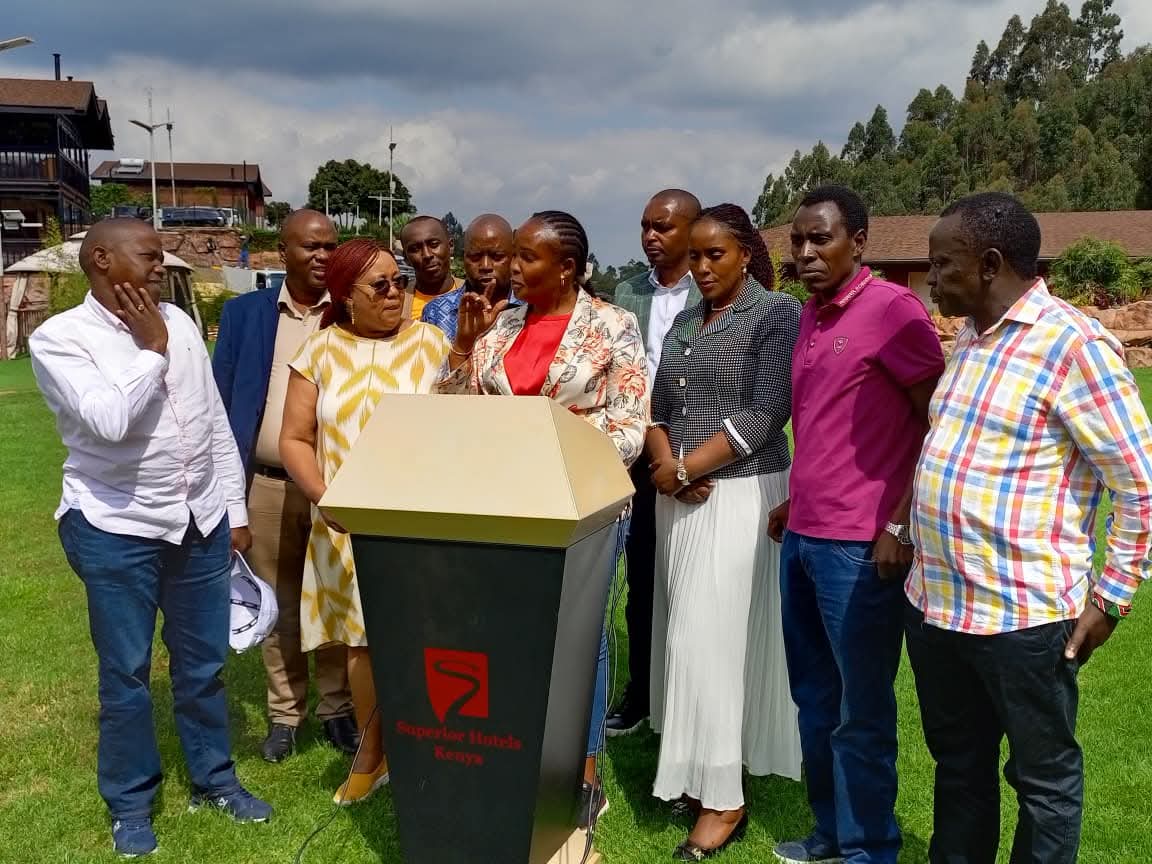
Led by Laikipia Woman Representative Jane Kagiri, the lawmakers rejected Omar’s apology and demanded his immediate resignation as UDA secretary general.
They accused Omar of making divisive remarks that risk inflaming ethnic tensions.
“We do not want explanations. We have rejected the apology and we demand immediate resignation,” the MPs declared, in one of the strongest internal rebellions the ruling party has faced from leaders within its own ranks.
Also present at the joint presser were Nyandarua Woman Representative Faith Gitau, Kabete’s Githua Wamacukuru, John Wanjiku (Kiambaa) and Thika Town’s Alice Ng’ang’a.
The joint presser came after days of other legislators castigating Omar individually.
These include Murang’a Woman Representative MP Betty Maina and her Nyeri counterpart Rahab Mukami.
Kirinyaga Governor Anne Waiguru has also condemned Omar’s remarks, whereas Nyeri’s Mutahi Kahigaahs called for his resignation.
But beyond the outrage over Omar’s comments, the MPs’ unusually aggressive tone reveals the widening disconnect between UDA’s national leadership and the political mood in Mt Kenya.
Privately, some leaders in the region admit that the ground has become increasingly hostile to the ruling party.
Elected leaders are increasingly struggling to defend the government and the party in public forums.
Kiambaa’s Wanjiku told the Star on the phone that such remarks would make their work of popularising UDA in the mountain harder.
He said without Omar’s resignation, they would have no other option but to decamp
Already, that political discomfort is beginning to shape early 2027 calculations.
Murang’a Governor Irungu Kang’ata has publicly said he will not seek re-election on a UDA ticket, openly citing the party’s declining popularity in the region.
Kiambu Governor Kimani Wamatangi has taken a similar position, signalling he, too, would avoid defending his seat under the ruling party.
Their decisions sent shockwaves through UDA because both governors were among influential leaders who rode on the party’s wave in 2022 when Mt Kenya overwhelmingly backed President Ruto following his fallout with former President Uhuru Kenyatta.
In Kirinyaga, gubernatorial aspirant Wangui Ngirici has also distanced herself from UDA after months of speculation over her political future.
Her exit was widely interpreted as another sign that politicians in the region are beginning to acknowledge the anti-UDA attitude on the ground won’t change and to reposition themselves early.
The latest fallout involving Omar thus appears to have provided an outlet for some of those politicians seeking an excuse to leave for political survival.
The MPs warned that if no action is taken against Omar, they could escalate the matter directly to President Ruto and even reconsider their continued stay in the party.
Such statements would have been almost unthinkable in UDA barely two years ago, when the party enjoyed near-unanimous support across the region.
Now, however, cracks are increasingly emerging in public.
Political observers say the hostility towards UDA in parts of Mt Kenya has been fuelled by a combination of economic frustrations, unmet political expectations and shifting alliances following the impeachment of former Deputy President Rigathi Gachagua.
Gachagua’s fallout with the President dramatically altered political dynamics in the region, with many local leaders now caught between loyalty to the ruling party and political survival through Gachagua’s camp.
While few leaders are willing to directly confront President Ruto, fence-sitters are also becoming careful not to appear too closely tied to unpopular party positions or controversial national figures.
It is within this context that Omar’s controversy is emerging. The MPs’ reaction appears carefully calibrated not just to condemn the remarks but also to signal to voters back home that they are willing to stand up against the party leadership when regional interests are perceived to be under attack.
This places UDA in a dangerous position despite months of seeking to win back the support base.
With the dissent no longer coming from a few and fringe figures allied to Gachagua and now being voiced openly by MPs and governors from within, it portends a dangerous future for the party.