The government has announced it has identified emergency medical sites in more than 10 high-risk border counties to quarantine and isolate Kenyans who may be exposed to the deadly Ebola virus.
The Ministry of Health also confirmed Kenya will proceed with a controversial US-supported isolation facility in Laikipia.
Health Cabinet Secretary Aden Duale pointed to past health crises, specifically highlighting the regional treatment infrastructure set up at the Nairobi Hospital by the United Nations Office at Nairobi (UNON) during the global Covid-19 pandemic, as proof that the US Laikipia Ebola base was not the first.
“These investments will strengthen Kenya's health security by improving laboratory capacity, healthcare infrastructure, disease surveillance, emergency response systems, supply chains, and workforce readiness beyond the current Ebola threat," Duale said in a statement.
However, public health experts continued to question whether Kenya should host such the Laikipia centre, particularly at a time when the region is dealing with active outbreaks.
Global public health expert Dr Bernard Muia, who is a former Deputy Director of Medical Services, said the proposal raises serious concerns.
“I was trained in Israel in public health. The proposal to quarantine Americans in Kenya is very alarming that Kenya has agreed to accept the centre in Laikipia,” Muia said.
“US has come too little too late, given that Ebola has been in DRC since 1976. We’ve been having outbreaks of Ebola. Seventeen episodes since 1976 according to our forums in Global public health.”
He said the courts should intervene to stop the project.
“The courts in Kenya should stop it completely. US should have established the centre earlier. The intention is good, but timing is ill-advised,” said Dr Muia, also a former Health CEC at Nairobi County.
“The risk of actively contracting it here is very high. You should establish it when there’s no outbreak. US should help those countries DRC and Uganda to contain the outbreak. We are not in a position to allow patients here.”
However, the Ministry of Health defended the move, saying the facilities are part of broader efforts to strengthen the country’s ability to detect and respond to infectious diseases before they spread.
“The ongoing Ebola outbreak in the Democratic Republic of Congo is a reminder that infectious diseases do not respect national borders. As a regional hub for trade, travel, and commerce, Kenya must remain prepared to prevent, detect, and respond to public health threats before they reach our communities,” Duale said.
He added that border screening alone is not enough.
“Protecting Kenyans requires more than hoping diseases do not cross our borders or relying solely on screening at points of entry. It requires a comprehensive approach that combines effective surveillance and border screening with strong preparedness and response systems before a crisis emerges, not after it has already taken hold.”
According to the ministry, several specialised isolation and treatment facilities are already in place.
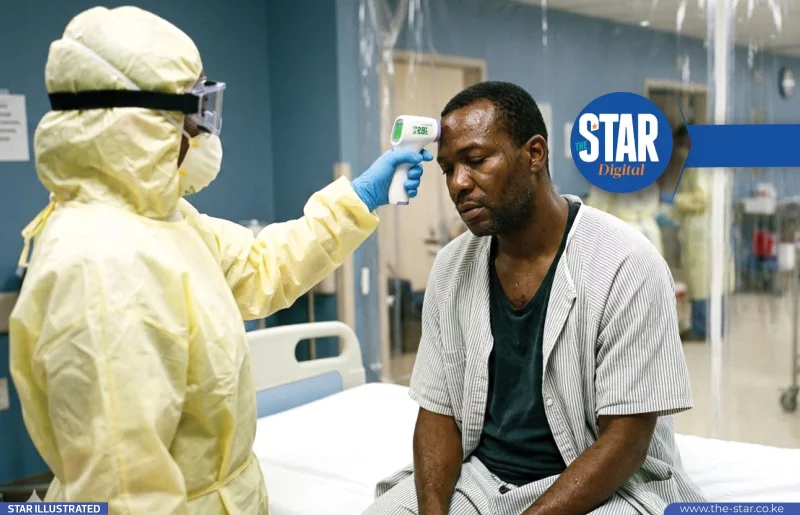
“To strengthen this preparedness, the government has established several dedicated isolation and treatment facilities, including specialized units at Kenyatta National Hospital, the Kenya National Police Hospital, and Moi Teaching and Referral Hospital (MTRH). Additional sites have been identified in more than 10 high-risk border counties to ensure a rapid and coordinated response should a case be detected,” Duale said.
The planned Laikipia Ebola facility has attracted public attention because of concerns that Kenya could end up hosting foreign Ebola patients or individuals exposed to the virus. Critics argue that the country should focus on supporting containment efforts in affected countries rather than receiving potentially infected individuals.
The ministry, however, maintains that the investments are aimed at protecting Kenyans and strengthening the country’s long-term health security.
“These investments will strengthen Kenya’s health security by improving laboratory capacity, healthcare infrastructure, disease surveillance, emergency response systems, supply chains, and workforce readiness beyond the current Ebola threat,” Duale said.
He noted that similar investments made during the Covid-19 pandemic continue to benefit the country years later and said the new facilities would help Kenya respond more effectively to future disease outbreaks.
The ministry argued that building preparedness capacity now will leave the country better equipped to handle both Ebola and other emerging public health threats.