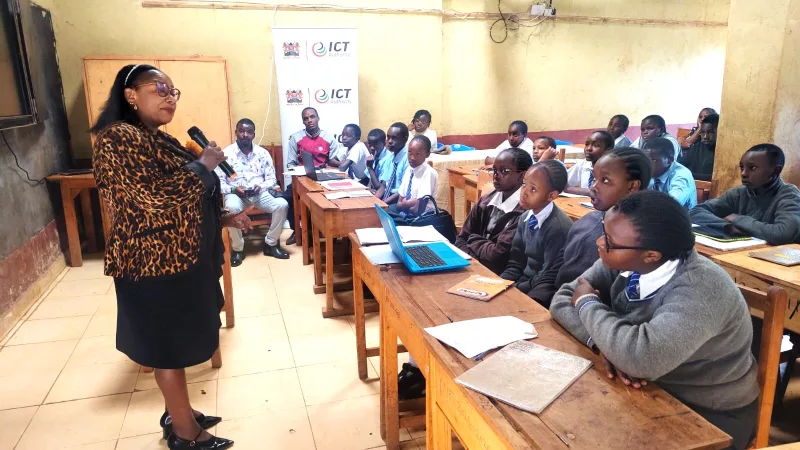
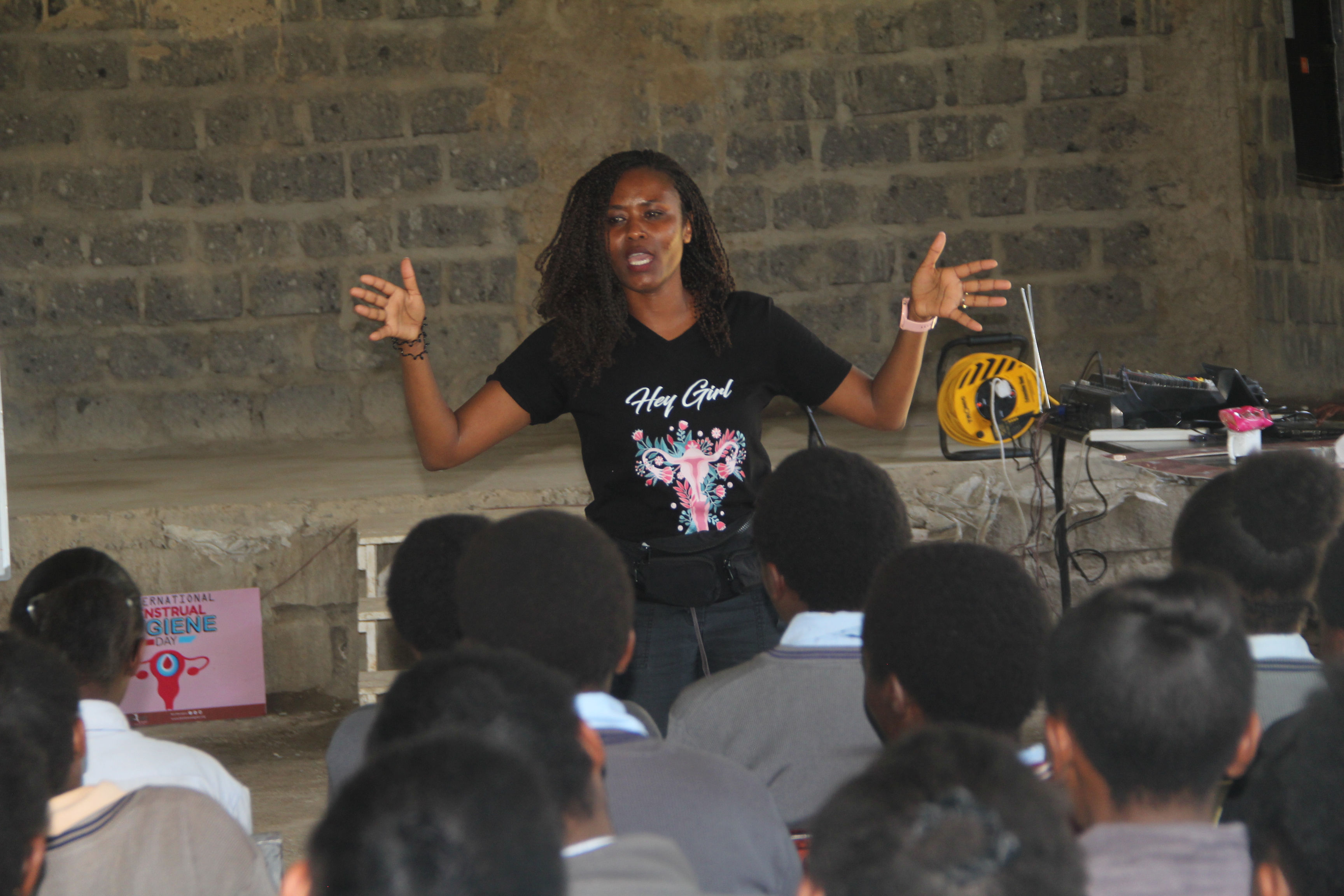
 Binti Mwangaza founder Ann Gakii addressing learners on menstrual hygiene at Likii Day Secondary school in Nanyuki on May 27, 2026/ ALICE WAITHERA
Calls to end stigma surrounding menstruation and ensure every girl has access to sanitary products dominated this year’s global Menstrual Hygiene Day celebrations in Laikipia county as activists warned that thousands of girls continue missing school due to period poverty.
Speaking during a menstrual hygiene awareness event at Likii Day Secondary School in Nanyuki town, stakeholders urged communities to normalise conversations around menstruation and support girls during their monthly periods instead of subjecting them to shame and discrimination.
The event was organised by community-based organisation Binti Mwangaza to mark the global Menstrual Hygiene Day under the theme “Together for a Period-Friendly World.”
The organisation’s founder Ann Gakii said there was need to involve both boys and girls in menstrual health conversations to break long-held myths and taboos surrounding menstruation.
“We want every child to grow knowing that periods are a normal fact of life and our brothers, uncles and fathers should always support girls when they are menstruating,” Gakii said.
She noted that many girls still suffer silently because of stigma associated with menstruation, forcing some to isolate themselves or skip school during periods.
Gakii said the organisation had adopted reusable sanitary towels and menstrual cups as sustainable alternatives aimed at keeping girls in school and reducing the burden on vulnerable families.
So far, it has distributed over 30,000 re-usable sanitary towels to vulnerable school girls.
“We don’t want a girl to miss school just because she lacks sanitary towels. Menstruation is normal and every girl deserves dignity and support,” she added.
According to the Kenya Menstrual Hygiene Management Policy enacted in 2019, the national government is obligated to provide free, sufficient and quality sanitary towels to all enrolled adolescent girls in public basic education institutions.
However, activists have questioned the poor implementation of the policy in many schools, leaving thousands of girls unable to access sanitary products consistently.
Statistics indicate that at least one million girls miss classes for three to four days every month due to lack of sanitary towels and inadequate menstrual hygiene support.
A report by the United Nations Population Fund (UNFPA) further shows that 45 per cent of girls face difficulties accessing menstrual hygiene products while 33 percent endure persistent shortages.
During the sensitisation forum, participants challenged communities to abandon harmful cultural beliefs that isolate girls during menstruation.
Osman Mohamed said many African communities continue perpetuating myths that negatively affect girls’ confidence and wellbeing.
“Menstruation is natural and normal and we should talk about it openly. Girls should never feel ashamed because of menstruation,” he said.
He said some girls are excluded from family activities or fail to attend school because of cultural misconceptions surrounding menstruation.
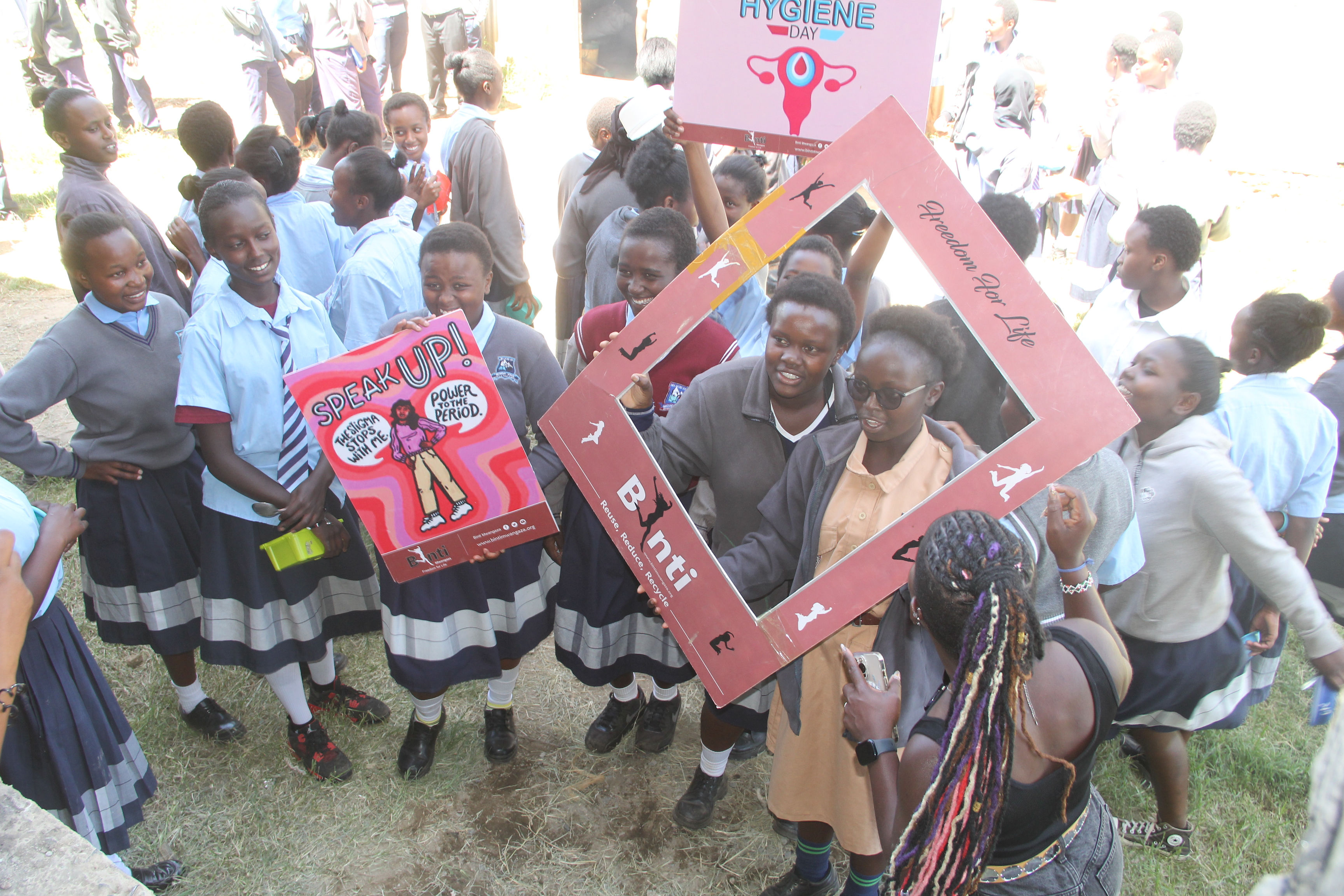 Learners from Likii Day Secondary School in Nanyuki Town during the International Menstrual Hygiene Day celebrations on May 27, 2026/ ALICE WAITHERA
“As a community we should educate our girls, empower them and ensure they are not stigmatised. They should feel confident speaking up about menstruation,” Osman said.
Josephine Mwania said there was urgent need to educate young people on menstrual hygiene and cleanliness while also creating safe spaces for girls to seek support.
“We are here to remove the stigma around menstrual hygiene and create a period-friendly world where girls feel empowered and protected,” she said.
Mwania noted that involving boys in menstrual health discussions was key in addressing discrimination and promoting understanding among young people.
She urged both national and county governments to work closely with communities, churches and non-state actors to ensure sanitary products are affordable and accessible to all girls.
To bridge the existing gaps, several non-state actors and community organisations have stepped in to provide temporary relief through donation of sanitary towels and promotion of reusable sanitary products.
She called for stronger partnerships between government agencies, schools and well-wishers to fully implement menstrual hygiene policies and guarantee girls uninterrupted learning.
The activists warned that unless period poverty and stigma are addressed comprehensively, many girls will continue suffering in silence.
Ends
Instant Analysis
A report by the United Nations Population Fund (UNFPA) further shows that 45 percent of girls face difficulties accessing menstrual hygiene products while 33 percent endure persistent shortages.
The activists warned that unless period poverty and stigma are addressed comprehensively, many girls will continue suffering in silence and losing valuable learning time every month.