The resistance has played out in technical policy submissions that could reshape the fate of the Finance Bill, 2026, before MPs begin formal debate on the proposals.
Powerful institutions, including the Law Society of Kenya (LSK), the Kenya Bankers Association (KBA), the Institute of Certified Public Accountants of Kenya (ICPAK), Deloitte East Africa and Andersen Tax, have mounted a pushback against some of the proposals.
They argue that the Bill has clauses that threaten constitutional rights, investor confidence, and financial inclusion and may hurt the already fragile economic recovery plan.
The Bill seeks to widen the tax net and help the Treasury plug an excruciating fiscal deficit amid mounting debt obligations and slowing revenue growth.
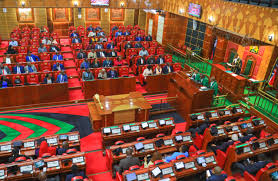
In their submissions before the National Assembly's Finance and National Planning Committee that is chaired by Molo MP Kuria Kimani, the critics say the government risks overreaching.
The Bill introduces sweeping amendments touching on digital payments and mobile phones to virtual assets, rental income, VAT, and withholding tax.
It also hands KRA more enforcement powers in what Treasury describes as among the administration reforms to net more tax revenues.
Hike fuel prices have already ignited public anger.
Opposition leaders are also planning fresh commemorative protests tied to the June 2024 anti-finance bill demonstrations.
In this regard, the battle over the Finance Bill is rapidly turning into a major political test for Ruto’s administration and MPs eyeing re-election in 2027.
Financial sector players are up in arms against attempts to reintroduce withholding tax on digital payment systems, despite a Supreme Court decision that had shielded the industry.
The Bill seeks to expand the definition of ‘management or professional fees’ and ‘royalties’ to include interchange fees, merchant service fees and digital payment network transactions involving firms such as Visa and Mastercard.
The Supreme Court, in a ruling delivered in favour of Absa Bank in December 2025, held that payments made to card companies were not royalties and therefore not subject to withholding tax.
In its submissions to Parliament, the KBA warned that the move threatens legal certainty and investor confidence.
“The proposed amendment seeks to overturn the Supreme Court’s decision, raising concerns that such legislative reversals undermine legal certainty, predictability and confidence in the rule of law,” the bankers’ lobby said.
LSK echoed the concerns, warning Parliament against using legislation to nullify settled judicial decisions after more than 15 years of litigation.
LSK president Charles Kanjama said the changes would increase the cost of digital payments and ultimately hurt ordinary consumers.
“The definition of royalty, if adopted, will lead to an increase in the cost of digital payments, which increase will be passed down to the final consumers,” the society said in its memorandum.
Deloitte East Africa also opposed the move, warning that the tax would create major practical and operational difficulties in the country’s banking ecosystem.
“In relation to interchange and merchant service fees, identifying the party on whom the WHT obligation falls is complex due to multi-party settlement structures,” Deloitte said.
The country’s digital payments ecosystem is widely regarded as one of Africa’s most advanced and a major pillar of the Kenya's fintech dominance.
Another point of divergence is the government’s aggressive tax proposals targeting mobile phones.
The Bill proposes raising excise duty on mobile phones from 10 per cent to 25 per cent while also changing their VAT status from zero-rated to exempt.
Industry players say the two measures could significantly raise handset prices and undermine the bid to establish a local assembly industry.
ICPAK warned that shifting locally assembled phones from zero-rated VAT status to exempt status would lock manufacturers out of reclaiming input VAT on imported components.
This, they hold, could make locally assembled devices more expensive than imported finished products.
The Finance Bill further proposes that excise duty be charged at the point of activation of the mobile phones, and not from the point of importation as it currently applies.
Deloitte warned that the proposal introduces uncertainty over valuation and responsibility for payment.
“The proposal creates uncertainty on valuation, as the excisable value at activation may differ from import/manufacturing value,” the firm said.
It added that the proposal raises privacy and data protection concerns because implementation may require extensive tracking of user activations and integration with telecommunications systems.
Beyond consumer taxes, some of the fiercest criticism has focused on the proposed expansion of powers granted to the Kenya Revenue Authority (KRA).
The Bill would allow the taxman to issue agency notices and pursue enforcement action even where taxpayers have active appeals before the Tax Appeals Tribunal or courts.
LSK warned that the proposal undermines constitutional rights to fair hearing and due process.
The society noted that similar attempts had been rejected in both the Finance Bill 2024 and Finance Bill 2025 following public backlash.
“Permitting the commissioner to issue and enforce agency notices even where an appeal is pending undermines taxpayers’ rights to justice, appeal and fair administrative action,” LSK states.
LSK further cited a recent High Court decision that faulted KRA for freezing bank accounts despite pending appeals before the tribunal.
Andersen Tax similarly warned that the measures could expose businesses to premature enforcement action before the appeals process is exhausted.
The Bill also proposes wider anti-tax avoidance powers under a new Section 18A of the Tax Procedures Act.
Under the proposal, KRA would gain authority to disregard transactions deemed primarily aimed at obtaining tax benefits and reassess taxpayers as if the arrangements never existed.
LSK said the powers are open to abuse.
“The terms ‘scheme’ and ‘tax benefit’ are defined so broadly that they cover virtually any commercial arrangement,” the society warned.
It cautioned about the potential challenge of distinguishing legitimate tax planning from unlawful avoidance, saying disputes before the Tax Appeals Tribunal will likely increase.
The Bill has also triggered anxiety among businesses over tighter filing timelines and increased compliance obligations.
Proposals to reduce annual tax return filing deadlines from six months to four months have been criticised as unrealistic and punitive.
LSK warned that the squeezed timelines would create immense pressure on taxpayers and auditors, increasing the risk of errors, penalties and compliance costs.
Deloitte has recommended reducing VAT from 16 per cent to 14 per cent and raising the VAT registration threshold from Sh5 million to Sh8 million to stimulate economic activity and ease pressure on small businesses.
The firm argues that the current thresholds no longer reflect inflation and prevailing economic realities.
ICPAK has painted a grim picture of the rising burden on salaried Kenyans.
According to the accountants’ lobby, statutory deductions for a worker earning Sh100,000 monthly are projected to rise from 24.01 per cent in 2023 to 29.89 per cent in 2026 before reliefs.
The agency says the PAYE structure has become excessively punitive, with the 30 per cent tax band kicking in at incomes above Sh32,333 per month, compared with countries such as Ghana, where the same rate applies only above approximately Sh255,000.
Deloitte similarly proposed a more progressive PAYE band, capping the top rate at 30 per cent and increasing personal relief to Sh3,000 monthly.
“Expanding bands and lowering rates will cushion low- and middle-income earners and improve purchasing power,” the firm said.
Still, not all proposals in the Bill have attracted hostility.
Stakeholders have welcomed plans to extend tax amnesty deadlines, exempt death-related pension benefits from taxation and support the growth of real estate investments.