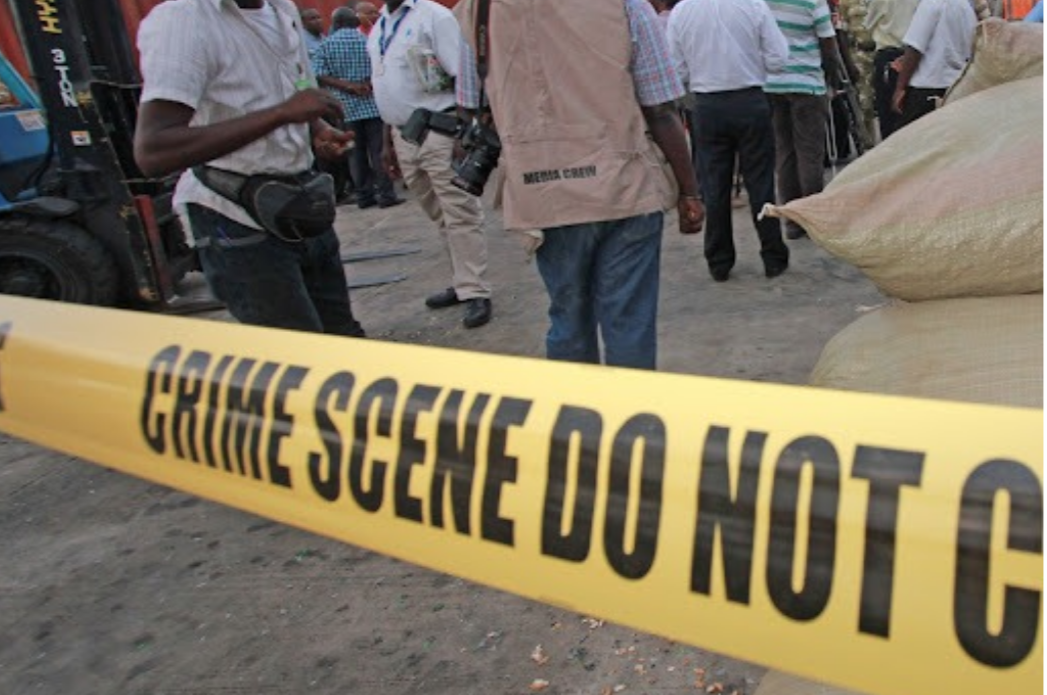
 Crime scene
Tanzanian authorities have arrested three Kenyans for attempting to join the terror group Islamic State in Mozambique.
The three were later handed over to Kenyan authorities after being intercepted in Tanzania while travelling to Mozambique where the terror group has cells.
According to the police, the suspects were arrested by Tanzanian police and transferred to Kenyan officers at the Horohoro One Border Post in Lunga Lunga, Kwale county. The suspects were identified as Yusuf Mbashir, 19, Ahmed Shaban, 21, and Abdul Salim, 22. They all come from the area.
Police said the three were allegedly heading to Mozambique to join ISIS-linked militants operating in the region.
Authorities further stated that the suspects did not possess any travel documents at the time of their arrest.
Following their handover to Kenyan authorities on May 18, the three were detained pending interrogation and processing.
The suspects were later presented before a court for a miscellaneous application seeking custodial orders to allow investigators more time to complete inquiries.
The court granted investigators 14 days to detain the suspects at Diani police station as investigations continue.
This is the latest such incident in the area amid reports terror recruiting agents are active in parts of the Coast amid operations to address the menace.
The government has worked to prevent the transit of foreign terrorist fighters, including Kenyans attempting to join al Shabaab or ISIS, and those returning from abroad.
Officials have blamed radicalisation for the trend.
Police had in December 2024 arrested 17 people including two suspected ISIS members, several foreign terrorist fighters and others involved in terrorism financing, radicalisation and propaganda.
Most recruits join the terror groups in Somalia, Mozambique or DR Congo.
Kenyan security services have detected and deterred terrorist plots and responded to dozens of terrorism-related incidents.
Official police reports indicated that some university students are among those who fled to join terror groups.
While the numbers have fluctuated due to enhanced government counter-terrorism strategies, the trend remains a focus for security agencies.
Al Shabaab in particular continues to pose the primary terrorism threat in Kenya as authorities continued to rely on the Prevention of Terrorism Act (amended in 2014) to investigate and prosecute terrorism.
Officials say since 2007, the Somali militant group al Shabaab has recruited hundreds of foreign fighters.
The bulk of non-Somali foreign fighters probably come from East African countries such as Kenya, Tanzania, Ethiopia, and Sudan and were recruited by al Shabaab’s regional allies.
Kenyan officials continue to work to secure the nation’s porous land borders to prevent terrorist exploitation, but hurdles remain.
Somalia has not had an effective central government since the 1991 overthrow of President Siad Barre's military regime, which ushered in more than two decades of anarchy and conflict in a country deeply divided along clan lines.