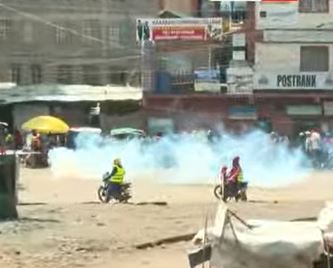
Running battles erupted in Githurai, Nairobi, on Tuesday as anti-riot police officers clashed with protesters during the second day of the nationwide matatu strike that has paralysed transport services across Kenya.
The confrontation unfolded along sections of the busy Thika Superhighway, where groups of demonstrators gathered to protest the continued rise in fuel prices and the increasing cost of operating public service vehicles.
Videos circulating on social media showed heavily armed police officers dispersing crowds using tear gas as protesters retaliated by hurling stones at the officers.
Witnesses said tension escalated early in the morning after protesters blocked parts of the road, forcing police to intervene.
Thick clouds of tear gas engulfed sections of Githurai as residents and commuters watched from a distance, away from the highway, fearing further clashes.
Despite the unrest, the roads remained largely deserted, with very few vehicles seen operating in the area. Only motorcycles, police armoured vehicles and a handful of private cars were spotted using the highway as matatus and buses stayed away in solidarity with the strike.
The Thika Superhighway, one of the country’s busiest transport corridors connecting Nairobi to Central Kenya, recorded minimal movement throughout the day.
Public transport operators, including matatus, buses and many boda boda riders, largely kept off the roads, deepening the transport crisis that has disrupted daily life in major towns.
Thousands of commuters were left stranded as they struggled to access workplaces, schools and businesses.
In many estates across Nairobi and neighbouring counties, residents were forced to walk long distances after failing to secure alternative transport. The few boda boda operators who remained in service reportedly hiked fares sharply due to increased demand.
Some schools cancelled activities while businesses experienced delays in deliveries and reduced customer traffic because workers and clients were unable to travel conveniently. Traders in parts of Nairobi reported losses as movement in and out of the city slowed significantly.
The industrial action follows failed talks between transport stakeholders and government representatives aimed at addressing grievances raised by matatu operators. The operators accuse the government of ignoring the challenges facing the transport sector, particularly the rising fuel prices and increased operational expenses.
Matatu operators and drivers have demanded a reduction in fuel prices, removal of some fuel levies and urgent intervention by Parliament to cushion both operators and ordinary Kenyans from the soaring cost of living.
They argue that many transport businesses are struggling to remain operational amid shrinking profits and rising expenses.