The spouse of the Prime Cabinet Secretary, Musalia Mudavadi, Tessie, has called for stronger partnerships between the government, private sector and civil society organisations to improve the welfare of vulnerable children.
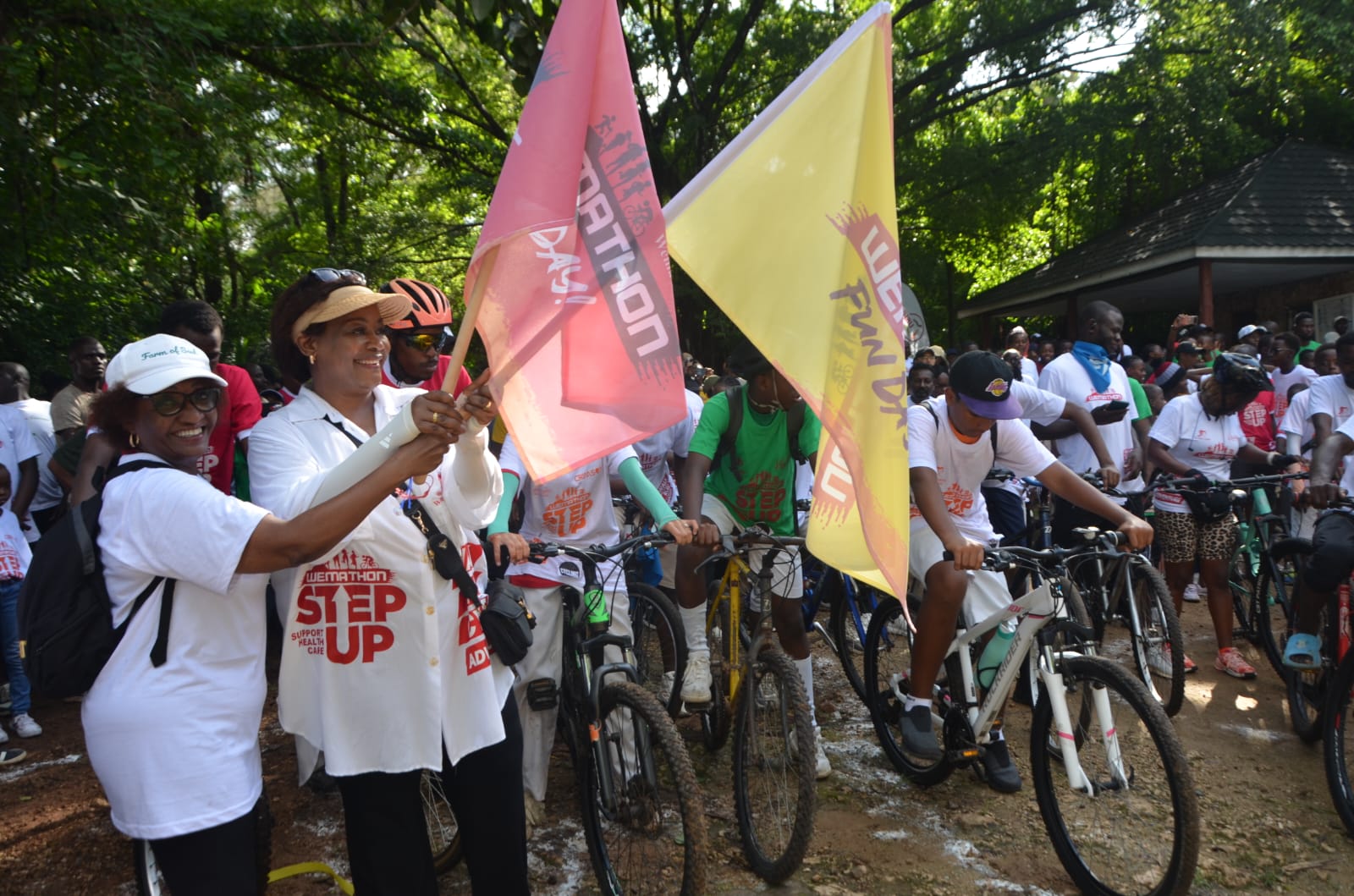
Speaking in Mombasa during the annual Wemathon event organised by the Wema Centre, Tessie said collaborative efforts are critical in addressing the growing challenges facing street-connected children and ensuring they access healthcare, education and protection.
The event, held at the Butterfly Pavilion Forest Trail, brought together hundreds of participants from different sectors of society for activities including running, walking, cycling and Zumba dance competitions.
Funds raised during the event will go towards the establishment of a clinic at the centre to provide medical services for street-connected children and vulnerable families within surrounding communities.
Tessie praised the initiative, saying it demonstrated the power of partnerships in restoring dignity and hope to children living in difficult circumstances.
“At the heart of this partnership is one single truth; no single organisation can meet the needs of our children alone,” she said.
“When we come together, we can reach further, serve better and restore dignity where it is needed most.”
She noted that Kenya’s Constitution and various child protection laws provide a strong framework for safeguarding children’s rights and welfare.
The charity event was in support of Wema Health Clinic in Mombasa, a facility dedicated to providing essential medical services to Wema Children that will now be open to street-connected children.
Citing Article 53 of the Bill of Rights, Tessie said every child is entitled to fundamental rights and freedoms that protect their dignity and future.
She also highlighted recent efforts by the government to strengthen child welfare systems through the publication of the Public Finance Management Fund Child Welfare Regulations, which aim to establish the .
“The government has taken bold steps to strengthen child protection systems,” she said.
“It is therefore encouraging to see institutions such as the Wema Centre living out these principles every single day through their commitment to rescuing, rehabilitating, educating and reintegrating children back into society.”
She added that protecting children should not be left to government institutions alone, but should instead be embraced as a shared responsibility among families, communities and organisations.
“It reminds us that protecting children is not the sole responsibility of the government. It is a collective responsibility shared by families, communities and institutions,” she said.
The event also featured a partnership initiative led by Ushiriki Wema in collaboration with the government, Equity Afya and the Wema Centre, which enabled children from the centre and neighbouring communities to access Huduma Centre and healthcare services.
Tessie described the collaboration as an example of how institutions can combine resources and expertise to address social challenges more effectively.
“This is what true partnership looks like-government, private sector and civil society coming together not just in principle, but in action, to improve the well-being of our citizens, especially our children,” she said.
She further emphasised that partnerships are essential for growth, innovation and sustainability, noting that organisations achieve greater impact when they work collectively rather than individually.
The Wemathon has over the years grown into a major community event aimed at mobilising resources and awareness to support vulnerable children in Mombasa and beyond.