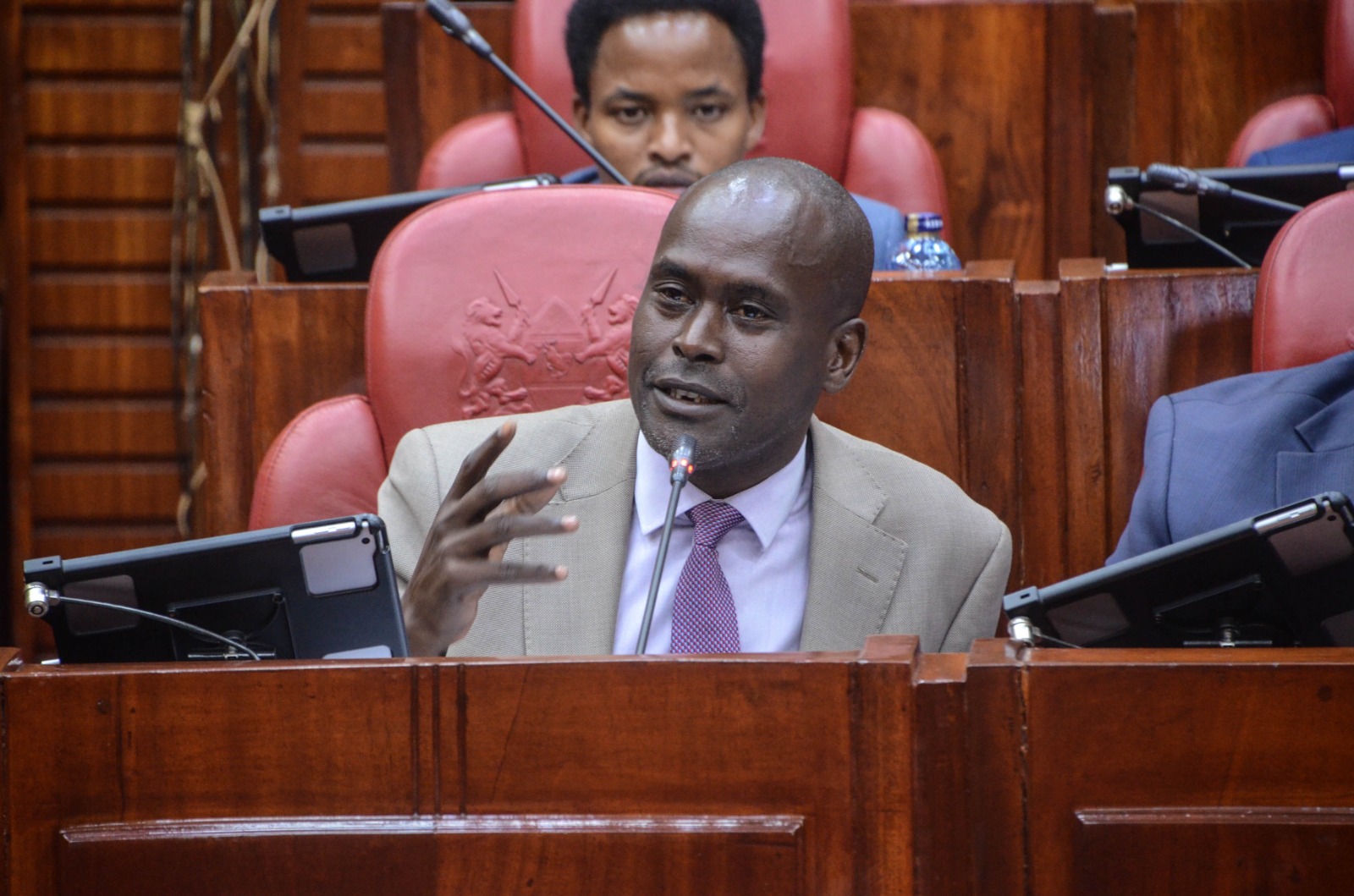
Appearing before the National Assembly Committee on National Administration and Internal Security, State House Comptroller Katoo Ole Metito pleaded with MPs to push for a review of the allocation.
He said the cuts were difficult to justify at a time when the overall national budget had increased.
Treasury estimates show State House budget has been reduced from the current Sh17 billion to Sh13 billion despite the national budget rising from Sh4.3 trillion to Sh4.8 trillion.
“With the limited resource allocation, we will be affected in our deliverables and hamper our work plan,” Metito told MPs.
“We are seeking a rationalisation of the budget in terms of an additional allocation. If we are able to get an additional Sh5 billion and only remain with a deficit of Sh2 billion, then we can try to work with that.”
Metito questioned why State House had suffered one of the largest cuts despite growth in the overall government budget.
“I don’t understand how the national budget has increased yet State House’s budget has decreased. If the National Treasury was to align the allocations with the budgetary increase, then we should have received Sh19.7 billion, which is just shy of our resource requirement,” he said.
Committee chairperson and Narok West MP Gabriel Tongoyo faulted the Treasury over the reductions, saying State House should at least have retained its current allocation.
“My question goes to the National Treasury; don’t you think it would have been fair to at least give them the Sh17 billion they had been allocated as opposed to slashing Sh4 billion?” he posed.
Tongoyo warned that Parliament could eventually be forced to rely on Article 223 of the Constitution to approve additional expenditure for State House if the funding gap persists.
Sotik MP Francis Sigei defended the push for more funding, cautioning against negative publicity influencing budget decisions.
“We should not succumb to negative publicity. State House is a national image, and we must give it enough resources for proper functioning,” Sigei said.
Elgeyo Marakwet Woman Representative Caroline Ng’elechei also sought clarification on whether the reduced allocation would affect staffing and service delivery.
Metito, however, explained that salaries for permanent staff would not be affected, noting that most reductions in personnel expenditure related to the expiry of contracts for nearly 500 employees engaged on fixed-term arrangements.
“This financial year ending in about a month marks the expiry of contracts for nearly 500 staff members. Their gratuity, amounting to Sh127 million, had been provided for in the 2025/2026 budget, and that is why the figure does not appear in the next budget cycle,” he said.
He added that nearly 80 per cent of State House staff are employed on contract terms.
Meanwhile, MPs have urged State House administrators to consider relocating Nakuru State House, citing congestion, limited room for expansion and the rapid growth of the city.
Nakuru Woman Representative Liza Chelule said the current facility, located along the busy Nairobi-Nakuru highway, no longer reflects the stature of a modern State House.
“The State House is in a very poor position and condition, considering it is just next to the main road to Nairobi,” she said.
Chelule proposed the acquisition of more than 100 acres elsewhere in Nakuru to pave the way for the construction of a larger and more modern facility.
“Nakuru, being a city now, we can get more than 100 acres and relocate so that we come up with the right structures that reflect the stature and dignity of State House,” she said.
“It is squeezed between tall buildings, and there is no room for expansion. I think we need to do something different and relocate completely from that place.”
Tongoyo acknowledged that space constraints around the Nakuru residence had become a major challenge, noting that neighbouring properties belong to legitimate private owners and the county government.
“The issue of space remains a challenge,” he said.
He, however, noted that Sh100 million had been allocated for renovation of State Houses and State lodges, suggesting part of the money could be used to improve the Nakuru facility as discussions on relocation continue.
Metito admitted that Nakuru State House faces genuine physical limitations, saying expansion would only be possible if nearby landowners agreed to sell their property.
“We also want to expand Nakuru, but there is very little space. The people around are genuine landowners, so we can only engage them to see whether they are willing to sell,” he said.
He added that State House facilities across the country are ageing and expensive to modernise, forcing the government to prioritise renovations in phases.