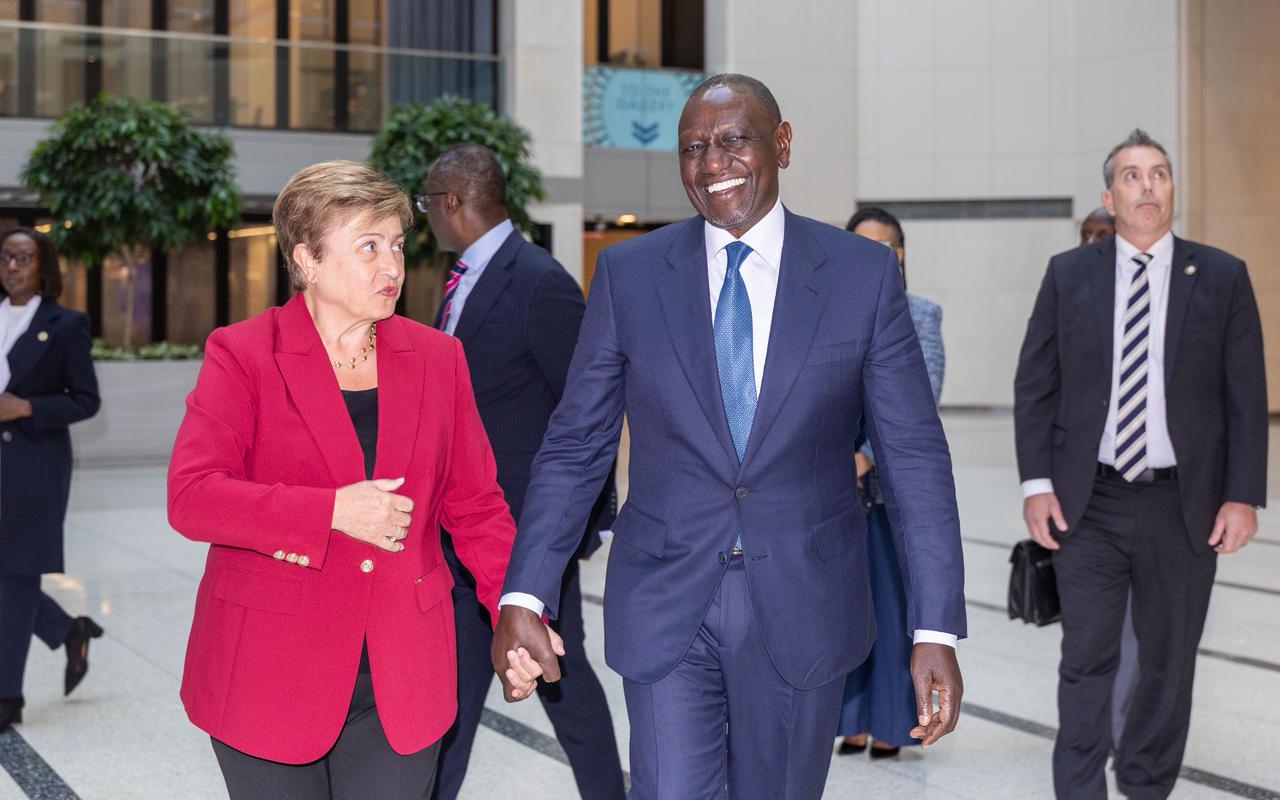
A coalition of civil society organisations has demanded the release of a confidential IMF report detailing corruption and governance failures within the state.
The group has petitioned the National Assembly to compel the government to publish the report, saying its continued withholding violates the right to information and undermines public trust in economic reforms.
The petition, filed on Tuesday by the Okoa Uchumi campaign, demands that the full, unredacted IMF Governance and Corruption Diagnostic Report be tabled before Parliament within 30 days.
Among the 19 signatories of the coalition are Transparency International Kenya, the Kenya Human Rights Commission, Amnesty International Kenya, Oxfam Kenya, the Institute for Social Accountability and the Fight Inequality Alliance Kenya.
“The issues raised in this petition are of immense national importance as they relate directly to the integrity of public financial management, the fight against corruption and the accountability of institutions responsible for the stewardship of public resources,” the petition states.
The report was the result of an International Monetary Fund Technical Assistance mission that visited Kenya between June 16 and 30, 2025.
The visit followed a preliminary scoping mission earlier that year.
During this period, the IMF team conducted a comprehensive review intended to identify systemic governance weaknesses, corruption vulnerabilities and institutional gaps affecting the management of public resources.
The diagnostic assessment examined governance challenges across public financial management, procurement systems, tax administration, state‑owned enterprises, regulatory institutions and anti‑corruption enforcement mechanisms.
During the process, IMF teams held consultations with government bodies, oversight agencies and non‑state stakeholders, including representatives of the Okoa Uchumi campaign.
“These consultations were intended to ensure that the diagnostic reflects the lived realities of Kenyans and identifies practical reforms necessary to strengthen integrity, accountability and transparency in the management of public resources.”
Although the document was completed and handed over to the government, it remains shielded from public view.
“This being a public interest document, it was expected that it would be published and made public as soon as it is finalised. However, this is yet to be done,” the group stated.
The petitioners argue that the government has already begun implementing the report’s recommendations internally through inter‑agency consultations, without affording Parliament or the public any opportunity to scrutinise its contents.
“This selective engagement with the report … undermines the principles of transparency and public participation that should underpin governance reform,” the document says.
According to the petitioners, access to the report would enable Members of Parliament to better interrogate governance weaknesses identified in the assessment and guide reforms aimed at safeguarding public resources.
“At a time when Kenyans are being required to bear increased taxation and other economic adjustment measures in the name of fiscal stability, it is both reasonable and just that citizens and their elected representatives have access to information on the governance weaknesses and corruption risks affecting the raising and use of public resources.”
The urgency of the demand is compounded by the recent enactment of the National Infrastructure Fund Act.
The coalition warns that the Act establishes a public financing vehicle expected to mobilise, manage and deploy significant public resources outside the ordinary annual budgetary framework.
The structure and scale of the fund raise critical questions relating to fiscal transparency and debt sustainability, thereby heightening the need for enhanced parliamentary oversight, the group contends.
In this context, the petitioners underscore that access to the report is essential to enable Parliament and the public to assess whether appropriate safeguards are in place to mitigate corruption risks.
Among the specific prayers made to the National Assembly, the coalition demands that the government formally submit and table the full, unredacted report before the House.
Most significantly, the petitioners seek to halt future financial engagements, demanding that no new IMF-supported lending programme be concluded by the Government of Kenya until the diagnostic report has been tabled, reviewed by the relevant committees and subjected to public scrutiny and debate.
The demand for disclosure comes as Kenya’s negotiations with the IMF for new lending have stalled.
Abebe Aemro Selassie, the outgoing IMF African Department director, confirmed that the draft report has been shared with Nairobi but that the institution was awaiting formal feedback from the government.
“We are waiting for their comments on that before presenting it to our board and publishing it,” he said in late April.
The IMF has indicated that any new programme agreement depends on Kenya demonstrating a credible path to fiscal management.

Comments 0
Sign in to join the conversation
Sign In Create AccountNo comments yet. Be the first to share your thoughts!