
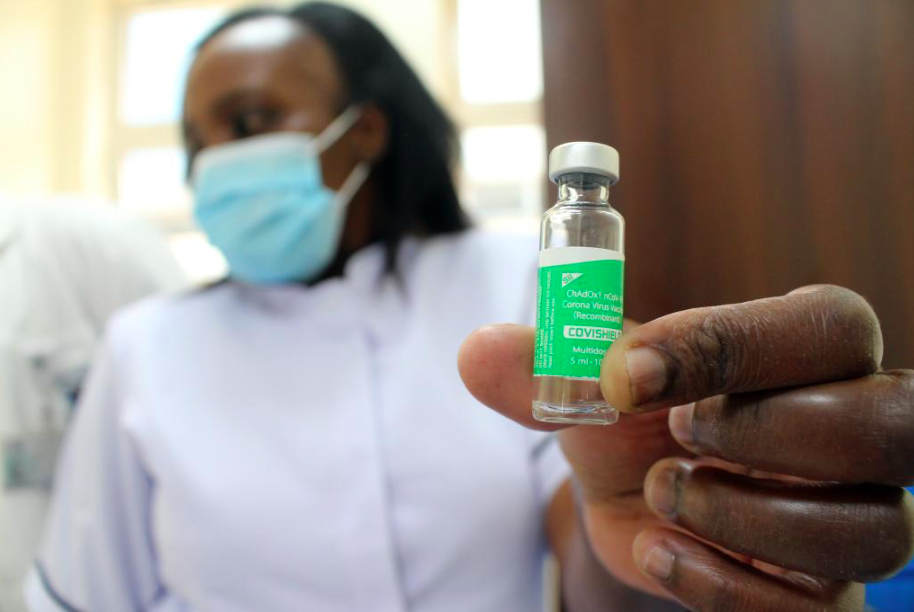
 Covid-19 vaccine
Countries have failed to agree on one of the most controversial lessons from Covid-19, whether nations that share deadly virus samples should be guaranteed vaccines, medicines and technology in return.
The negotiations, which would have ended last week, will continue with the outcome expected next year, the World Health Organizaton (WHO) said.
The talks focused on the Pathogen Access and Benefit-Sharing system (PABS). The system is expected to determine how countries share dangerous virus samples and genetic sequencing data, and what they receive in return when vaccines, diagnostics and treatments are developed from them.
The issue has become highly sensitive for African countries, including Kenya, after the continent was largely locked out of Covid-19 vaccines despite rapidly sharing critical scientific data during the pandemic.
The WHO, which hosted the talks in Geneva, said in a statement that member states had made progress but needed more time to finalise the annex.
The outcome is expected to be presented either at the next World Health Assembly in 2027 or earlier through a special session later this year.
“Real progress was made on the PABS annex, and I am confident that through continued negotiations, differences will be overcome,” said WHO Director-General Tedros Adhanom Ghebreyesus.
“Member States should continue approaching the outstanding issues with a sense of urgency because the next pandemic is a matter of when, not if. The PABS annex is the last piece of the puzzle not only for the Pandemic Agreement but all initiatives that WHO and Member States have implemented as a result of lessons learned from the Covid-19 pandemic.”
The PABS system is one of the most contested sections of the WHO Pandemic Agreement, which countries adopted last year after years of negotiations following Covid-19.
Under the proposed system, countries would quickly share pathogen samples and genetic data during outbreaks. In return, countries providing the samples would expect fair access to vaccines, treatments, tests, technology transfer and possibly financial benefits.
African countries argue that during Covid-19, rich nations benefited from African scientific cooperation without sharing vaccines fairly.
Two weeks ago, Kenyan civil society groups had warned governments not to approve a weak agreement that could repeat the inequalities seen during Covid-19.
Aggrey Aluso, executive director of the Resilience Action Network Africa, said African countries hold important bargaining power because many diseases with pandemic potential originate on the continent.
“Most diseases with pandemic potential, Ebola, Marburg, Lassa fever, and mpox, are endemic in Africa, not in Europe or the United States. Yet Europe and the U.S. hold stockpiles of mpox vaccines. Africa does not. Where did they get the genetic sequencing data? From Africa. Free of charge,” Aluso said.
“This is not a negotiation about charity. It is about one of the most strategic resources in 21st-century public health, and every country has something to offer for a robust PABS. A good agreement is possible, and we have all the right propositions on the table. All actors have to act in good faith.”
According to BMJ Global Health, Africa received less than three per cent of Covid-19 vaccines despite accounting for about 17 per cent of the world’s population.
This history has made African negotiators push for legally binding benefit-sharing rules instead of voluntary promises.
The negotiations stalled partly because many developing countries want strong, enforceable obligations requiring pharmaceutical companies and wealthy nations to share vaccines and technology during emergencies.
Several high-income countries, especially in Europe, are reportedly uncomfortable with mandatory obligations and prefer voluntary arrangements instead.
“The last pandemic was not a failure of science — it was a failure of solidarity. Vaccines existed, treatments existed, but access was rationed by geography and wealth,” said Dan Owala of the People’s Health Movement Kenya.
“If the PABS Annex is stripped of binding contracts and traceable obligations, we will have to rebuild the same architecture that failed our people the first time. Solidarity written in pencil is not solidarity at all.”
The outcome of the talks is especially important for Kenya, which is trying to grow its local pharmaceutical and vaccine manufacturing industry.
The Ministry of Health’s Local Manufacturing Strategy 2025–2030 aims to produce half of Kenya’s essential medicines locally, although the country still imports more than 70 per cent of its medicines.
Civil society groups say a strong PABS agreement could help countries like Kenya secure technology transfer and manufacturing partnerships during future pandemics.
END


Comments 0
Sign in to join the conversation
Sign In Create AccountNo comments yet. Be the first to share your thoughts!