KENYA is among African countries that could reap big from
the Chinese market, as the Asian country opens up for the continent’s exports.
Starting May 1, 2026, products from African countries with diplomatic ties with China, including Kenya, will enjoy zero-tariff access to the Chinese market.
Approximately 98.2 per cent of Kenyan exports stand to benefit from the Kenya–China Early Harvest Agreement.
“This marks a decisive new chapter for Kenya’s export growth and presents an immediate opportunity for Kenyan businesses to expand exports, increase earnings, and penetrate one of the world’s largest consumer markets,” Investments, Trade and Industry CS, Lee Kinyanjui, said.
Kenya’s trade with China has grown significantly over the years, but remains in China’s favour.
In 2025, the value of imports from China grew to Sh671.2 billion from 576.1 billion in 2024, the Economic Survey 2026 indicates, as the Asian giant remained the biggest import source for Kenya, followed by India (Sh293 billion). This is against an export value of Sh16.9 billion, which was down from Sh26.3 billion the previous year.
The Kenyan government is confident that with the agreement in place, the country has a clear pathway to narrow this imbalance, boost foreign exchange inflows, and support job creation across key sectors.
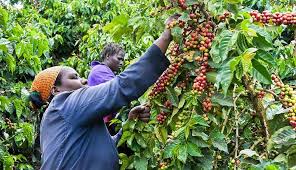
Priority export products include tea, coffee, avocados, macadamia nuts, fresh horticultural produce, key produces in the agriculture and horticulture sector, with Kenyan exporters encouraged to immediately take advantage of the zero-tariff access across a wide range of products.
Kenya also eyes the Chinese market for minerals and industrial inputs, including titanium ores and concentrates, zirconium and related mineral ores and manganese ores.
Emerging and value-added products are leather and hides, natural resins and gums and processed agricultural products.
To fully benefit from the zero-tariff framework, exporters must meet key requirements, including mandatory registration with both Kenyan authorities and China’s General Administration of Customs (GACC).
They must also obtain all relevant business and product-specific licenses and meet Sanitary and Phytosanitary (SPS) requirements, including phytosanitary certification from KEPHIS for plant and agricultural products.
Exporters should also ensure products are labelled in Chinese with full details, including product name, origin, ingredients, dates and GACC registration number.
They must also maintain product traceability systems and comply with periodic inspections for applicable goods, and provide complete shipment documentation.
These include commercial invoice, certificate of origin, export permits, health certificates, and related customs documents.
CS Kinyanjui said government institutions are working closely with exporters to ensure they are certified, market-ready and well-positioned to access the Chinese market.
“Efforts are also underway to streamline certification and customs processes to ensure that zero tariffs are matched by seamless market access,” he said.
“Kenyan businesses are called upon to act decisively by scaling production for export markets, investing in value addition and processing, strengthening compliance with international standards, and establishing direct linkages with Chinese buyers.”
Meanwhile, Africa remained Kenya’s
leading export destination, with earnings increasing to Sh452.8 billion up from Sh425.6
billion last year.
This growth was largely driven by stronger
trade within the East African Community, particularly Uganda, which recorded a
28.8 per cent increase and accounted for 14.5 per cent of total export
earnings.
Value of exports to the EAC increased to Sh351.2 billion from Sh321.5 billion, despite a drop in exports to Tanzania. Last year, exports to Asia the Far East, which includes China, India, Japan and Pakistan fell to Sh275.7 billion from Sh317.5 billion.
“This decline was primarily due to a decline in exports in key markets like Yemen (66.45%), Saudi Arabia (38.3%), China (35.7%), India (8.3%) and the United Arab Emirates (UAE) (23.3%),” the Economic Survey 2026 states.
The decline was due to reduced domestic exports and re-exports, particularly in kerosene-type jet fuel and tea to the UAE and Saudi Arabia, titanium ores and concentrates and macadamia nuts to China, pigeon peas to India and tea to Yemen.





Comments 0
Sign in to join the conversation
Sign In Create AccountNo comments yet. Be the first to share your thoughts!