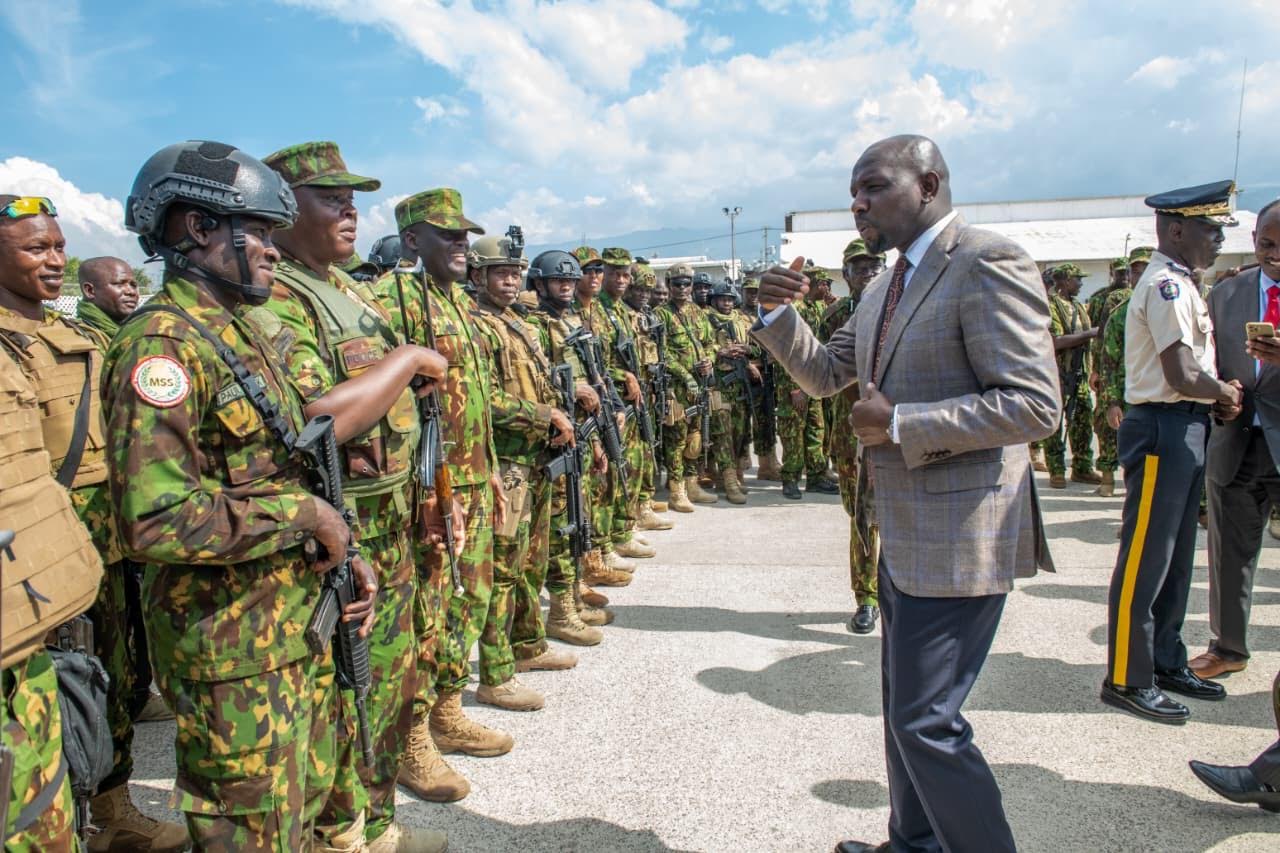
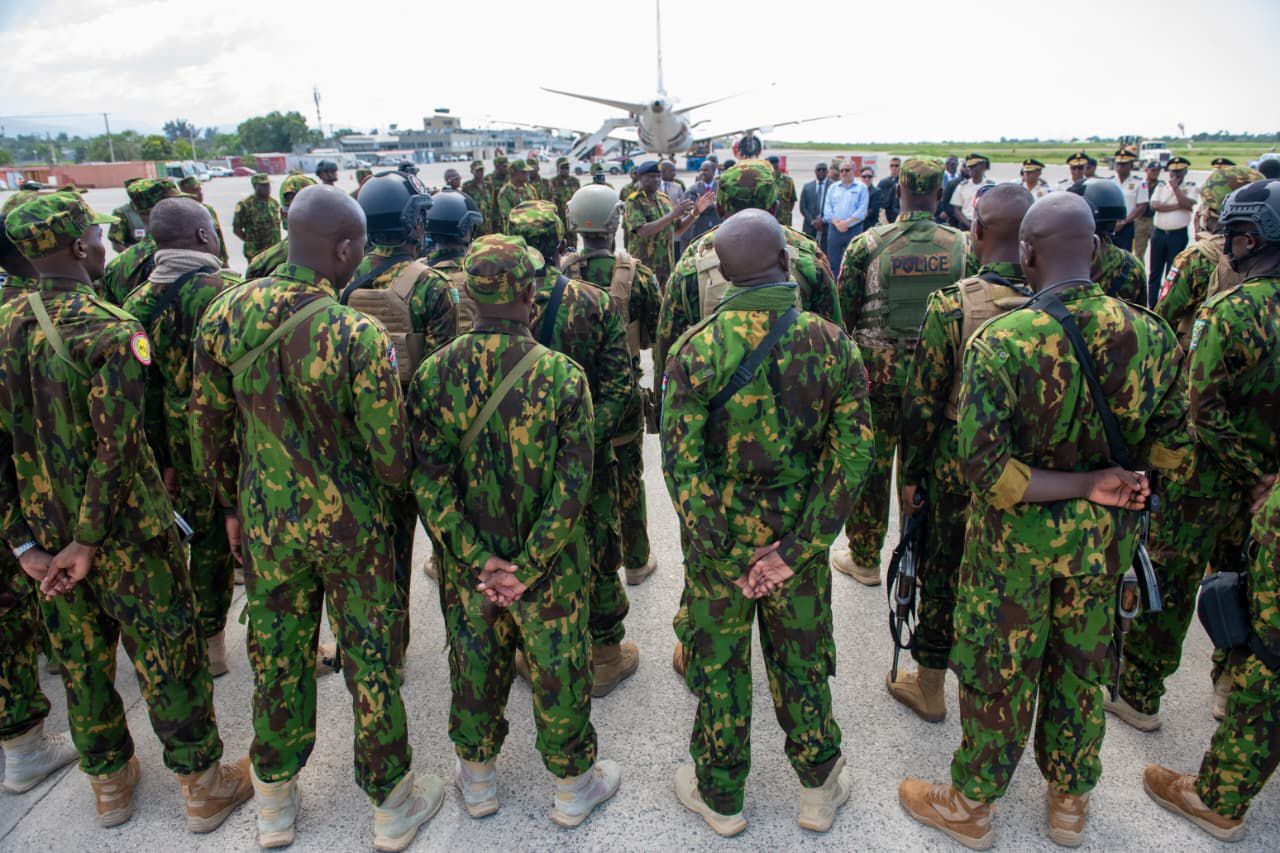
 CS Murkomen in Haiti for the final withdrawal of police officers./HANDOUT
Interior Cabinet Secretary Kipchumba Murkomen flew to Haiti to oversee the withdrawal of the final Kenya police team deployed to Port-au-Prince to help contain criminal gangs.
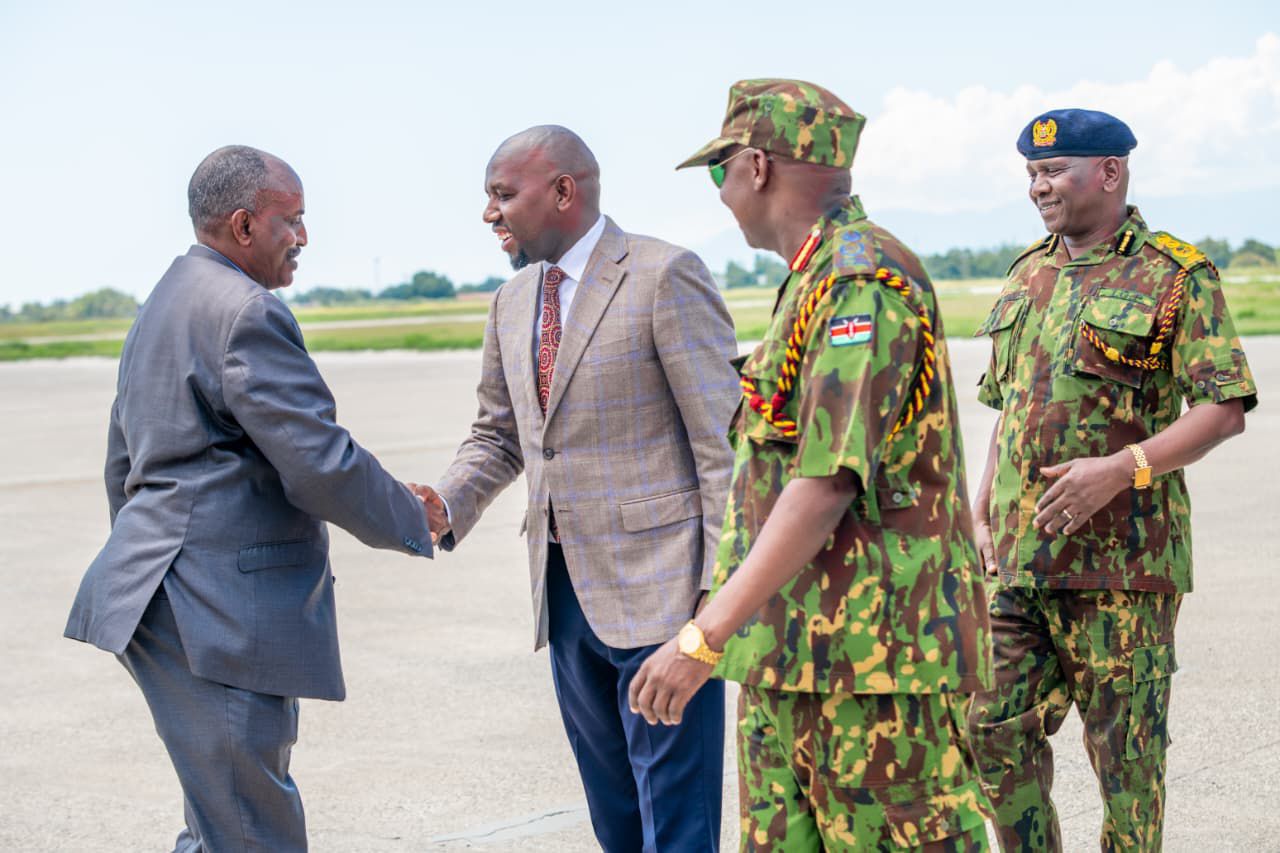
Murkomen, who was accompanied by Inspector General of police Douglas Kanja and acting National Security Advisor Joseph Boinnet, flew aboard a Kenya Airways plane that carried the final 150 officers home.
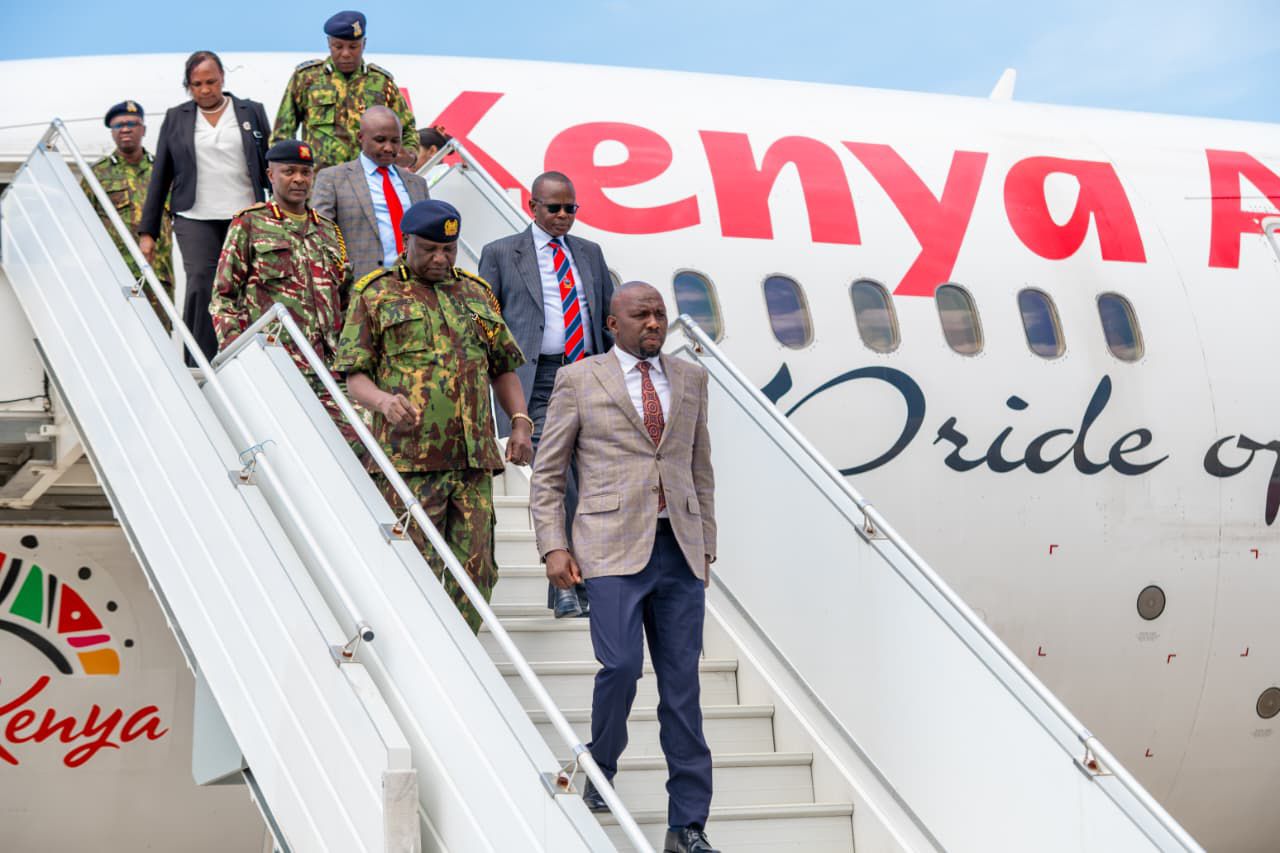
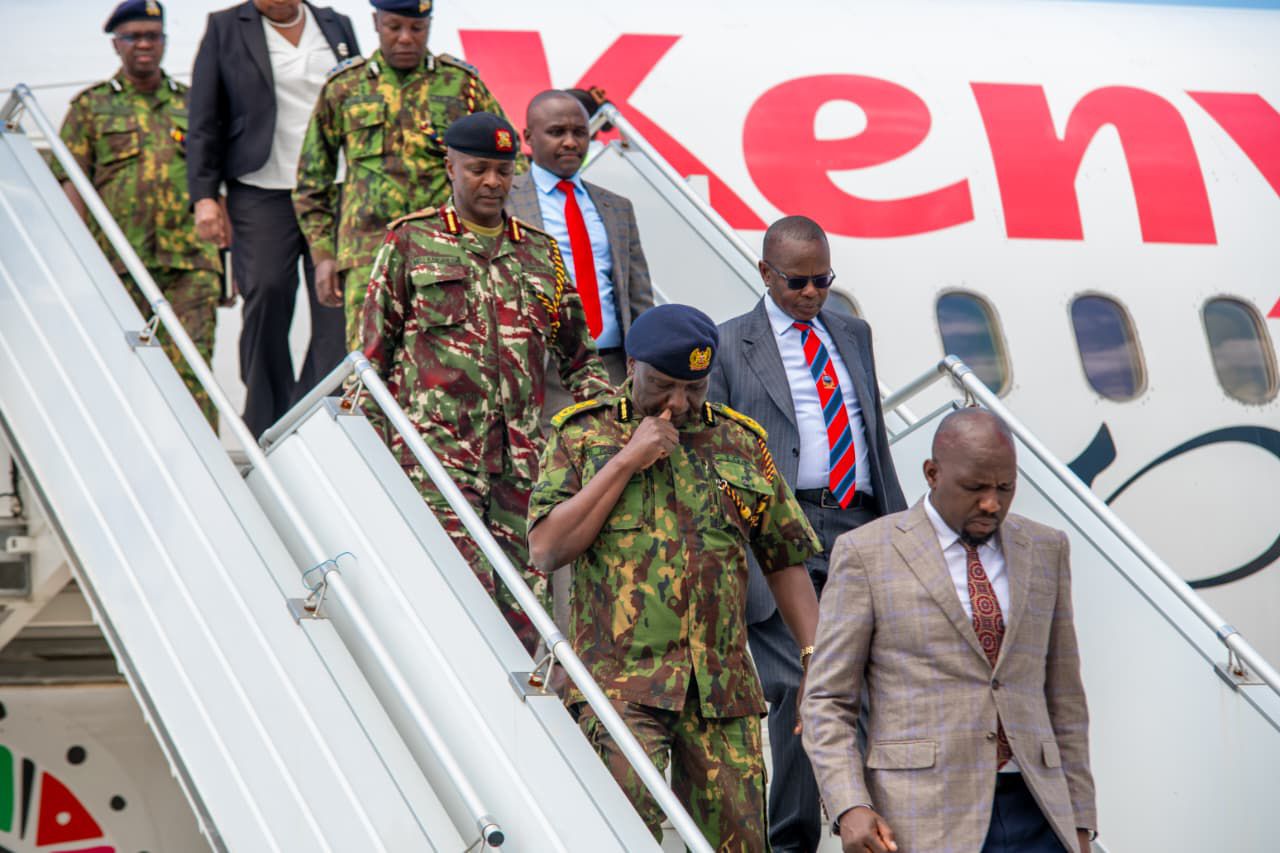
The team was welcomed by top officials led by Kenya’s Consular General to Haiti, Noor Gabow.
Murkomen hailed Kenya’s Multinational Security Support (MSS) Mission in Haiti as a success, as the final contingent of Kenyan police officers prepared to return home after nearly two years of deployment.
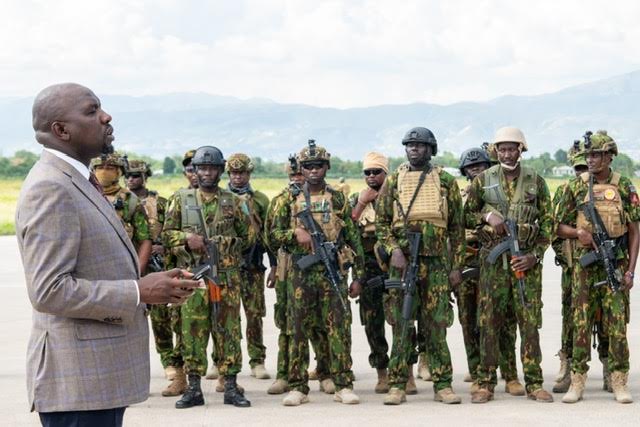 CS Murkomen in Haiti for the final withdrawal of police officers./HANDOUT
He conveyed greetings from President William Ruto and the Kenyan people, noting that while the officers were eager to reunite with their families, they were leaving behind communities whose safety had become part of their daily lives.
Kenya deployed its first group of officers to Haiti in June 2024 following a commitment made by President Ruto during the United Nations General Assembly in 2023.
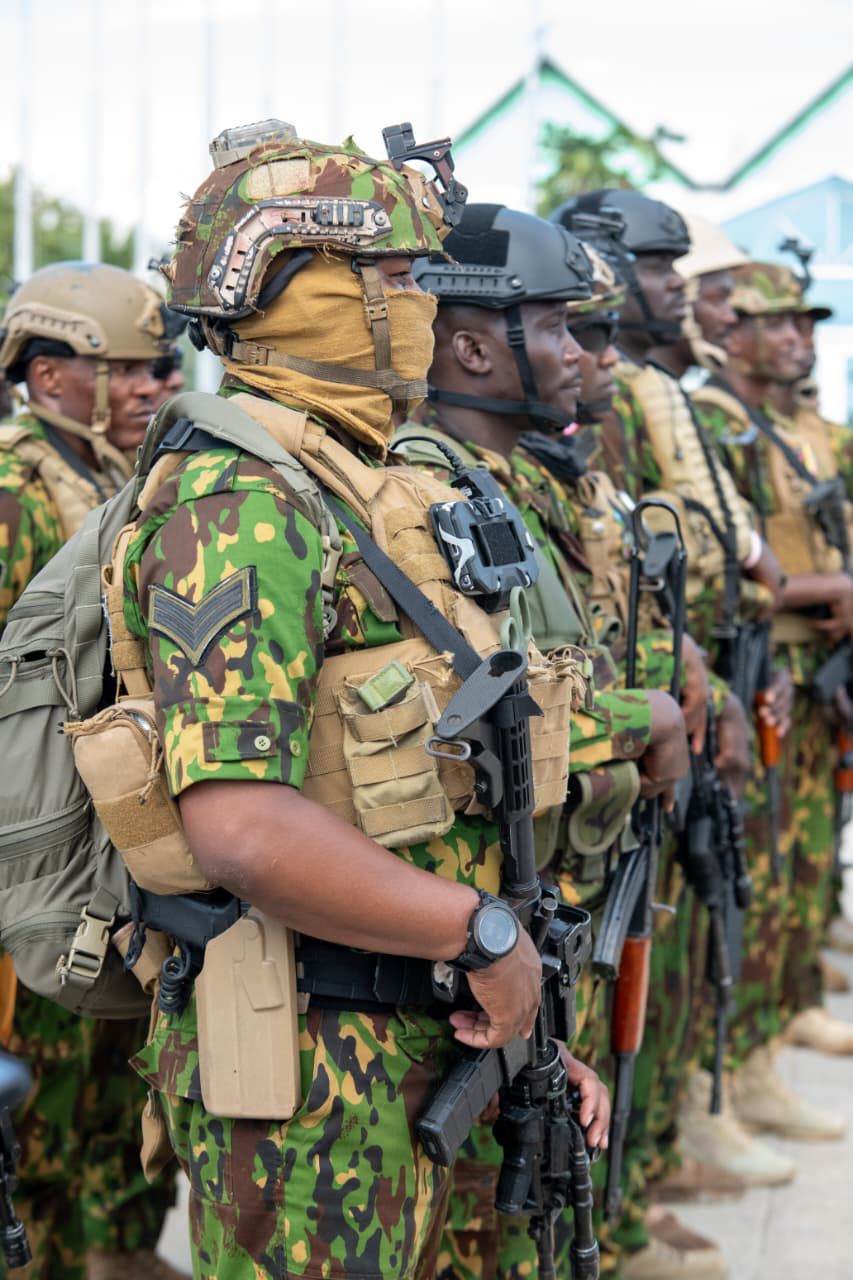
The mission, authorised under UN Security Council resolutions, saw Kenya take the lead role, eventually deploying 730 officers despite initial plans for 1,000.
Murkomen said Kenyan officers worked closely with the Haitian National Police and international partners, including the Bahamas, Canada, Jamaica, and the United States, to restore order and reduce gang activity.
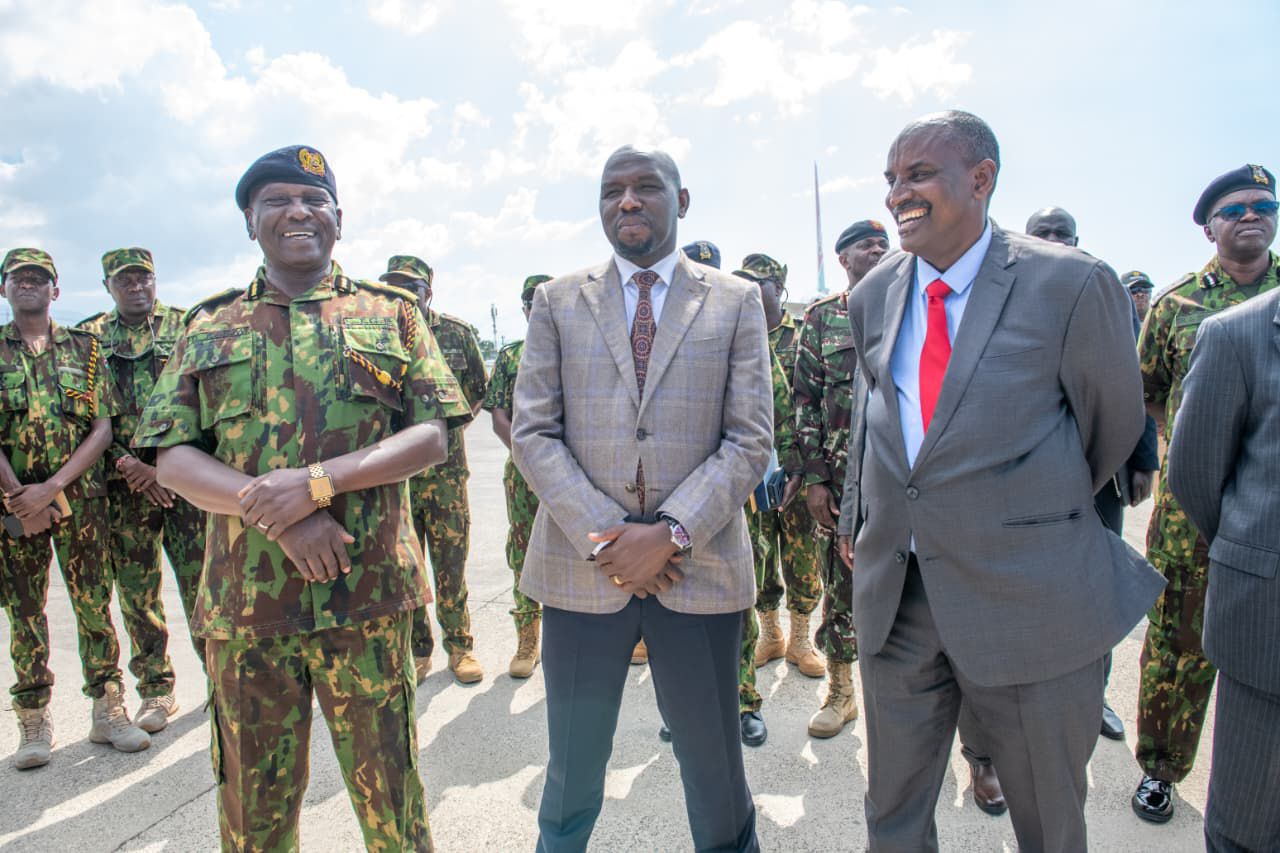
“Even at less than full strength, the Mission delivered meaningful results,” Murkomen said, adding that critical infrastructure had been secured and public confidence in institutions was gradually returning.
He also pointed to the strong bond formed between Kenyan officers and the Haitian people, citing recent scenes where residents attempted to block a departing contingent from leaving as a sign of appreciation.
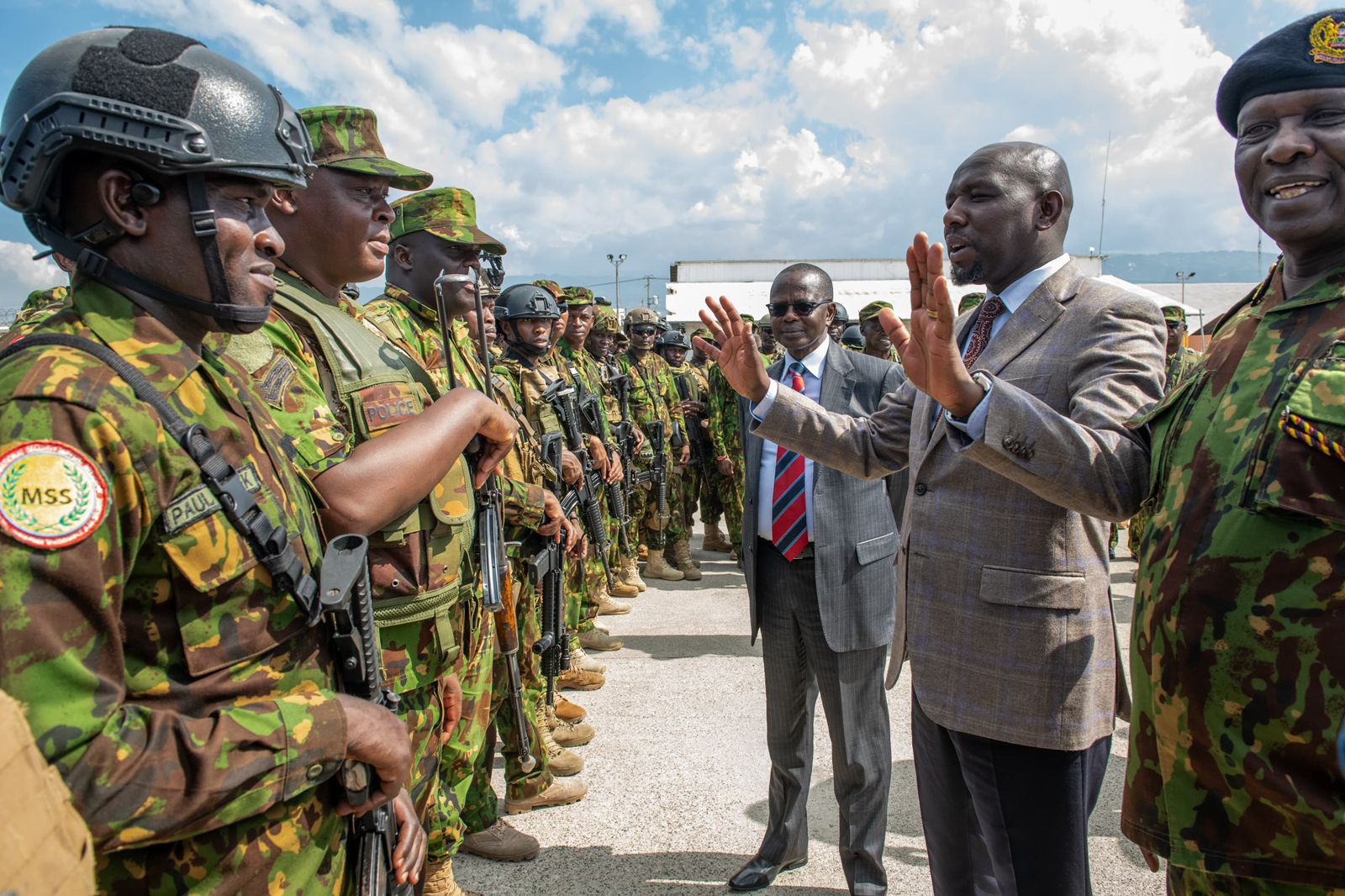
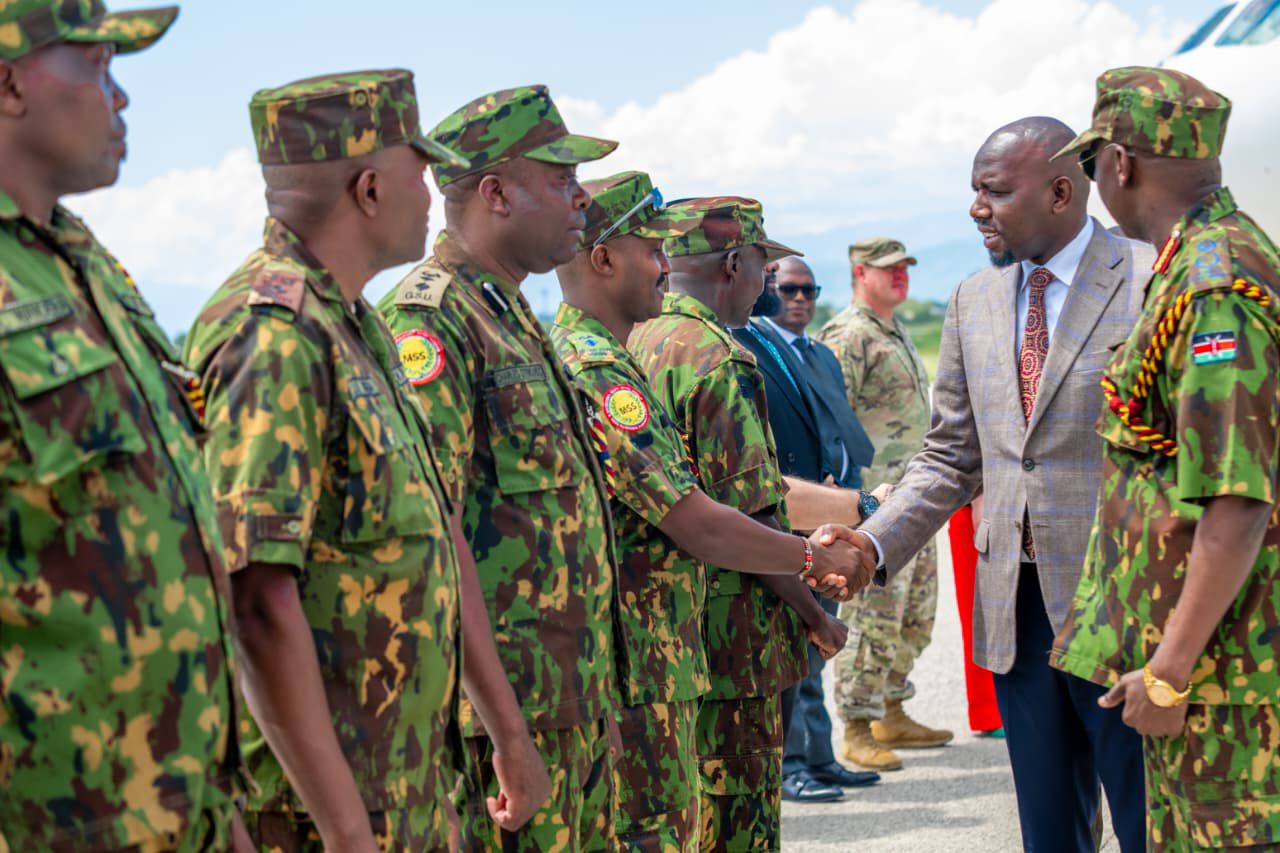
Murkomen acknowledged that the mission faced early scepticism but said Kenya remained committed to the principle that global peace and security are shared responsibilities.
He further emphasised Kenya’s commitment to accountability, noting that allegations of misconduct involving officers were investigated.
As the MSS Mission concludes, Murkomen said efforts are underway to ensure a smooth transition to Haiti’s Gang Suppression Force, which will take over ongoing security operations.
Murkomen also lauded Haiti’s qualification for the 2026 FIFA World Cup as a symbol of resilience, saying Kenya would be cheering the Caribbean nation on.
“Though this chapter ends, our friendship continues,” he said.
The mission was transitioned to the General Suppression Force.
Haiti’s security landscape is entering a fragile phase following the gradual withdrawal of Kenyan forces that had been supporting frontline operations against armed gangs.
The Director General of the Haitian National Police acknowledged that the force is at a critical turning point.
He noted that the exit of Kenyan personnel is weakening key positions previously stabilised through joint operations.
Security gaps are already being felt in several high-risk areas, including Croix-des-Bouquets, Delmas, and downtown Port-au-Prince.
In response, the Haitian government has moved to deploy members of the Armed Forces of Haiti to reinforce security operations.
While initial deployments are limited, officials say troop numbers could rise to around 400 by the end of April.
Under the new arrangement, the PNH will take the lead in frontline engagements, while the military will focus on consolidating and holding reclaimed territory.
Defence Minister Mario Andrésol confirmed the strategy and announced plans to train 1,200 new recruits to strengthen the army’s operational capacity.
The initiative mirrors ongoing efforts within the police force to boost manpower through expanded recruitment.
With reduced reliance on foreign forces, Haitian security institutions may be compelled to develop greater autonomy and operational resilience.
The exit of the Kenyan troops gives room for the Gang Suppression Force (GSF), approved by the United Nations Security Council in October 2025.
The new GSF will be led by Chadian forces. The first batch of Chadian police arrived in Haiti in early April for the peace operation. They will take over the leadership of GSF.
Jack Christofides, a South African UN official, will lead the GSF mission, taking over from Kenya’s Godfrey Otunge, who led the MSS mission.
Christofides, who has overseen various peacekeeping operations in Africa, was appointed as Special Representative of the GSF late last year.